 News




Article
Powering Rural India: Why Distributed Renewables Must Go Beyond Electrification to Enable Inclusive Growth
Powering Rural India: Why Distributed Renewables Must Go Beyond Electrification to Enable Inclusive Growth
![]() By
Samuel Raj 28-November-2026


India’s energy transition is often measured through the expansion of large-scale solar parks, wind farms, transmission corridors and energy storage systems. Yet, the real test of this transition lies not only in the megawatts added to the national grid but also in the reliability, affordability and accessibility of electricity in the country’s villages, farms and rural enterprises. As India moves towards a cleaner energy future, rural electrification must evolve from a basic infrastructure objective into a broader strategy for agricultural productivity, local enterprise and inclusive economic growth.
The central question is no longer simply how to supply electricity to rural India, but how to deliver reliable, affordable and increasingly clean power while enabling rural communities to participate in energy generation and benefit economically from the transition.

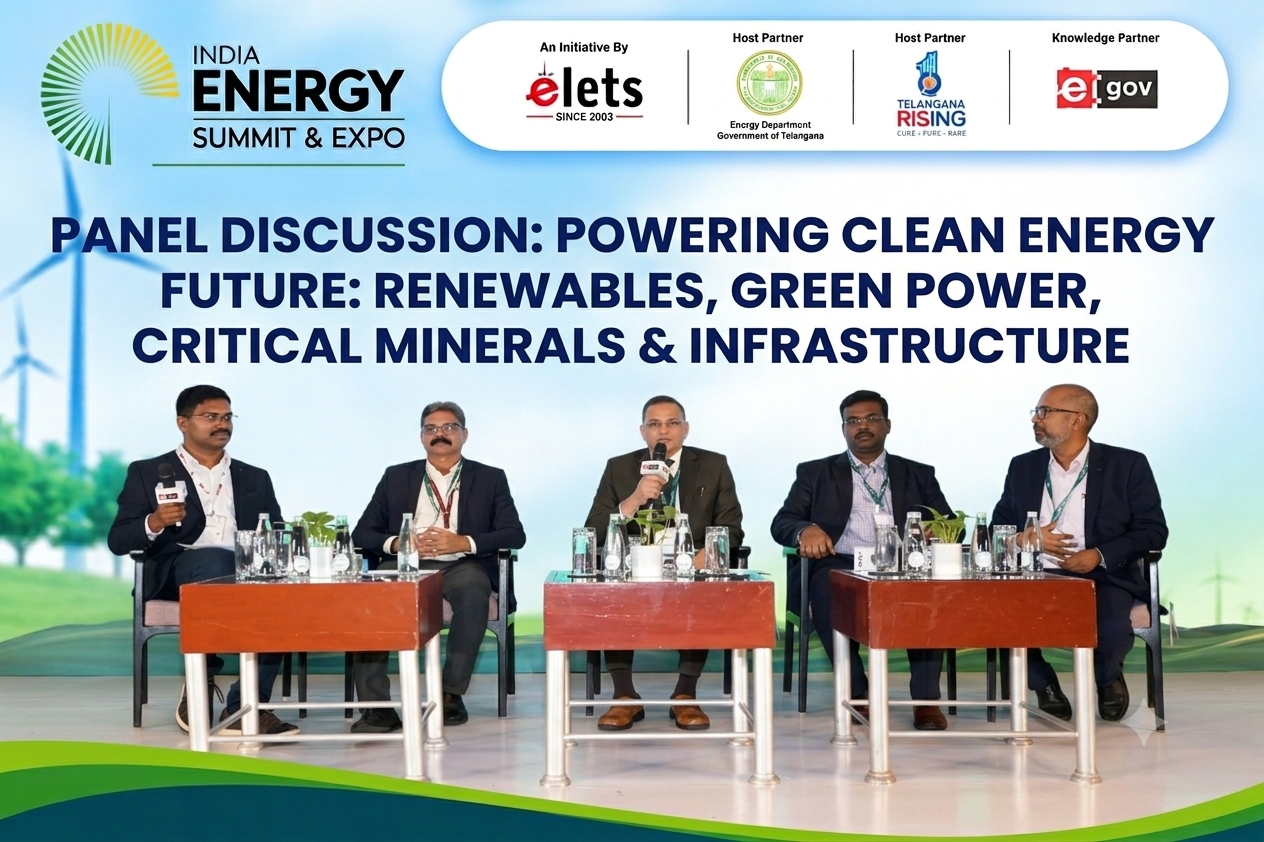
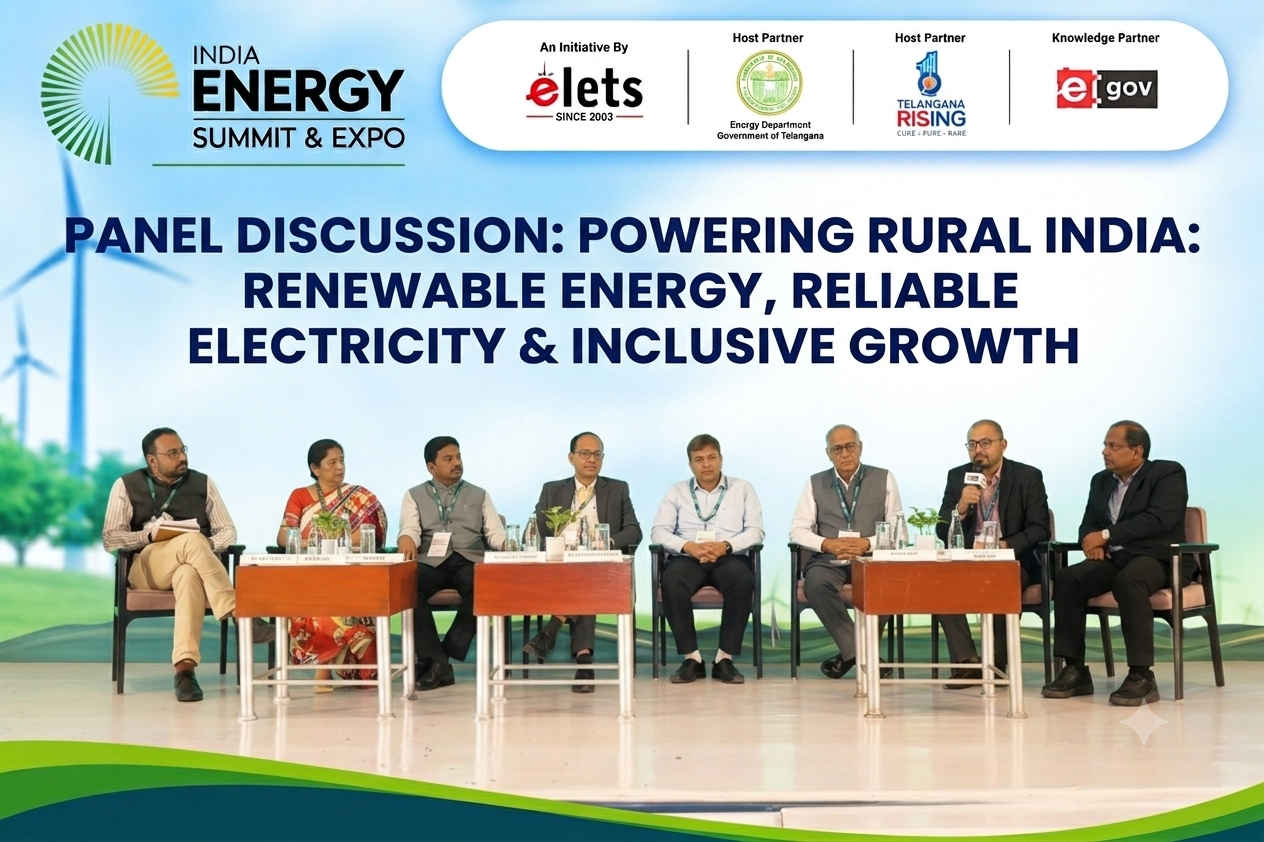
This was the central theme of a panel discussion on “Powering Rural India: Renewable Energy, Reliable Electricity and Inclusive Growth”, which brought together representatives from agriculture departments, distribution companies, renewable energy institutions, financial agencies and industry. The discussion highlighted a fundamental shift in thinking: farmers must be viewed not merely as electricity consumers but also as potential producers of clean energy and partners in building a decentralised energy economy.
Agriculture and energy: An increasingly interconnected future

Agriculture accounts for close to 20% of India’s electricity demand, with irrigation pumps constituting a significant share of consumption. This demand is expected to become more complex as rural infrastructure expands, particularly with the growth of cold storage, food processing and other electricity-intensive agricultural activities.
The challenge is twofold. India must meet rising rural electricity demand while reducing its carbon intensity and ensuring that power remains affordable for farmers. Solar pumps, agricultural feeder solarisation and decentralised renewable energy (DRE) schemes, including the Pradhan Mantri Kisan Urja Suraksha evam Utthaan Mahabhiyan (PM-KUSUM), offer important pathways towards this objective.
However, the next phase of the transition requires a more integrated approach. Solarising agricultural electricity consumption can reduce dependence on conventional power sources, but the larger opportunity lies in linking clean energy generation with agricultural practices, local demand and rural livelihoods.
Agrivoltaics, or agricultural photovoltaics (Agri-PV), offers one such possibility. By combining solar power generation with agricultural cultivation on the same land, the approach can potentially create an additional revenue stream for farmers without requiring agriculture to be displaced entirely by energy infrastructure.
The scale of the opportunity is considerable. During the discussion, the moderator cited an assessment by The Energy and Resources Institute (TERI) that examined Agri-PV potential across five crop categories, including horticultural crops, tea and coffee. Although these categories represented less than 5% of India’s agricultural area, the estimated potential was close to 2,000 GW. This figure points to the possible scale of the opportunity, although actual deployment will depend on crop suitability, site conditions, economic viability and implementation models.
With the country expected to require substantial additional solar capacity over the coming decades, Agri-PV could become an important part of India’s long-term decarbonisation strategy. Its success, however, will depend on evidence-based planning rather than treating all agricultural land and crops as equally suitable.
Crop diversification must shape Agri-PV deployment
The experience of Telangana illustrates why agricultural realities must remain central to renewable energy planning. According to Dr Gopi from the state’s Agriculture Department, Telangana’s gross cropped area has increased from approximately 131 lakh acres in 2014 to around 2.2 crore acres. The area under paddy cultivation has also expanded significantly.
While this growth reflects changes in agricultural activity, the increasing concentration on water-intensive crops raises questions about electricity demand, irrigation requirements and the sustainability of existing cropping patterns.
The state government is promoting crop diversification, including pulses, oilseeds, vegetables and horticultural crops, alongside micro-irrigation initiatives. These measures can help reduce pressure on water and electricity resources while creating opportunities to integrate renewable energy into agricultural systems.
Agri-PV planning must therefore be guided by crop-specific research. Different crops respond differently to partial shading and the microclimates created beneath solar structures. Identifying shade-tolerant crops and understanding the implications for yield, water use and farm income will be essential before moving from experimental projects to large-scale deployment.
Equally important is the participation of farmer collectives, including Farmer Producer Organisations (FPOs) and primary agricultural cooperative societies. Such institutions can help farmers pool resources, access financing and participate in solarisation projects that may otherwise be difficult to undertake individually.
The objective should be to develop models in which clean energy supports agricultural diversification and farm incomes rather than becoming an additional infrastructure burden.
Feeder solarisation: A practical route to decentralised power
Agricultural feeder separation and feeder-level solarisation emerged as critical steps towards making rural electricity supply more reliable and efficient. Separating agricultural loads from other rural consumers allows distribution companies to manage supply schedules more effectively and creates a clearer basis for integrating solar generation with irrigation demand.
Andhra Pradesh’s Eastern Power Distribution Company shared its experience of segregating 962 feeders and providing nine hours of daytime electricity to agricultural consumers. The utility also reported distribution losses of 5.61%. Despite this progress, challenges remain, including theft of distribution equipment, difficult access to remote tribal areas and the logistical burden of transporting poles and other materials into forested locations. The utility also noted that farmers moving away from solarisation arrangements can complicate implementation.
These experiences demonstrate that rural energy projects cannot be judged by installed capacity alone. Their long-term success depends on maintenance, local participation, access to remote communities and the ability to sustain infrastructure after commissioning.
The case for decentralised renewable energy is further strengthened when generation takes place close to the point of consumption. Rajasthan’s experience under PM-KUSUM illustrates the potential benefits of this approach.
According to Jaipur Vidyut Vitran Nigam’s representative, Rajasthan has awarded approximately 10.67 GW of solar capacity under PM-KUSUM Components A and C, with power purchase agreements signed for 25 years. More than 5 GW had been commissioned at the time of the discussion, benefiting over 3.5 lakh agricultural farmers.
The state’s implementation approach has been supported by transparent tendering, participation from farmers and developers, facilitation across project stages and monitoring. The projects offer potential benefits to multiple stakeholders: farmers can earn additional income by installing solar plants or leasing land, distribution companies can access locally generated power, and governments can advance clean-energy targets without necessarily undertaking the entire capital investment themselves.
Locally consumed solar power can also reduce transmission and distribution losses and, in suitable cases, defer investment in network upgrades. These advantages make feeder-level solarisation not merely an environmental intervention but a potential component of distribution-sector reform.
The business case must work for distribution companies
One of the strongest messages from the discussion was that decentralised renewable energy must make financial sense for distribution companies, or discoms, if it is to scale sustainably.
Rural electricity distribution presents a difficult economic equation. Long feeder lines, dispersed consumers, infrastructure maintenance and subsidised tariffs can make the cost of supplying power significantly higher than the revenue collected. At the same time, electricity remains essential for agricultural livelihoods and basic household needs.
The representative from Chhattisgarh’s power distribution utility highlighted this tension, describing electricity as both a commercial commodity for discoms and a social necessity for consumers. The utility cited an average cost of supply of approximately ₹7.13–₹7.15 per unit, compared with a domestic tariff of around ₹4.10 per unit for the category discussed. Government subsidies therefore remain important to bridging the gap.
Chhattisgarh has also extended support to agricultural consumers, including free electricity provisions for eligible farmers, while pursuing feeder separation and decentralised solarisation. The representative reported that approximately 76% of customer households had been covered by smart metering at the time of the discussion.
Such measures can improve visibility into consumption, voltage conditions and network performance. But they also underline the need for a more comprehensive financial model that combines public support, better infrastructure utilisation, reduced losses and local renewable generation.
If savings from lower transmission losses, reduced subsidy requirements or avoided network investments are realised, a portion could be redirected towards strengthening rural distribution infrastructure and supporting further renewable energy deployment. The transition will be more sustainable when it improves the financial position of utilities without compromising the affordability of electricity for vulnerable consumers.
Financing must connect infrastructure with rural value creation
Even where technology and policy support are available, financing remains a decisive factor in determining whether rural renewable energy projects can move beyond pilot stages.
The National Bank for Agriculture and Rural Development (NABARD), which supports agricultural and rural infrastructure, outlined several financing channels, including the Rural Infrastructure Development Fund, NABARD Infrastructure Development Assistance and the NABARD Green Lending Facility. Its representative said that the institution finances a broad range of rural infrastructure projects and that approximately ₹3,000 crore of annual funding from the cited portfolio goes towards the energy sector, depending on government priorities.
The key challenge is the initial investment required for solar infrastructure. Farmer groups, cooperatives and FPOs may have access to suitable land and a viable business proposition but still require loans, financial assistance or other forms of support to make projects feasible.
The discussion also highlighted the importance of moving beyond projects that simply generate electricity. Solar-powered cold storage, crop dryers and other productive-use applications can help rural communities capture greater value from renewable energy.
An example shared during the session was that of the Katangur FPO near Hyderabad. With support for solar-powered cold storage, the organisation reportedly installed 14 storage units. However, seasonal fluctuations in agricultural production meant that the facilities were not always fully utilised. The FPO subsequently began using surplus electricity for battery charging, creating an additional business activity with technology support from a startup.
This example illustrates a broader principle: rural renewable energy projects become more resilient when they are integrated with local economic needs. Energy infrastructure should support multiple productive uses wherever practical, helping farmer organisations diversify revenue and improve asset utilisation.
Reliability is as important as access
As rural India becomes increasingly dependent on electricity for irrigation, storage, processing and digital services, the quality and reliability of supply must receive the same attention as access.
Distribution transformers are a crucial part of this equation. They form the final link between distribution networks and consumers, yet their performance depends on design, materials, operating conditions and maintenance.
The International Copper Association highlighted the importance of transformer material choices and asset management. Its representative argued that accounting practices should better recognise the value of the metal components within transformers, rather than treating the entire asset as a single depreciating unit. Such an approach, if appropriately implemented, could improve asset valuation and potentially strengthen access to financing for infrastructure investment.
The discussion also stressed that renewable integration must be accompanied by stronger grid reliability. Transformer failures, power-quality issues, reactive power requirements and the variability of agricultural loads can undermine the benefits of additional generation if they are not addressed systematically.
Battery energy storage is one possible part of the solution. Solar output is concentrated during daylight hours, while electricity requirements vary across seasons and may rise during evening peaks. Storage can help shift surplus daytime generation to periods when it is needed, provided the projects are technically and financially viable.
Storage should therefore be planned alongside feeder solarisation and local generation rather than treated as a separate intervention introduced after problems emerge.
From individual projects to solar villages
The panel’s concluding recommendations pointed towards a more integrated model of rural energy development. One proposal was to develop model solar villages in which decentralised generation, battery storage and local consumption are planned together.
Such villages could combine solarised agricultural feeders, household renewable energy, productive-use infrastructure and appropriately sized storage systems. Farmer collectives could play a central role in organising demand, operating shared assets and enabling communities to benefit from local generation.
However, technology alone will not deliver this transition. Skills development will be equally important. As distributed renewable capacity expands, India will need trained personnel for installation, operations, maintenance, equipment servicing and project management. The moderator emphasised the need to build this workforce at scale, noting that deployment ambitions running into hundreds of gigawatts would require a corresponding expansion in training and local technical capacity.
Policy continuity will also matter. Schemes must be supported by clear implementation responsibilities, accessible finance, coordination between agencies and sustained engagement with farmers. Experiences from states such as Maharashtra, Rajasthan, Andhra Pradesh and Chhattisgarh offer useful lessons, but models will need to be adapted to local crops, land conditions, grid characteristics and consumer requirements.
Ultimately, the objective should be to make rural communities active participants in the energy transition rather than passive recipients of infrastructure.
Conclusion: Building an energy-enabled rural economy
India’s rural energy transition cannot succeed through electrification alone. It requires an ecosystem in which clean power strengthens agriculture, reliable networks support essential services, financing enables local participation, and renewable infrastructure creates new livelihood opportunities.
Agri-PV, feeder-level solarisation, battery storage, productive-use applications and farmer-led energy models offer complementary pathways towards that goal. Their effectiveness will depend on crop-specific evidence, viable business models, stronger distribution infrastructure and the ability to translate policy support into lasting local benefits.
The next three to five years will be particularly important in determining whether decentralised renewable energy remains a collection of promising pilots or becomes a scalable pillar of India’s energy system. That shift will require coordination across governments, utilities, financial institutions, industry and rural communities, alongside investments in skills and grid reliability.
The measure of success should not be the number of solar panels installed or the capacity commissioned alone. It should be whether farmers receive dependable electricity, rural enterprises become more productive, distribution networks become more resilient and communities gain a meaningful stake in clean-energy generation.
Powering rural India, therefore, is ultimately about more than supplying electricity. It is about building a renewable-energy-enabled rural economy in which energy security, agricultural prosperity and inclusive growth reinforce one another.
——————————–
Insights shared by Dr B. Gopi, T. Vanaja, Sivakumar Vepakomma, Raj Kumar Sharma, R. Ganapathy, Santanu Debnath, and Bimbisar at the India Energy Summit and Expo 2026, held on 18-19 August 2026, Hyderabad

Be a part of Elets Collaborative Initiatives. Join Us for Upcoming Events and explore business opportunities. Like us on Facebook , connect with us on LinkedIn and follow us on Twitter, Instagram.
"Exciting news! Elets technomedia is now on WhatsApp Channels Subscribe today by clicking the link and stay updated with the latest insights!" Click here!