 News





Article
India’s Clean Energy Future: Why Policy Continuity, Grid Infrastructure and Self-Reliance Must Go Hand in Hand
India’s Clean Energy Future: Why Policy Continuity, Grid Infrastructure and Self-Reliance Must Go Hand in Hand
![]() By
Samuel Raj 27-November-2026


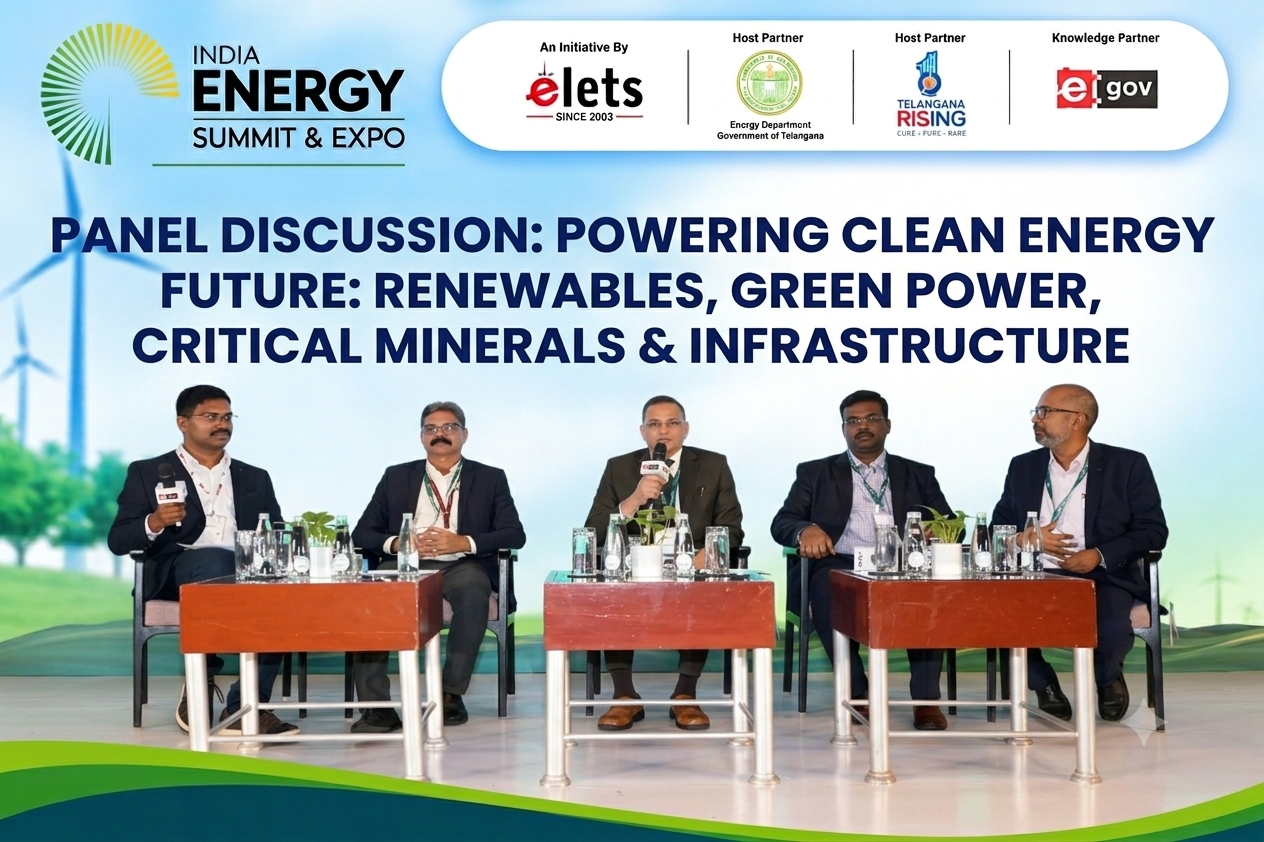
India’s clean energy transition has reached a decisive stage. The country has made considerable progress in expanding renewable energy capacity, attracting investment and strengthening its ambition to build a more sustainable power sector. Yet, the next phase of this transition will be more demanding than the last. The challenge is no longer limited to installing solar panels or increasing renewable energy generation. It is about ensuring that the electricity generated reaches consumers, that infrastructure keeps pace with capacity addition, and that the technologies and materials required for this transformation are increasingly available within the country.
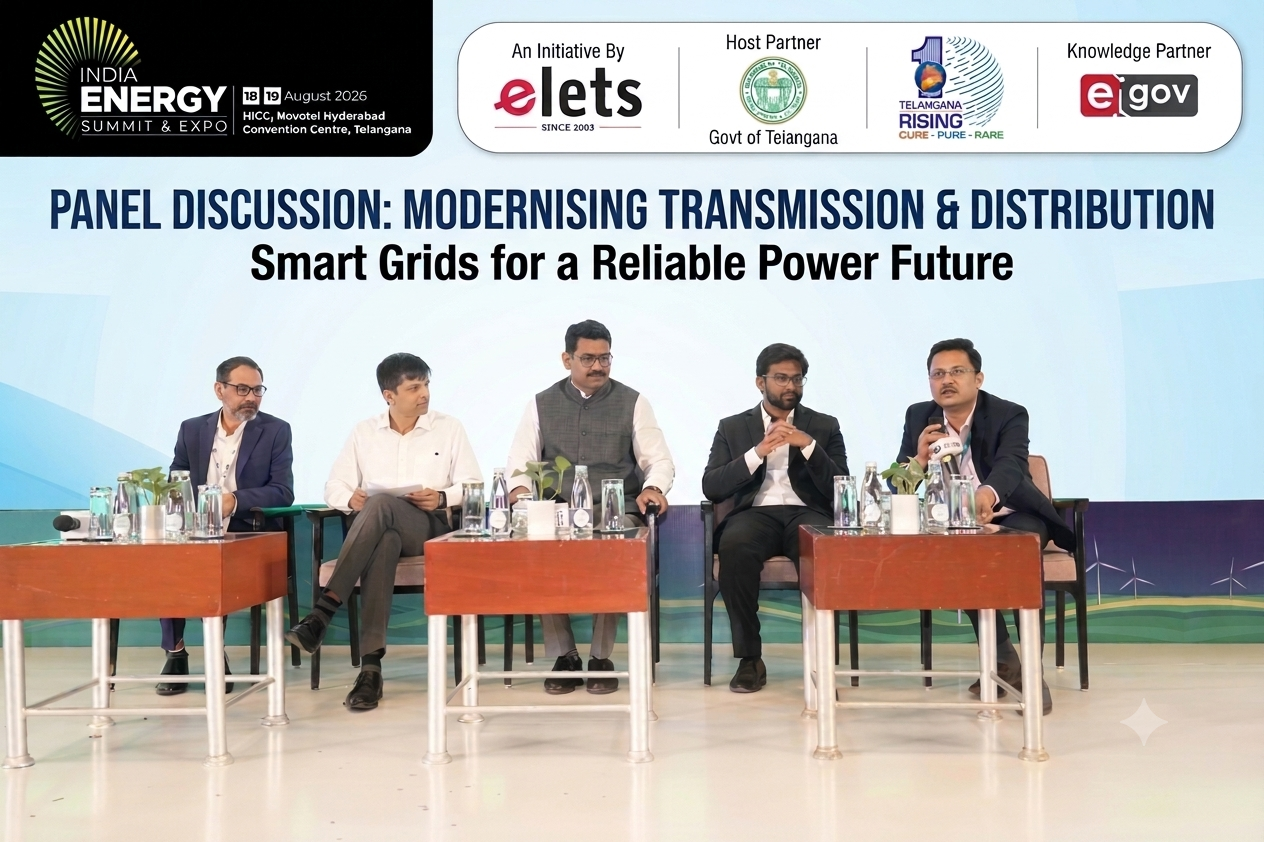
The discussion at the closing panel on Day One brought these interconnected challenges into focus. Representatives from NTPC, infrastructure development, the copper industry and railway-linked engineering highlighted a common concern: India’s clean energy ambitions must be matched by a stronger transmission network, predictable policies, faster approvals, improved resource management and a greater commitment to domestic manufacturing.

In my view, this is the central question confronting India’s energy transition. We have demonstrated that renewable energy can be expanded at scale. Now, we must build the systems that allow this capacity to deliver its full economic and environmental value.
Renewable Energy Needs More Than Generation Capacity
One of the most significant challenges highlighted during the discussion was the growing mismatch between renewable energy generation and transmission infrastructure. NTPC Green Energy Limited has been expanding its renewable energy portfolio, with approximately 10.88 GW of operational capacity, around 16 GW under execution and a further 9 GW at various stages of tendering, according to the panel. The company is working towards its target of reaching 60 GW of renewable capacity by 2030.

These figures reflect the scale of investment and execution required to transform India’s energy mix. However, they also reveal why capacity addition alone cannot be treated as the primary measure of progress.
Renewable energy projects can be developed relatively quickly, but the transmission infrastructure required to evacuate their electricity often takes longer to complete. As a result, generation capacity may be ready before the grid is equipped to carry the power to demand centres. This mismatch can lead to curtailment, leaving renewable electricity unused and creating financial losses for developers.
The panel highlighted delays in transmission projects, including land and connectivity issues, as major obstacles. When a significant proportion of transmission infrastructure is delayed, renewable energy projects face uncertainty even after substantial investment has been made.
This is an avoidable contradiction. India cannot afford to encourage large-scale renewable investment while allowing the supporting infrastructure to lag behind. Transmission planning must be integrated into renewable energy development from the beginning, rather than treated as a separate exercise to be completed later.
The development of green energy corridors is an important step in this direction. However, the next phases must progress alongside the commissioning of renewable capacity. The objective should be straightforward: every new renewable energy project must have a credible and timely plan for connecting to the grid.
Energy Storage Can Bridge the Gap but Cannot Replace the Grid
Battery energy storage systems (BESS) offer an important opportunity to address some of the immediate challenges associated with renewable energy integration. As solar generation rises during the day, storage can capture surplus electricity and release it when demand increases, particularly during evening peak hours.
The panel noted that transmission infrastructure in some renewable-rich regions can remain relatively lightly loaded outside solar-generation hours. Storage could help use this available capacity more efficiently by shifting electricity delivery to periods when it is most needed. It could also reduce curtailment and help manage the gap between daytime generation and peak demand.
NTPC’s storage plans, as discussed during the session, included approximately 1,620 MWh under execution and a larger pipeline of projects at different stages of tendering and planning. These developments indicate that storage is becoming an increasingly important component of renewable energy planning.
Nevertheless, storage should not be presented as a substitute for transmission expansion. Batteries can improve flexibility and help manage variations in supply, but they cannot eliminate the need for a robust network capable of delivering electricity across regions.
India therefore needs a coordinated approach. Transmission lines, substations, battery storage and renewable generation must be planned as complementary elements of one power system. This will require better coordination among developers, transmission utilities, regulators and government agencies.
The transition will be more efficient when infrastructure planning reflects the complete journey of electricity—from generation to storage, transmission and final consumption.
Telangana’s Renewable Ambitions Require Faster Execution
The challenges become particularly visible when we examine state-level renewable energy development. Telangana has significant ambitions for expanding its renewable energy capacity, but the discussion highlighted the gap between its current position and its intended targets.
According to the panel, Telangana had approximately 5 GW of renewable capacity, while the state was working towards a target of around 30 GW. Reaching that level within the stated timeframe would require a substantial acceleration in project development and supporting infrastructure.
The state has the opportunity to learn from renewable energy markets that have already advanced further. However, adopting successful models requires more than announcing targets. It demands a regulatory environment that gives developers confidence, approvals that arrive within predictable timelines and transmission systems capable of evacuating the electricity generated.
Land availability is another major concern. As a landlocked state with costly land in many areas, Telangana faces practical difficulties in securing suitable sites for large renewable energy projects. The panel suggested that government-owned land, including suitable wasteland, could be made available through long-term leasing arrangements. Such an approach could reduce upfront acquisition challenges while allowing landowners and developers to participate in the long-term value created by projects.
Single-window clearances and coordinated approvals could further reduce delays. These are not minor administrative improvements; they directly influence the speed at which investment becomes operational capacity.
Most importantly, Telangana needs consistency in its policies. Renewable energy projects involve substantial capital expenditure and long development cycles. Investors need confidence that the rules governing their projects will remain reasonably stable over time.
If the state can combine policy continuity, accessible land, faster approvals and transmission expansion, it can move more rapidly towards its ambitions while supporting the energy needs of emerging industries.
Policy Continuity Is the Foundation of Investor Confidence
A recurring message from the panel was that policy consistency is essential to sustaining the clean energy transition. India has attracted substantial interest in renewable energy, but future growth will require investment in increasingly complex projects and infrastructure.
Investors do not assess opportunities solely on the basis of renewable energy targets. They also consider regulatory certainty, land access, grid connectivity, payment arrangements and the predictability of project approvals. Frequent changes in rules or prolonged administrative processes can weaken confidence and increase project costs.
For states that are still building their renewable energy markets, this concern becomes even more important. Telangana, for instance, can accelerate development by adapting approaches that have worked elsewhere in the country instead of creating unnecessary delays through repeated experimentation.
Policy continuity must also be accompanied by effective implementation. The discussion raised concerns about renewable purchase obligations (RPOs), noting that obligations can lose their intended force when compliance is repeatedly deferred. If the country expects industries and electricity consumers to contribute to decarbonisation, the regulatory framework must establish clear responsibilities and credible enforcement.
Renewable energy cannot remain an option that organisations pursue only when it is financially convenient. As the transition progresses, compliance, accountability and long-term planning must become integral to the way the power sector operates.
At the same time, regulations should be designed carefully enough to support investment rather than create avoidable uncertainty. The objective is not simply more rules but rules that are clear, consistent and enforceable.
Self-Reliance Must Extend Across the Renewable Energy Supply Chain
India’s energy security will increasingly depend on its ability to manufacture critical technologies and components domestically. The panel emphasised that while the country has developed substantial solar module manufacturing capacity, it still needs to strengthen domestic production of cells, wafers, inverters and other essential equipment.
This distinction matters. Expanding final-stage manufacturing is valuable, but a supply chain remains vulnerable when important upstream materials and components depend heavily on external sources. Geopolitical disruptions and changes in international trade can affect prices, delivery schedules and project execution.
A stronger domestic manufacturing ecosystem would help reduce these risks while creating opportunities for industrial development, technological advancement and employment.
The panel also highlighted the importance of domestic production of critical electrical components, including equipment needed to support renewable energy integration. These components are essential to the reliable operation of the wider power system, not merely to the installation of generation capacity.
In my view, self-reliance should be understood as a long-term industrial strategy rather than an isolated manufacturing target. India needs to strengthen production capabilities, improve product quality, develop technical expertise and create the conditions for domestic manufacturers to compete at scale.
The transition will be more resilient when the country can depend on a wider domestic ecosystem for the technologies that underpin its energy infrastructure.
Copper and Material Circularity: The Overlooked Side of the Transition
The discussion also brought attention to a resource that is fundamental to electrification: copper. Its electrical and thermal properties make it important for renewable energy systems, electric vehicle charging infrastructure, transmission networks and data centres.
As India expands its clean energy capacity and digital infrastructure, demand for copper is likely to become increasingly significant. The panel referred to national copper demand of approximately 1.8–1.9 million tonnes and highlighted the contribution of recycling to meeting domestic requirements.
This creates an important opportunity for India to connect its energy transition with the principles of a circular economy. Recovering copper from used equipment, electrical systems and other sources can reduce pressure on primary resources and improve the resilience of supply chains.
However, recycling alone is not enough. The discussion pointed to the need for greater domestic refining capacity. Simply recovering and remelting copper does not always produce material suitable for every electrical application. Stronger refining capabilities can help return recycled material to higher-value uses and improve resource efficiency.
The same principle applies to other critical minerals and emerging energy technologies. India needs to strengthen its capabilities across the value chain, from resource access and processing to manufacturing, reuse and recycling.
Standardisation is equally important. As technologies such as floating solar and battery storage expand, consistent product standards, installation codes and quality checks become essential for safety, performance and investor confidence.
A successful clean energy transition will depend not only on how much equipment India installs but also on how intelligently it manages the materials that make that equipment possible.
Infrastructure Execution Must Become More Strategic
Large infrastructure projects demonstrate why effective planning can be as important as financial investment. The panel discussed the challenges of developing a 500 MW solar project in Karnataka, including the need to secure approximately 2,750 acres of land.
Instead of relying entirely on outright acquisition, the project adopted a long-term leasing approach. According to the speaker, this helped make the land process more manageable while allowing landowners to remain involved over the longer term.
The project also addressed grid evacuation by dividing commissioning into smaller stages rather than waiting for the entire capacity to be completed at once. This approach allowed generation to be commissioned progressively in line with evacuation arrangements.
These lessons are relevant to India’s wider infrastructure ambitions. Projects often face delays because land, financing, approvals and transmission connectivity are treated as separate challenges. A more integrated model can identify constraints early and sequence construction to reflect actual infrastructure readiness.
Financial planning remains equally important. Large renewable projects require significant capital, and developers must balance investment needs with credible financing structures and long-term revenue arrangements.
India can improve project delivery by combining sound financial planning with phased commissioning, practical land arrangements and early coordination with transmission agencies. Better execution will help convert announced investment into operational infrastructure more quickly.
The Road Ahead: From Ambition to System-Wide Readiness
India’s clean energy transition is entering a phase in which the quality of implementation will determine the scale of future progress. The country has demonstrated its ability to expand renewable energy and attract investment. The next task is to ensure that transmission infrastructure, storage, domestic manufacturing, material recycling and regulatory systems advance at the same pace.
The closing panel offered a clear set of priorities: strengthen transmission networks, deploy storage where it can improve system flexibility, ensure predictable policies, simplify approvals, make land access more practical, enforce renewable energy obligations and build domestic capabilities across the clean energy supply chain.
These priorities must be pursued together. A solar project without timely grid connectivity cannot deliver its full potential. A storage system without appropriate standards and planning cannot provide its maximum value. Domestic manufacturing without strong quality controls will struggle to build lasting competitiveness. And ambitious renewable energy targets without policy continuity will find it harder to attract the investment needed for implementation.
India’s energy transition must therefore be measured not only by installed capacity but also by the reliability, affordability and resilience of the entire system.
The way forward is neither to slow renewable energy development nor to rely on capacity targets alone. It is to create an environment in which generation, transmission, storage, manufacturing and regulation reinforce one another.
If India can achieve that coordination, the clean energy transition will become more than an exercise in adding megawatts. It will become a foundation for energy security, industrial self-reliance and sustainable economic growth. The ambition is already clear. The priority now is to make the systems around that ambition equally strong.
——————————–
Insights shared by Ajay Kumar Dhamania, Rajesh Naik, Hemanth Kumar, Birendra Pandey, and Kapil Muddineni at the India Energy Summit and Expo 2026, held on 18-19 August 2026, Hyderabad

Be a part of Elets Collaborative Initiatives. Join Us for Upcoming Events and explore business opportunities. Like us on Facebook , connect with us on LinkedIn and follow us on Twitter, Instagram.
"Exciting news! Elets technomedia is now on WhatsApp Channels Subscribe today by clicking the link and stay updated with the latest insights!" Click here!