 News




Article
AI and Smart Grid Technologies: Building a More Intelligent, Efficient and Renewable-Ready Power Sector
AI and Smart Grid Technologies: Building a More Intelligent, Efficient and Renewable-Ready Power Sector
![]() By
Samuel Raj 27-November-2026


India’s energy transition is no longer defined solely by how much renewable energy the country can generate. The more pressing challenge is how efficiently that electricity can be forecast, integrated into the grid, scheduled, traded and consumed. As solar and wind capacity expands, power systems must become more responsive to changing weather conditions, fluctuating demand and increasingly complex electricity markets. In this evolving landscape, artificial intelligence (AI), digitalisation and smart grid technologies are emerging as essential tools for building a reliable, affordable and sustainable energy ecosystem.
The transition from conventional power management to intelligent grid operations will require more than the installation of new infrastructure. It demands a coordinated approach that connects electricity generation, transmission, distribution, market operations and consumption through reliable data and advanced analytics. The experience presented by AR Connect, an energy technology company with more than 15 years of experience in power forecasting, scheduling, procurement, trading and management, highlights how digital solutions can address some of the operational challenges confronting India’s power sector.

The central lesson is clear: renewable energy expansion must be accompanied by a parallel transformation in the systems responsible for managing electricity.
Beyond Renewable Capacity: The Need for Intelligent Grid Management

India’s renewable energy ambitions have created an urgent need to improve grid flexibility and operational efficiency. Unlike conventional generation, solar and wind power depend heavily on weather conditions. Changes in wind speed, cloud cover, fog and solar radiation can affect generation, making accurate forecasting essential for balancing electricity supply and demand.
Forecasting errors can also have financial consequences for renewable energy developers and utilities. Deviations between scheduled and actual generation may expose participants to deviation settlement mechanism (DSM) charges and penalties, making forecasting accuracy an operational and commercial priority.
This is where AI-driven forecasting and digital grid management can make a meaningful difference. By combining historical records, real-time measurements, weather information and other relevant data, advanced analytical systems can help power-sector stakeholders anticipate changes in generation and demand. Better forecasts can support improved scheduling, more informed procurement decisions and more efficient grid operations.
AR Connect’s Grid Connect platform is designed around this principle. Launched in 2015, the platform brings together different layers of energy data and converts them into actionable intelligence. Its technology ecosystem serves renewable energy developers and utilities through separate but complementary platforms, covering renewable forecasting, utility demand forecasting, market intelligence and grid management.
According to the company’s presentation, its renewable forecasting and scheduling solutions support approximately 41 GW of renewable energy capacity. The company also reported working with more than 20 utilities in India and international markets.
These figures illustrate the growing role of digital platforms in managing increasingly complex electricity systems. However, the wider significance lies in the model itself: technology becomes valuable when it improves the quality, speed and consistency of operational decisions.
AI Forecasting: Reducing Uncertainty in Renewable Generation
Forecasting renewable energy generation is not simply a matter of predicting tomorrow’s weather. Power-system operators need forecasts that reflect conditions at specific locations and time intervals, allowing them to prepare for sudden changes and minimise scheduling deviations.
AR Connect’s approach uses multiple artificial intelligence and machine learning models simultaneously. Rather than relying on a single forecasting model, the platform runs several models and identifies the most suitable forecast for a particular time block. The resulting output is intended to improve the accuracy of generation estimates under changing conditions.
This multi-model approach is important because renewable energy forecasting involves several variables, and the performance of individual models can change according to weather patterns and operating conditions. Combining different forecasting techniques can provide a more flexible framework for managing uncertainty.
The company’s presentation highlighted examples involving a 200 MW wind farm, a 75 MW solar farm and an aggregation-based application in Karnataka. For the wind project, the reported forecasting error was reduced from 1.15% to 0.55%. The presentation also reported improvements in solar forecasting and a reduction in aggregated imbalance volumes from 190 to 88 per MW per year.
These results, as presented by the company, point to the potential operational and financial benefits of better forecasting. They should nevertheless be assessed in the context of the individual projects, their measurement periods and the methodologies used to calculate improvements. Results from specific sites cannot automatically be assumed to apply across every renewable energy installation.
The broader implication remains significant. As renewable capacity grows, even incremental improvements in forecasting accuracy can help developers manage deviations more effectively and enable grid operators to plan with greater confidence.
From Prediction to Decision-Making
The next stage in the digital transformation of power systems is moving beyond forecasting towards decision support and increasingly automated operations.
A forecast identifies what may happen. A decision-support system helps determine what should be done in response. For electricity grids, this distinction is crucial. Operators must consider renewable generation forecasts alongside transmission constraints, contractual obligations, regulatory requirements, weather conditions and electricity demand.
AR Connect described an emerging approach in which satellite weather information, real-time grid data and operational constraints feed into AI-driven optimisation systems. These systems can translate multiple inputs into dispatch recommendations across different time horizons.
Such capabilities could help reduce the burden of human-intensive decision-making while improving the speed and consistency of operational responses. The objective should not be to remove human oversight from critical infrastructure, but to equip system operators with better information and more effective tools.
As power systems become more decentralised and renewable-heavy, the volume and complexity of decisions facing operators will increase. Intelligent decision-support systems can help them respond to this complexity, provided that their recommendations are transparent, reliable and consistent with grid codes and regulatory requirements.
The evolution from forecasting to decision-making therefore represents a potentially important shift in the way electricity networks are managed. It connects data analytics with practical operational outcomes.
Digitalisation Across Utilities and Electricity Markets
The benefits of intelligent energy management extend beyond renewable generation. Distribution utilities also need accurate demand forecasts to plan electricity procurement, manage supply obligations and reduce avoidable costs.
Demand forecasting becomes particularly important when consumption patterns fluctuate across seasons, industrial activity, weather conditions and consumer behaviour. Errors in estimating demand can result in inefficient procurement decisions, unnecessary costs or difficulties in maintaining the balance between supply and consumption.
AR Connect’s Grid Pro and Grid Flex solutions are designed to support utility demand forecasting. According to the presentation, these platforms allow utilities to incorporate forecasts from multiple providers and use them to develop more informed estimates. The approach offers utilities greater flexibility than dependence on a single forecasting source.
The company also described AI-based electricity market intelligence, using historical information and analytical models to forecast prices across market segments, including the Day-Ahead Market (DAM), Real-Time Market (RTM) and Green Day-Ahead Market (GDAM). Forecasts across day-ahead, intraday and longer periods can help market participants assess procurement options and plan transactions more strategically.
This capability is becoming increasingly relevant as electricity markets evolve and renewable generation changes the timing and availability of supply. Better price forecasts can support more informed decisions, although market participants must account for forecast uncertainty and the possibility of sudden changes in market conditions.
The larger opportunity is to connect forecasting, procurement optimisation and market intelligence rather than treating them as separate functions. An integrated approach can help utilities and generators make decisions based on a more complete understanding of the power system.
Satellite Data and IoT: Strengthening the Foundation
Advanced AI systems are only as effective as the quality of the data they receive. In the power sector, obtaining reliable, timely and location-specific information remains a practical challenge, particularly across geographically dispersed renewable energy installations.
AR Connect’s presentation highlighted the use of satellite imagery and machine learning to identify fog at a renewable energy site in Rajasthan before sunrise. The company said that the predicted weather impact was incorporated into an intraday forecast shared with the relevant State Load Despatch Centre (SLDC), helping minimise forecasting errors and associated DSM exposure.
The company also described work on cloud nowcasting, which seeks to anticipate near-term changes in cloud conditions. Such information can be valuable for solar generation forecasting because cloud movements can rapidly affect output.
Alongside weather analytics, the company has developed an in-house IoT device called Grid Box. The device is designed to collect information from equipment such as wind and solar installations, hybrid inverters, grid energy meters and charging points. The presentation cited connectivity options including GSM, Wi-Fi and Ethernet, as well as support for multiple communication protocols.
These technologies address an often-overlooked aspect of energy digitalisation: the infrastructure required to gather reliable operational data. Sophisticated analytics cannot deliver consistent results if field measurements are incomplete, delayed or inaccurate. Strengthening connectivity between physical assets and digital platforms is therefore fundamental to improving forecasting and grid management.
Smart Grid Infrastructure and Institutional Readiness
Digital transformation must also be supported by capable institutions and modern grid infrastructure. AR Connect reported delivering Renewable Energy Management Centres (REMCs) at national, regional and state levels, including projects associated with the National Load Despatch Centre (NLDC), Regional Load Despatch Centres (RLDCs) and State Load Despatch Centres.
The company also described automation work involving State Load Despatch Centres, including projects in Haryana and Kerala and a Chhattisgarh project that was under execution at the time of the presentation. Other reported activities included open-access demand forecasting, smart-meter analytics and efforts to reduce aggregate technical and commercial (AT&C) losses.
These initiatives demonstrate how digital tools can be applied across different layers of the electricity system. REMCs can support the monitoring and integration of renewable generation, while SLDC automation can improve operational workflows. Smart-meter analytics and loss-reduction systems can help distribution utilities understand consumption patterns and identify areas requiring attention.
Yet the deployment of technology alone does not guarantee better performance. Utilities need trained personnel, dependable communication networks, suitable data-management practices and institutional processes that allow digital insights to influence actual decisions.
The company itself emphasised that technology cannot transform the energy sector in isolation. Domain expertise, multidisciplinary teams and effective project execution remain essential to translating software capabilities into practical results.
This is a critical point for India’s energy transition. Investments in AI and digital platforms must be matched by investments in people, processes and infrastructure.
Making Digital Energy Solutions Scalable
Another challenge is ensuring that successful technology applications can be adopted beyond individual projects. Solutions that work at a single wind farm or utility must be adapted to different operating conditions, data environments and regulatory requirements before they can deliver benefits at scale.
AR Connect described productising its forecasting solutions to support wider adoption among renewable energy generators and utilities. Its renewable forecasting platform, Re Pro Flex, can accommodate forecasts from multiple providers and combine them into an integrated output. Similar multi-provider functionality is available through its utility-focused forecasting products.
Such flexibility could help energy-sector participants compare forecasts, manage uncertainty and avoid dependence on a single source of information. However, wider adoption will depend on practical considerations such as interoperability, data quality, cost, cybersecurity and ease of integration with existing systems.
The objective should be to make intelligent energy management accessible not only to large developers and major utilities but also to a wider range of participants in the electricity market. Standardised interfaces, reliable communication infrastructure and clear technical requirements can help reduce barriers to adoption.
Building the Next Generation of India’s Power Grid
India’s energy transition will ultimately be judged not only by the renewable capacity it installs but also by how reliably and affordably that electricity reaches consumers. A grid with rising shares of variable renewable generation requires better forecasting, flexible operations, efficient procurement and increasingly sophisticated coordination between generators, utilities and market participants.
AI, satellite-based weather intelligence, IoT devices and digital grid-management platforms can contribute to this transformation. They can help reduce uncertainty, improve operational visibility and strengthen the basis for decision-making. But their impact depends on the quality of implementation, the reliability of data and the ability of institutions to use these tools effectively.
The experience outlined by AR Connect offers an illustration of how energy technology companies are attempting to bridge the gap between digital innovation and real-world power-system requirements. Its reported work across renewable forecasting, utility automation, market intelligence and grid monitoring reflects a broader shift towards integrated energy management.
The next step for India is to ensure that such capabilities become part of a wider, coordinated modernisation strategy. That means strengthening grid infrastructure, improving data availability, developing technical skills, encouraging interoperability and ensuring that digital systems remain accountable to operational and regulatory requirements.
The future of the power sector will not be shaped by renewable generation or artificial intelligence alone. It will depend on how effectively the two are integrated into a system that can anticipate change, respond intelligently and deliver electricity efficiently. For India, building a smarter grid is no longer merely a technological ambition; it is an essential part of making the energy transition reliable, economically viable and sustainable.
——————————–
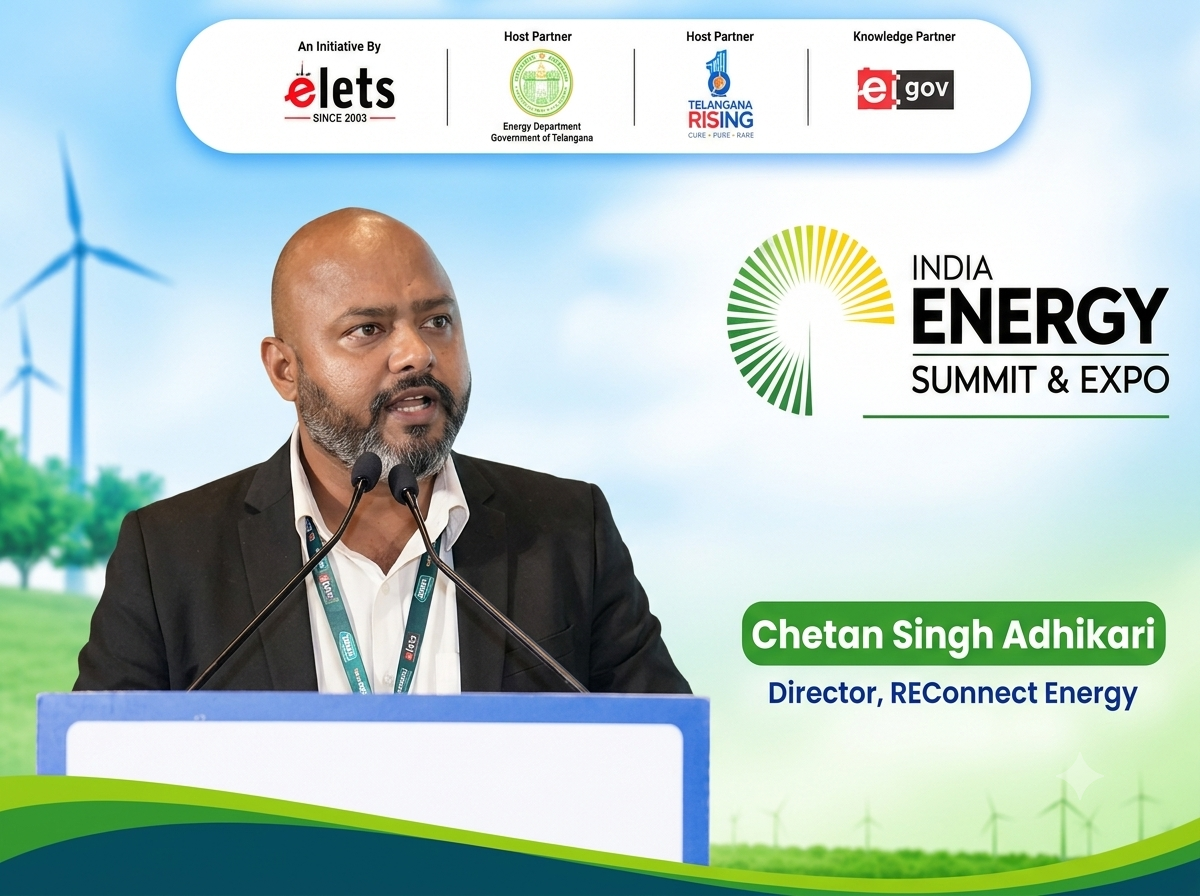
Insights shared by Chetan Singh Adhikari, Director, REConnect Energy, at the India Energy Summit and Expo 2026, held on 18-19 August 2026, Hyderabad

Be a part of Elets Collaborative Initiatives. Join Us for Upcoming Events and explore business opportunities. Like us on Facebook , connect with us on LinkedIn and follow us on Twitter, Instagram.
"Exciting news! Elets technomedia is now on WhatsApp Channels Subscribe today by clicking the link and stay updated with the latest insights!" Click here!