 News




Article
Energy Security Is Development Security: Building a Sustainable Future Through Global Partnerships
Energy Security Is Development Security: Building a Sustainable Future Through Global Partnerships
![]() By
Samuel Raj 26-November-2026


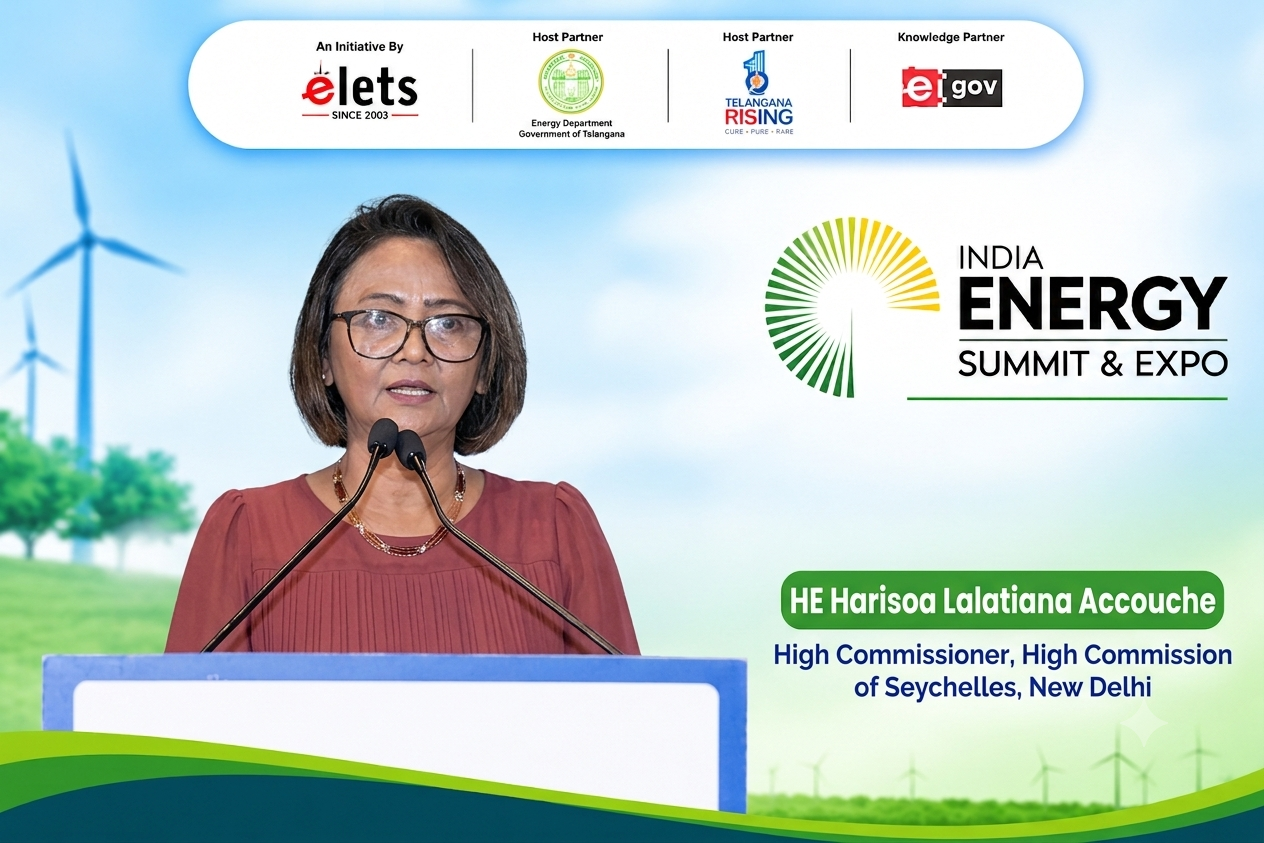
When I look at the future of energy, I see a transformation that extends far beyond the electricity sector. Energy is no longer simply an infrastructure requirement; it is directly connected to national security, economic competitiveness, technological advancement and human development. It powers industries, connects communities, enables digitalisation, supports healthcare and education, creates employment and drives innovation. Without reliable and affordable energy, it becomes difficult for any country to achieve its broader development ambitions.
This is particularly relevant as India advances towards its vision of Viksit Bharat. We are not speaking only about economic growth. We are speaking about building a nation that is technologically advanced, inclusive, sustainable and capable of contributing to global progress. Energy security must therefore become a central pillar of our development strategy.

I believe the discussions taking place at platforms such as this summit are important because they bring together the questions that will shape the future of our economies and societies. Renewable energy, grid modernisation, energy storage, green hydrogen and sustainable infrastructure are no longer separate subjects. They are interconnected priorities that will determine how successfully we navigate the next phase of economic transformation.
Energy Security Is Central to National Development
India’s scale and development ambitions make its energy transition particularly significant, not only for the country but also for the wider region and the world.

As economies grow, their energy requirements increase. Industries need dependable electricity, digital infrastructure requires continuous power, and communities need access to affordable energy to improve their quality of life. Energy security is therefore inseparable from economic security and national competitiveness.
For a state such as Telangana, this opportunity is particularly important. Hyderabad has emerged as a major centre for technology, innovation, pharmaceuticals, aerospace, startups and advanced industries. Such an economy requires energy that is not only abundant but also reliable, affordable, clean and resilient.
The challenge before Telangana is to build an energy ecosystem that supports economic expansion while remaining aligned with sustainability objectives. This means accelerating renewable energy deployment, modernising electricity grids, strengthening storage capacity, improving energy efficiency and creating an enabling environment for emerging technologies.
However, the energy transition must also remain people-centred. A successful transition should create opportunities for young people, encourage entrepreneurship, strengthen local skills and ensure that the benefits of clean energy reach communities across the state and beyond.
We must ensure that the transition is not simply about changing the sources from which electricity is generated. It must also improve livelihoods, create new industries and make development more inclusive.
Moving From Energy Transition to Energy Transformation
The world is gradually moving from an energy transition towards a broader energy transformation. Solar, wind, green hydrogen, battery storage, smart grids, electric mobility and digital technologies are changing the architecture of energy systems.
But technology alone will not be sufficient to achieve this transformation. We also need strong partnerships.
These partnerships must operate at several levels: between governments and industries, between established companies and startups, and between developed and developing countries. Cooperation across regions and continents will also be essential.
India has an opportunity to demonstrate global leadership by combining its growing technological capabilities with its experience in renewable energy deployment and sustainable infrastructure development.
The objective should be to ensure that innovation does not remain limited to individual projects or isolated markets. We need solutions that can be replicated, scaled and adapted to different economic and geographical conditions.
This is particularly important when we consider the needs of smaller and more vulnerable economies.
India and Seychelles: A Partnership With Shared Sustainability Priorities
From the perspective of Seychelles, the energy transition has a particularly important development dimension. As a Small Island Developing State (SIDS), Seychelles is highly vulnerable to the effects of climate change and external economic shocks.
For us, sustainable development is not an abstract concept. It is directly connected to economic security, environmental resilience and the well-being of our people.
Our geographical circumstances require us to place the blue economy, renewable energy, climate resilience and environmental stewardship at the centre of our national development agenda.
India and Seychelles share a strong commitment to sustainable development, and our partnership offers an opportunity to exchange experiences, technologies and solutions.
During the recent state visit of Prime Minister Narendra Modi to Seychelles in June, India’s growing capabilities in renewable energy, digital public infrastructure, innovation and climate-resilient infrastructure were of considerable interest. These areas offer meaningful opportunities for cooperation between our countries.
At the same time, Seychelles brings valuable experience in ocean governance, marine conservation and the sustainable management of island ecosystems.
I believe our bilateral relationship should increasingly embrace cooperation in clean energy, climate resilience and sustainable technologies alongside traditional areas of partnership.
The Indian Ocean provides another important dimension to this relationship. It connects India, Seychelles and several other countries through maritime routes, energy flows and shared environmental challenges. A secure and sustainable Indian Ocean requires cooperation among the countries of the region.
Energy security must therefore become an essential component of our regional partnership. We should explore opportunities in renewable energy technologies, energy-efficient infrastructure, green mobility, smart solutions and innovative financing mechanisms that can benefit island and coastal economies.
Financing the Transition Must Become a Priority
One of the most important challenges facing developing countries and Small Island Developing States is access to affordable and appropriate financing.
The transition to clean energy requires significant investment across generation, transmission, storage, technology infrastructure and human capital. Even when the technologies are available, the ability to finance and implement them remains a major constraint for many countries.
For smaller economies, this challenge is particularly pronounced. Limited land resources, infrastructure constraints and smaller domestic markets can make large-scale energy projects difficult to develop.
This is why we need stronger partnerships among governments, development institutions, private investors, technology providers and multilateral agencies.
We must move beyond isolated projects and focus on solutions that can be scaled and replicated across different markets.
Innovative financing models will be essential. They can help mobilise private investment, reduce project risks and make clean energy infrastructure more accessible to countries that need it most.
We must also ensure that financing reaches the entire energy ecosystem rather than focusing only on electricity generation. Transmission networks, energy storage, technology adoption and skills development are equally important components of a successful transition.
Green Hydrogen Can Create New Industrial Opportunities
Green hydrogen deserves particular attention because it has the potential to transform sectors where direct electrification may be difficult.
It can support industrial decarbonisation while creating new opportunities in manufacturing, technology development and exports. India’s investment in this area can contribute not only to domestic emission reduction but also to the emergence of new global clean energy supply chains.
For countries such as Seychelles, the important question is how emerging technologies can be adapted to local realities. Land availability, infrastructure requirements, financing conditions and the scale of domestic energy demand must all be considered before adopting new solutions.
We cannot assume that every technology or business model developed in a large economy will automatically work in a small island economy.
Instead, we must encourage cooperation that allows countries to identify suitable technologies and adapt them to their specific circumstances. This is where international partnerships and knowledge-sharing platforms become especially valuable.
Telangana Can Become a Platform for Sustainable Innovation
Telangana’s economic ambitions and technological capabilities provide an important opportunity to demonstrate how economic growth can move alongside environmental responsibility.
The state has developed a strong position in technology, pharmaceuticals, startups and advanced industries. Its next phase of development can build on these strengths by integrating renewable energy, energy storage, modern grids and sustainable infrastructure into its growth strategy.
I see Telangana as a potential laboratory for demonstrating how economic ambition can be combined with environmental responsibility and technological innovation.
Such an approach can generate lessons that extend beyond the state and contribute to India’s broader energy transition. It can also create opportunities for international collaboration, particularly with countries looking for practical solutions in renewable energy, climate resilience and sustainable infrastructure.
For Seychelles, engagement with India and Telangana offers an opportunity to explore these developments, understand emerging technologies and identify areas where our countries can work together.
I would also like to extend an invitation to Indian investors to consider Seychelles for investment and collaboration in these sectors. Our strategic location and development priorities create opportunities for partnerships in clean energy and sustainable infrastructure.
Despite our relatively small size, Seychelles has demonstrated that ambition and focused action can deliver meaningful progress. We are proud of our development achievements, including our strong economic and literacy indicators within the African context. Size should not determine the scale of our aspirations.
Building an Inclusive and Resilient Energy Future
As we look ahead, I believe the future energy system must be sustainable, inclusive and intelligent.
It must be secure enough to support national development, sustainable enough to protect our planet, inclusive enough to ensure that no community is left behind and intelligent enough to make effective use of technology, data and innovation.
This requires us to connect our energy ambitions with our wider development ambitions. The energy transition should not be viewed merely as a response to climate change. It should be recognised as an opportunity to create a more prosperous, resilient and equitable future.
For India, Seychelles and the wider Indian Ocean region, cooperation will be central to achieving this objective. We must strengthen partnerships in clean energy, climate resilience, innovation, skills development and sustainable infrastructure.
I look forward to seeing the discussions at this summit translated into meaningful partnerships, investments, innovations and measurable outcomes.
Seychelles is ready to be a partner in this journey. I invite Indian businesses, investors and technology providers to explore the opportunities before us and work with us to build solutions that serve our people and contribute to a more sustainable world.
Ultimately, energy transformation is not only about powering economies. It is about creating opportunities, strengthening resilience and improving lives. If we can bring our ambitions, resources and capabilities together, we can make the clean energy transition a powerful driver of shared prosperity.
——————————–
Insights shared by HE Harisoa Lalatiana Accouche, High Commissioner, High Commission of Seychelles, New Delhi , at the India Energy Summit and Expo 2026, held on 18-19 August 2026, Hyderabad

Be a part of Elets Collaborative Initiatives. Join Us for Upcoming Events and explore business opportunities. Like us on Facebook , connect with us on LinkedIn and follow us on Twitter, Instagram.
"Exciting news! Elets technomedia is now on WhatsApp Channels Subscribe today by clicking the link and stay updated with the latest insights!" Click here!