 News




Article
TGNREDCL: Accelerating Telangana’s Renewable Energy Revolution
TGNREDCL: Accelerating Telangana’s Renewable Energy Revolution
![]() By
Samuel Raj 23-October-2026


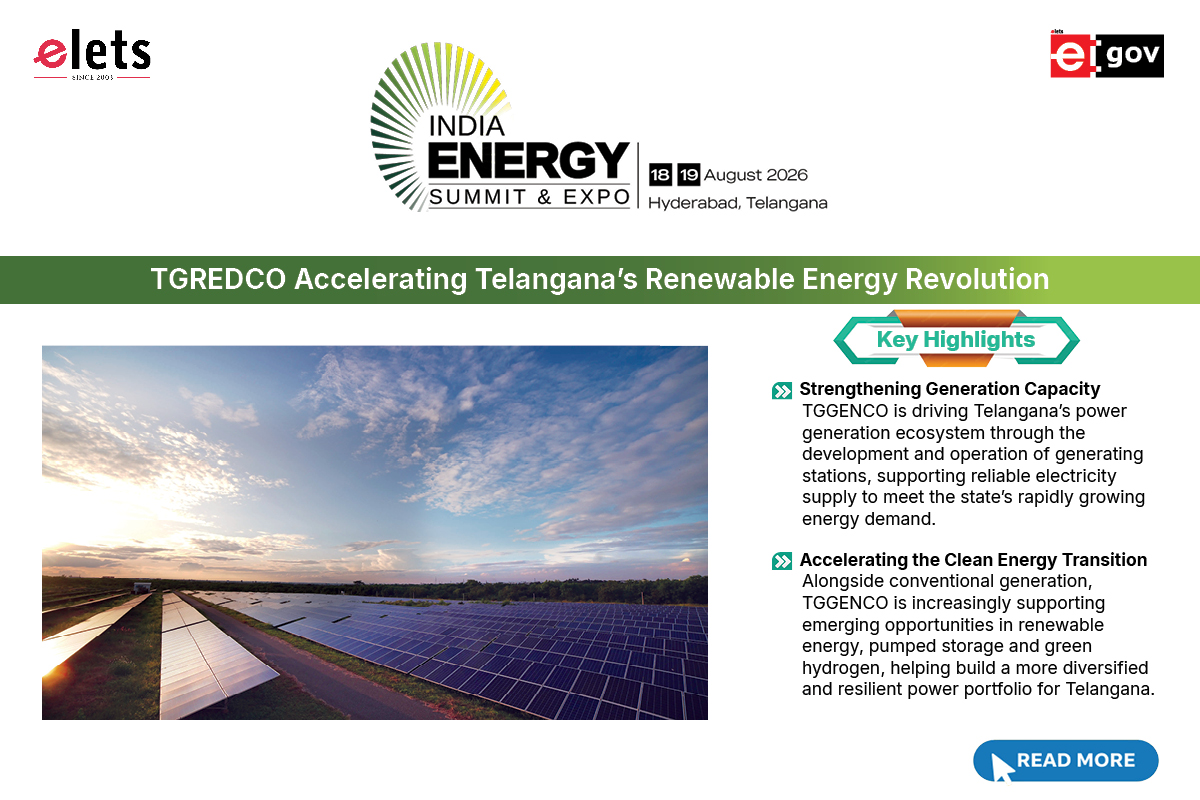
The Telangana New & Renewable Energy Development Corporation Limited, known for years as TSREDCO and more recently as TGREDCO before its renaming, functions out of Visvesvaraya Bhavan on the Institution of Engineers campus in Khairatabad, Hyderabad. From this address, the corporation has been designated the state’s nodal agency for solar power, rooftop installations, energy efficiency, electric vehicle infrastructure and, increasingly, green hydrogen. Where TGGENCO builds and runs generating stations, TGNREDCL’s task is different: it designs schemes, empanels vendors, disburses subsidies and coordinates with distribution companies so that homes, offices and factories across the state can generate and consume clean power on their own premises.
Solar and Rooftop Solar Programmes

Solar remains the corporation’s largest single portfolio. Telangana’s solar rooftop programme already covers government buildings, schools, hospitals and heritage sites, and TGNREDCL runs it through empanelled vendors under net-metering rules that let consumers offset their own bills with power fed back to the grid. Current tenders illustrate the spread of this work: rooftop systems are being installed at pilgrimage sites in Bhadrachalam and Parnasala, at the Ramappa interpretation centre in Mulugu district, and at government office buildings in Hyderabad itself, including the Forest and Eco-Tourism Development Office at Kothaguda. A separate, larger initiative is rolling out an aggregate 46,705 kW of rooftop solar across 9,937 government schools statewide, alongside ground-mounted solar installations feeding 18 substations across nine districts under a capital-expenditure rate-contract model. The corporation also implements the central government’s PM-KUSUM scheme, which extends solar pumping and grid-connected solar capacity to farmers, and continues to process off-grid solar water heating and solar street-lighting programmes that predate the current renewable push but remain in active use across the state.
Energy Efficiency

Energy efficiency work is carried out in coordination with the Bureau of Energy Efficiency, the central agency that designates State Designated Agencies in each state to enforce and promote efficient energy use. TGNREDCL has sought professional manpower support to strengthen this function, and a state energy efficiency action plan prepared with the Bureau’s involvement has proposed measures such as a directory of energy service companies for industry, financial incentives for performance-contracting arrangements, and green public-procurement guidelines developed with the state’s industries and commerce department. On the built-environment side, TGNREDCL and the Telangana government are jointly developing a six-storey office building in Hyderabad, shared with the Telangana State Southern Power Distribution Company, designed to be a grid-interactive, super energy-conservation-building-code-compliant net-zero energy building. The building is expected to generate its own power through a rooftop solar plant of about 179 kW, producing roughly 271,360 units annually while remaining connected to the grid to help balance demand during peak hours, a demonstration project the corporation hopes will guide similar retrofits of government buildings elsewhere in the city and the state.
The EV Ecosystem
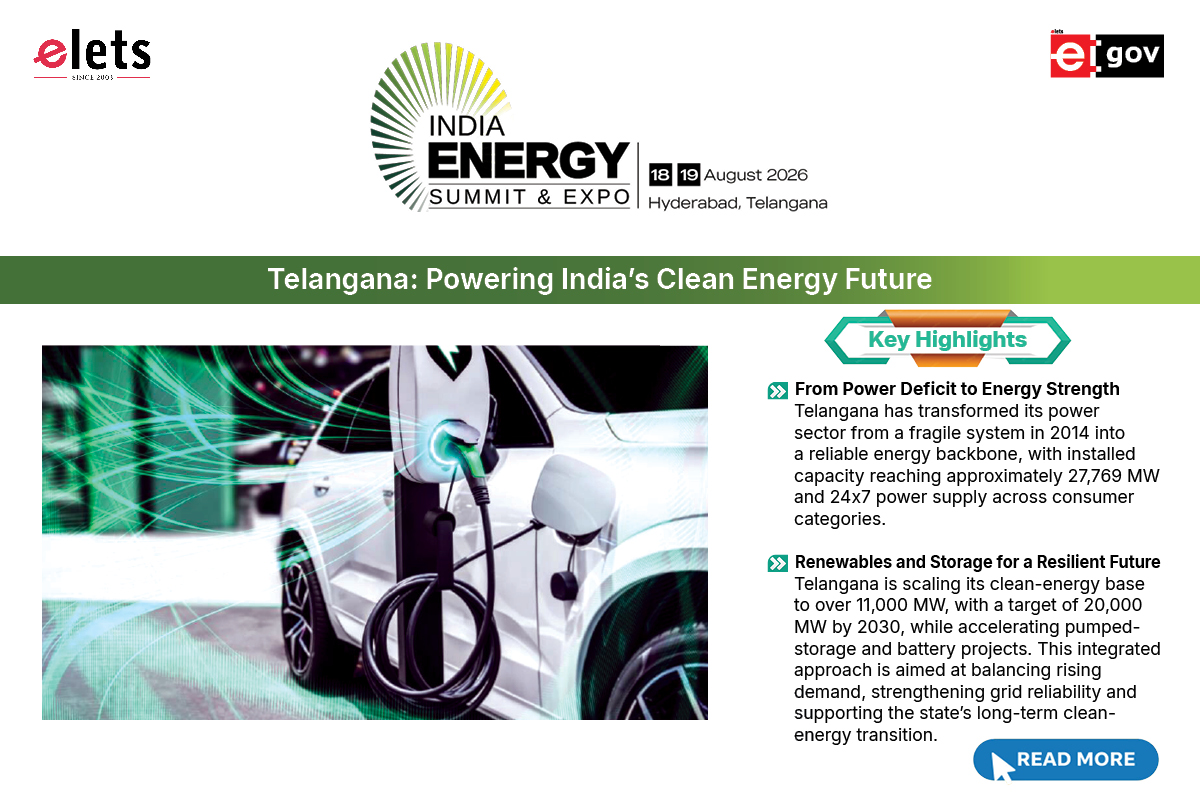
Electric mobility is the fastest-growing part of TGNREDCL’s remit. The Telangana Electric Vehicle and Energy Storage Policy, in force since 2020 and running through 2030, names the corporation as the state nodal agency responsible, in coordination with the distribution companies, for ensuring renewable power supply to charging stations and for supporting rooftop solar at charging sites under net-metering rules. The policy’s stated ambition is to attract four billion dollars in investment and create more than a hundred thousand jobs through EV manufacturing, charging infrastructure and shared mobility, while offering exemptions on road tax and registration fees for early adopters across two-wheelers, autos, taxis and buses. Implementation touches Hyderabad directly: the policy encourages charging and swapping points at Hyderabad Metro Rail stations and TSRTC bus depots for last-mile connectivity, and residential townships of a thousand or more families are encouraged to build dedicated charging bays. State officials have pointed to several hundred charging stations already operational, with the government’s broader Clean and Green Energy Policy setting a target of 6,000 electric vehicle charging stations by 2030 and 12,000 by 2035, a build-out that TGNREDCL is expected to support by ensuring renewable power is available at charging points as the network expands from the city outward to highway corridors connecting Hyderabad to Bengaluru, Mumbai and Chennai.
Green Hydrogen and Emerging Programmes
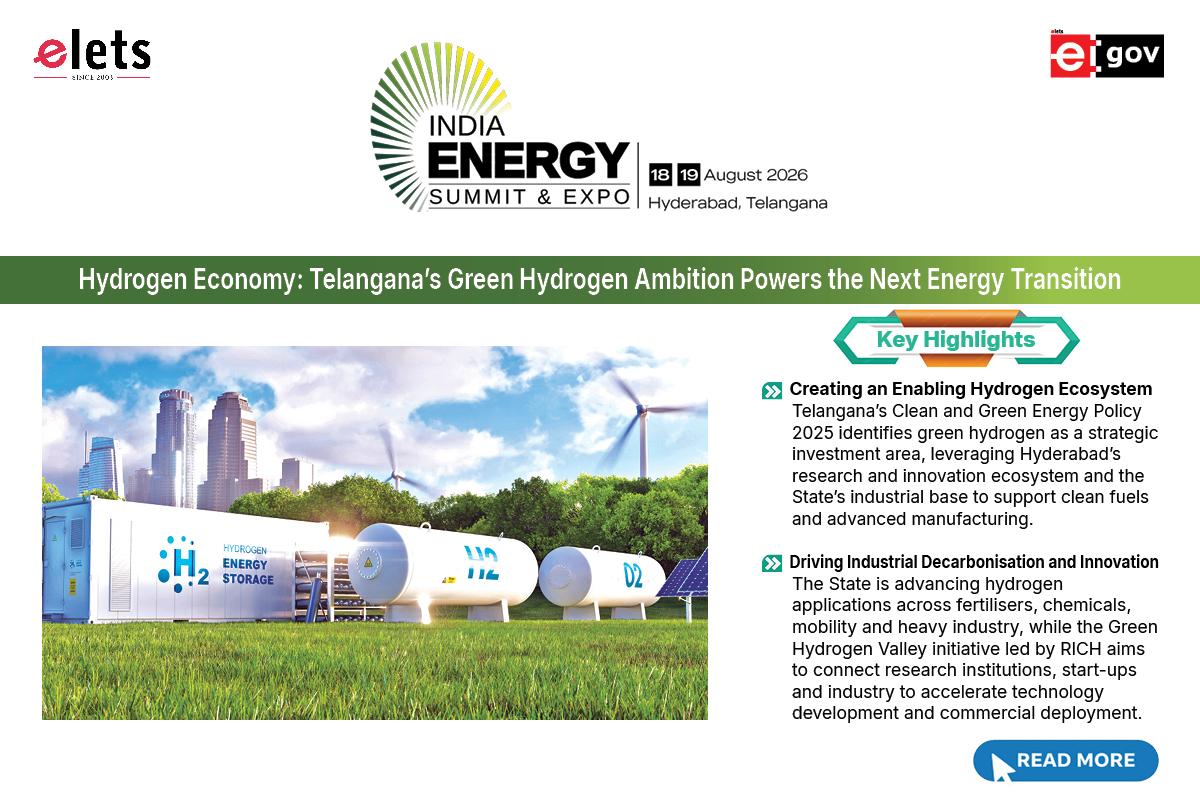
Green hydrogen is the newest addition to the corporation’s brief. State planning documents propose a dedicated Green Hydrogen Fund offering low-interest loans and grants for domestic fuel-cell manufacturing, alongside priority-sector lending for companies engaged in hydrogen fuel production, and a phased plan for hydrogen fuelling stations along key transport routes. The state’s Clean and Green Energy Policy backs this with capital subsidies of up to thirty per cent on electrolyser stack and equipment costs for green hydrogen, green ammonia and green methanol production, disbursed over five years and capped per project, with TGNREDCL working alongside TGGENCO as a nodal agency for the policy’s implementation. Floating solar and further pumped-storage integration at existing hydel sites are also under consideration as advanced options the corporation is expected to help evaluate, extending its role well beyond conventional rooftop solar toward the newer technologies the state is betting on to meet electricity demand projected to more than double by the mid-2030s.
Beyond the flagship schemes, TGNREDCL also administers a long tail of smaller renewable initiatives that rarely make headlines but keep the corporation’s field offices busy across the state. These include solar-powered street lighting and lantern schemes for villages with unreliable grid connections, small wind rooftop pilots on public buildings such as the state electricity regulator’s office in Hyderabad’s Kalyan Nagar, and an empanelment list of several dozen solar contractors and system integrators, many of them based in and around Hyderabad, who carry out the rooftop and ground-mounted installations tendered by the corporation. This empanelment model, in which private vendors bid for standardised, subsidy-linked contracts rather than the corporation building capacity itself, is the operating pattern that runs through nearly all of TGNREDCL’s programmes, from rooftop solar to EV charging to the green hydrogen incentives now being framed.
Conclusion
As Telangana accelerates its transition towards a cleaner and more resilient energy system, TGNREDCL is emerging as the institution that connects policy with implementation. By coordinating rooftop solar deployment, advancing energy efficiency, supporting the expansion of EV charging infrastructure and facilitating emerging technologies such as green hydrogen, the corporation is helping translate the state’s clean energy ambitions into measurable outcomes. While power generation remains the responsibility of utilities, TGNREDCL’s role as planner, facilitator and implementation partner will be central to ensuring that Telangana’s renewable energy transition is inclusive, scalable and aligned with its long-term sustainability goals.
—————————————————————————————————————————
Written by: Divya Tyagi | Elets News Network (ENN)

Be a part of Elets Collaborative Initiatives. Join Us for Upcoming Events and explore business opportunities. Like us on Facebook , connect with us on LinkedIn and follow us on Twitter, Instagram.
"Exciting news! Elets technomedia is now on WhatsApp Channels Subscribe today by clicking the link and stay updated with the latest insights!" Click here!