 News




Article
Telangana’s Power Sector at a Turning Point: Why Grid Modernisation, Smart Metering and Energy Storage Matter
Telangana’s Power Sector at a Turning Point: Why Grid Modernisation, Smart Metering and Energy Storage Matter
![]() By
Samuel Raj 27-November-2026


When I look at the evolution of India’s power sector, I see a transformation that extends far beyond increasing electricity generation. Over the past two decades, we have strengthened our generation capabilities, expanded transmission networks, and introduced new technologies to improve the delivery of electricity. However, I believe we have now reached a critical turning point. The challenge is no longer simply about generating enough electricity; it is about how efficiently we can transmit, distribute, manage, and utilise the power available to us.
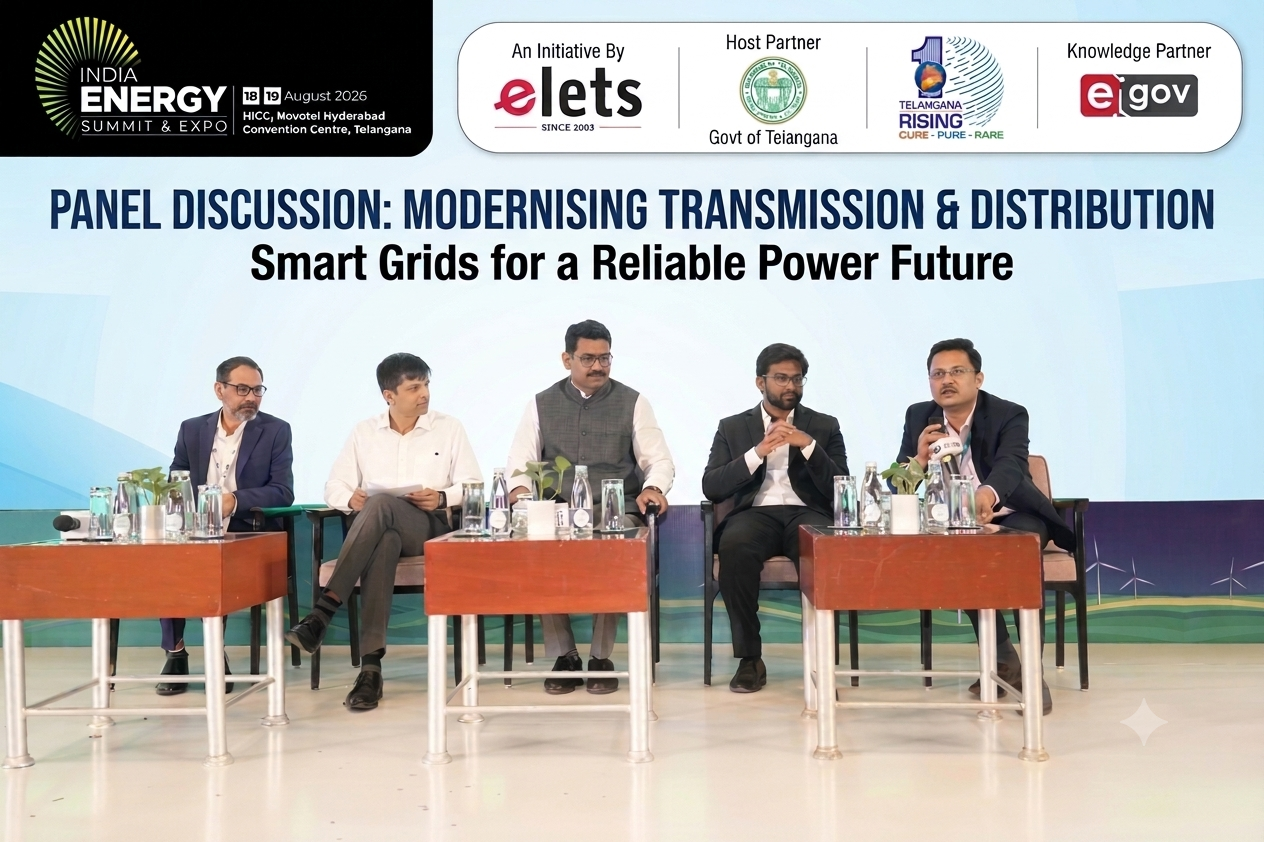
This shift was at the heart of our discussion on Telangana’s power sector, particularly its progress in grid modernisation, transmission upgrades, smart metering, and the integration of renewable energy. What emerged from the conversation was a clear understanding that the future of electricity will depend on our ability to build a smarter, more flexible, and financially sustainable power ecosystem.

For me, one of the most important observations was that the question facing Telangana has fundamentally changed. We are moving from asking where electricity will come from to determining how the available electricity can be effectively absorbed into the grid. This change reflects the broader transformation taking place across India’s energy landscape.
From Electricity Generation to Efficient Power Management

When we assess the progress of India’s power sector since the Electricity Act, 2003, I believe it is important to examine the achievements and challenges across generation, transmission, and distribution. While generation capacity has expanded significantly and transmission infrastructure has become increasingly interconnected, distribution continues to require sustained attention.
Telangana offers an important perspective on this transition. The state has made progress in strengthening its power infrastructure and integrating renewable energy into its electricity network. However, as renewable generation increases, the need for adequate transmission infrastructure, evacuation capacity, and energy storage becomes more pressing.
I believe that generating electricity is only one part of the larger equation. We must also ensure that the electricity produced reaches the places where it is needed, at the right time and with minimal disruption. This requires coordinated planning, faster infrastructure development, and effective collaboration between government departments, utilities, and industry.
Land acquisition, statutory permissions, and right-of-way clearances can influence the pace at which transmission infrastructure is developed. These challenges cannot be addressed by the power sector in isolation. They require a whole-of-government approach in which different stakeholders work together to ensure that infrastructure development keeps pace with changing energy requirements.
As we move towards greater renewable energy adoption, I see this coordination becoming even more important.
Grid Modernisation Must Go Beyond Technology
One of the key lessons I took away from the discussion was that grid modernisation does not always require us to begin with entirely new technologies. Sometimes, the most effective improvements come from changing the way we manage existing infrastructure and electricity demand.
Flexible tariffs and time-of-day pricing are important examples. By encouraging consumers to shift certain activities towards periods when electricity is more readily available, utilities can manage demand more efficiently and reduce pressure during peak hours. Such measures can offer operational and financial benefits without necessarily requiring immediate, large-scale infrastructure expansion.
At the same time, I recognise the growing importance of energy storage in the transition towards a renewable-powered grid. Battery energy storage systems and pumped-storage projects can help address the intermittent nature of solar and wind generation by storing electricity when it is available and making it accessible when demand rises.
What makes this period particularly exciting is the pace at which energy technologies are evolving. Advances in battery chemistry and storage systems could change the assumptions on which infrastructure investments are planned today.
For me, this reinforces the need to remain flexible. Our long-term planning must provide a stable direction while allowing us to adapt to technological breakthroughs, changing market conditions, and emerging energy requirements.
Building a Stronger Transmission and Distribution Network
As I consider the future of the power sector, I believe transmission and distribution infrastructure must evolve alongside generation capacity. A modern electricity network needs more than additional transmission lines. It requires better monitoring, reliable equipment, improved data management, and stronger coordination between different parts of the system.
The industry also faces supply-chain challenges. Certain critical components, including high-voltage direct-current equipment, converters, and smart meters, depend on specialised manufacturing capabilities and a limited pool of suppliers. As investment in power infrastructure accelerates, strengthening domestic capabilities and improving coordination between manufacturers, engineering companies, and utilities will become increasingly important.
I believe industry collaboration is essential to addressing these challenges. We must bring together technical expertise, operational experience, and reliable data to develop solutions that can be deployed at scale.
The growing adoption of electric vehicles, charging infrastructure, renewable energy, and smart-grid systems also demonstrates how quickly the requirements of the power sector are changing. Technologies that were once peripheral to electricity planning are now becoming integral to the design of future networks.
For Telangana and the country as a whole, the opportunity lies in preparing the infrastructure, workforce, and supply chain for this next phase of development.
Smart Metering and the Power of Data
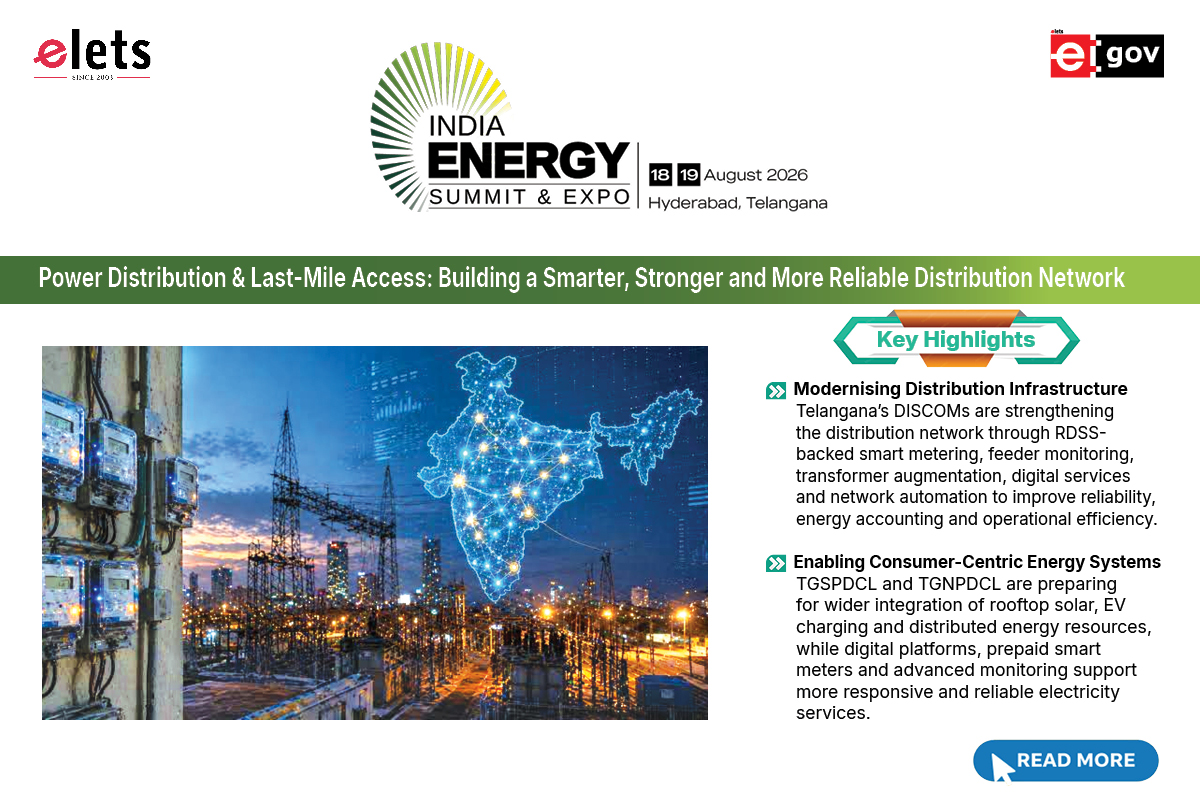
I see smart metering as one of the most important steps towards creating a more transparent, efficient, and responsive distribution system. Its value extends well beyond automated billing. When combined with digital monitoring and advanced analytics, smart meters can help utilities understand consumption patterns, identify interruptions, and improve their response to consumer grievances.
During our discussion, the experience of Telangana’s distribution utilities highlighted how data analytics and artificial intelligence are already helping improve operational decision-making. By analysing feeder-level performance, identifying recurring faults, and mapping individual consumers to the relevant transformers, poles, and substations, utilities can identify where interventions are needed most.
This approach can also support better capacity planning. Instead of relying solely on broad estimates, utilities can use more detailed information about transformer loading and network performance to determine where infrastructure needs to be strengthened.
I believe this represents a significant shift from reactive maintenance to more proactive power management.
Smart metering can further improve revenue collection, reduce opportunities for inaccurate categorisation, and provide consumers with greater visibility into their electricity usage. However, I would emphasise that technology alone cannot guarantee success. Its benefits depend on effective implementation, reliable communication systems, trained personnel, and the ability of utilities to act on the information they receive.
Telangana’s planned expansion of smart metering therefore presents an opportunity to strengthen both operational efficiency and consumer service.
Consumer Confidence Must Remain at the Centre
While discussing smart meters, I believe we must pay equal attention to consumer concerns. Questions about electricity bills, data privacy, remote disconnection, and the security of personal information are natural whenever a new technology changes the relationship between consumers and utilities.
We cannot expect people to embrace modernisation simply because it is technologically advanced. We must explain its benefits clearly, address genuine concerns, and establish transparent processes that build confidence.
Smart meters can provide consumers with better visibility into their electricity consumption and billing. Utilities can also use digital communication channels, helplines, and messaging platforms to make information more accessible. Clear explanations of billing calculations and timely responses to complaints can help reduce misunderstandings.
Data protection is equally important. As electricity systems become increasingly digital, utilities must maintain appropriate safeguards for consumer information and ensure that their data-handling practices comply with applicable privacy requirements.
I believe capacity building must accompany these changes. Employees need to understand new technologies, data-protection responsibilities, and the practical challenges of smart-meter deployment. Consumers, too, need accessible information that helps them understand how these systems work.
Ultimately, the success of grid modernisation will depend not only on the infrastructure we install but also on the trust we establish.
Making Distribution Financially Sustainable
For me, the financial health of distribution companies remains one of the defining issues in India’s electricity sector. Improvements in generation and transmission must translate into a distribution system that can deliver reliable power while maintaining commercial sustainability.
The discussion highlighted the potential of digitisation and data analytics to improve revenue realisation and identify areas where technical and commercial losses can be reduced. More accurate consumer mapping, improved metering, and targeted field interventions can help utilities identify inefficiencies that might otherwise remain unnoticed.
At the same time, I believe financial sustainability must be pursued without overlooking the needs of rural consumers, agricultural users, and other consumer groups that depend on government support.
The transition towards smart grids and modern metering systems should not create uncertainty about existing subsidies or future electricity costs. Governments and utilities must communicate clearly how consumer categories, tariffs, and support mechanisms will operate as the system evolves.
We must also recognise that infrastructure investments should be based on actual demand patterns rather than peak demand alone. In some areas, electricity demand rises sharply during a limited number of hours. Expanding the entire network to accommodate these short periods can be expensive.
Distributed storage, rooftop solar, and flexible demand management can help address such challenges. By combining local generation with appropriately designed storage solutions, utilities may be able to reduce peak loads and use existing infrastructure more efficiently.
I see this as an important opportunity to align operational efficiency with financial sustainability.
Renewable Energy and the Rise of the Prosumer
Another important development is the emergence of the prosumer: a consumer who both produces and consumes electricity. As rooftop solar and other distributed renewable energy sources expand, electricity will increasingly flow in both directions across the distribution network.
This creates new opportunities for consumers to participate more actively in the energy market. Depending on the applicable regulations and arrangements, surplus electricity could be used locally or supplied to the grid.
However, I believe this transition requires careful planning. Utilities must be able to forecast renewable generation, understand local consumption patterns, and manage the electricity flowing back into the network. Smart meters, weather forecasting, and improved grid monitoring can help make this possible.
We must also pay attention to power quality and network stability. Integrating distributed generation at scale requires appropriate technical standards, monitoring, and safeguards to ensure that electricity supplied by different sources does not compromise the wider system.
For Telangana, developing a framework that supports consumer participation while protecting grid reliability will be an important part of the energy transition.
Investing in People, Innovation, and Collaboration
As I reflect on the way forward, I believe the power sector must invest as much in people and institutional capabilities as it does in physical infrastructure.
Engineers, utility employees, technology providers, and policymakers need opportunities to exchange knowledge and learn from the experiences of other states. Smart-meter deployment, data security, artificial intelligence, and renewable integration all require specialised skills that must continuously evolve.
I also see considerable potential in collaboration with startups and innovation ecosystems. Rather than creating separate innovation structures for every sector, we can use existing platforms to bring entrepreneurs, researchers, industry leaders, and government agencies together. The objective should be to make it easier for promising ideas to find technical support, funding opportunities, and practical applications.
Greater engagement with residential communities, commercial establishments, and industrial consumers can also help unlock investments in rooftop solar, battery storage, and energy-efficient technologies.
In my view, the next phase of development will depend on how effectively we connect policy, technology, investment, and people.
Looking Ahead: Building a Future-Ready Power Sector
I am convinced that the future of India’s power sector will be shaped by flexibility, digitisation, reliability, and collaboration. Telangana’s experience demonstrates why these priorities must be addressed together rather than as separate initiatives.
We need transmission infrastructure that can accommodate growing renewable generation, distribution networks that can respond quickly to faults, smart meters that improve transparency, and storage systems that help balance supply and demand. Equally, we need financially sustainable utilities, capable professionals, and consumers who understand and trust the systems serving them.
For me, the central message is clear: the future of electricity is not simply about producing more power. It is about building an intelligent, responsive, and resilient ecosystem that can deliver electricity efficiently while supporting economic growth and the energy transition.
The technologies are evolving, consumer expectations are changing, and new opportunities are emerging across the value chain. Our responsibility is to ensure that infrastructure development, policy decisions, and institutional capabilities evolve at the same pace.
If we can achieve that alignment, I believe Telangana can continue strengthening its power sector while contributing to India’s broader ambition of building a reliable, modern, and sustainable energy future.
——————————–
Insights shared by: D. Krishna Bhaskar, Jitesh V. Patil, K. Varun Reddy, and M. Raghu Kumar at the India Energy Summit and Expo 2026, held on 18-19 August 2026, Hyderabad

Be a part of Elets Collaborative Initiatives. Join Us for Upcoming Events and explore business opportunities. Like us on Facebook , connect with us on LinkedIn and follow us on Twitter, Instagram.
"Exciting news! Elets technomedia is now on WhatsApp Channels Subscribe today by clicking the link and stay updated with the latest insights!" Click here!