 News
News




Article
Australia – India Renewable Energy Cooperation: Building Skills, Technology and Green Industrial Partnerships
Australia – India Renewable Energy Cooperation: Building Skills, Technology and Green Industrial Partnerships
![]() By
eletsnetzerofinal2025 14-August-2026
By
eletsnetzerofinal2025 14-August-2026


India’s rapid transition towards clean energy has drawn significant global attention, not only for the scale of its ambitions but also for the institutional capacity to translate vision into implementation. International partners increasingly view India as a key collaborator in the global energy transition. Among these partners, Australia has emerged as an important ally, working closely with India to strengthen cooperation in renewable energy, skill development, technology innovation, and emerging sectors such as green hydrogen.
The growing partnership between the two countries reflects both strategic alignment and complementary strengths. While India offers a large and dynamic workforce, expanding manufacturing capabilities, and ambitious renewable energy targets, Australia contributes advanced research expertise, technological innovation, and access to critical minerals essential for the clean energy ecosystem.

India’s Unique Governance Model For Energy Transition
One of the striking features of India’s development approach is the ability of its leadership and institutions to set ambitious national goals while maintaining strong execution at the operational level. Policymakers, administrators, and technical leaders often demonstrate the capacity to pursue large-scale national objectives while simultaneously addressing the granular challenges required to achieve them.

This governance approach has enabled India to undertake some of the most ambitious clean energy initiatives in the world. Targets such as expanding renewable energy capacity, scaling up rooftop solar installations, and advancing the hydrogen economy demand coordinated action across government departments, industry stakeholders, and the workforce. India’s institutional framework has proven capable of mobilising these actors and aligning them toward common goals.
Renewable Energy Partnership Between India And Australia
The deepening relationship between India and Australia has gained momentum through the Renewable Energy Partnership announced by the Prime Ministers of the two countries. The partnership identifies several strategic areas for collaboration, focusing particularly on skill development, technology exchange, and research cooperation.
A central component of this partnership is the recognition that India’s clean energy ambitions will require a massive skilled workforce. Achieving the country’s renewable energy targets, including the goal of reaching 500 gigawatts of non-fossil fuel capacity, will require a large number of trained professionals, technicians, and installers.
Training The Workforce For The Solar Revolution
One of the most immediate areas of cooperation between the two countries lies in solar energy skill development. India’s rooftop solar expansion, in particular, requires trained technicians capable of installing and maintaining solar systems at scale.
Estimates suggest that India may need to train nearly one million workers to support its renewable energy targets. Australia sees an opportunity to contribute to this effort by helping develop training programs that meet international standards while supporting India’s domestic energy transition.
Under this collaboration, training programs are being designed to align with both Indian and Australian vocational standards. The aim is to create a pool of skilled technicians who can work effectively within India while also possessing qualifications that are recognised internationally.
To support this initiative, a comprehensive training framework is being developed with the assistance of Australian knowledge partners. The program will involve extensive consultation with industry stakeholders from both countries to ensure that the curriculum reflects real-world industry needs.
Establishing Solar Training Academies
Alongside curriculum development, the partnership also includes the establishment of solar training academies across India. These academies will serve as centres of excellence where technicians can receive high-quality training in solar technology, installation, and maintenance.
The academies will bring together expertise from Indian industry, Australian educational institutions, and sectoral skill councils. Prominent Australian partners such as Deakin University and the Kangan Institute are expected to contribute their experience in vocational training and renewable energy education.
These academies aim to deliver skill development programs that combine technical expertise with practical industry exposure. By doing so, they will support India’s domestic solar expansion while also creating globally competitive renewable energy professionals.
Connecting Australian Research With Indian Manufacturing
Another pillar of the partnership focuses on technology collaboration. Australia has played a pioneering role in several renewable energy innovations, particularly in solar photovoltaic technology.
For example, the PERC (Passivated Emitter and Rear Cell) technology used in most modern solar panels was developed at the University of New South Wales by Professor Martin Green and his research team. Australia continues to maintain strong research capabilities in solar energy, hydrogen technologies, and advanced battery systems.
The partnership seeks to connect these research strengths with India’s growing manufacturing base. By facilitating collaboration between Australian research institutions and Indian manufacturers, both countries aim to accelerate the development and commercialisation of new clean energy technologies.
Australia’s national science agency, CSIRO, is coordinating outreach efforts to identify opportunities where research expertise can be paired with industrial production capabilities in India. Dedicated funding has also been allocated to support collaborative research projects and facilitate exchanges between scientists, engineers, and industry stakeholders.
Expanding Collaboration In Green Hydrogen
Green hydrogen represents another major area of cooperation between the two countries. Recognising the strategic importance of hydrogen in future energy systems, India and Australia established a bilateral Hydrogen Task Force in November 2023.
The task force brings together leading experts from government, industry, and research institutions in both countries. Its objective is to identify opportunities for collaboration across the hydrogen value chain, including production technologies, storage solutions, industrial applications, and skill development.
Australia has particular expertise in materials used in hydrogen technologies, including components required for electrolyser systems and advanced materials such as carbon fibre used for hydrogen storage. Collaborative research in these areas could help accelerate technological progress and reduce costs.
Industrial Applications: Methanol And Green Steel
The task force has also highlighted opportunities in industrial applications of green hydrogen, particularly in sectors such as chemicals and steel manufacturing.
One promising area is the production of green methanol, which can serve as a clean fuel for shipping and industrial processes. Port cities and industrial hubs offer significant potential for developing hydrogen-based chemical industries, enabling cleaner maritime fuel options and supporting the decarbonisation of global shipping.
Another key focus area is green steel. India is one of the world’s largest steel producers, and Australia has long been a major supplier of metallurgical coal used in India’s steel industry. As the global steel sector moves toward decarbonisation, both countries are exploring ways to transition toward hydrogen-based steel production.
Australia possesses substantial iron ore resources, including magnetite deposits that are well suited for producing direct reduced iron using hydrogen. One potential pathway involves producing hydrogen-based iron in Australia and exporting it to India, where it can be used by steel manufacturers to produce green steel.
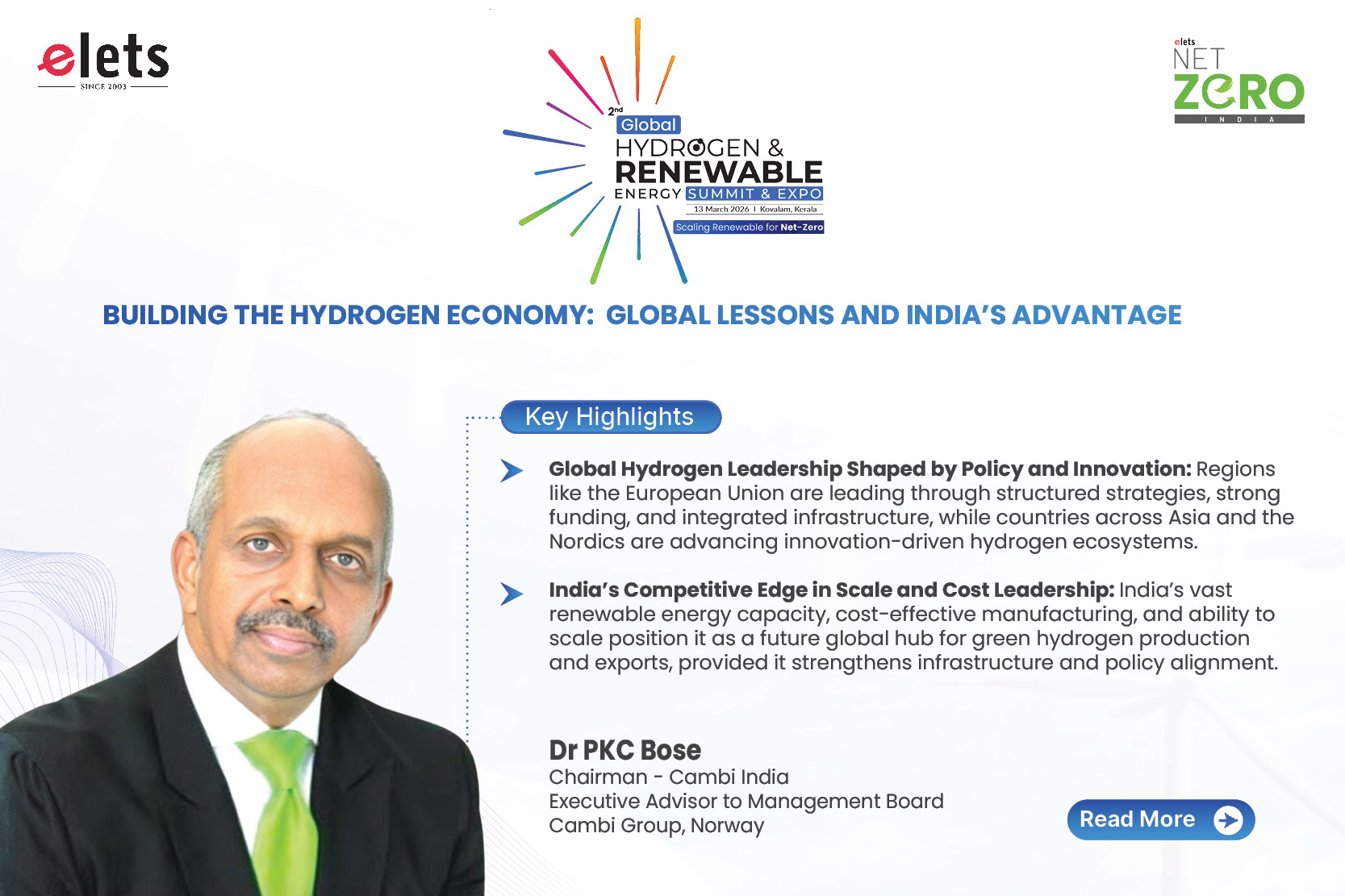
Also Read | Building the Hydrogen ECONOMY Global Lessons and India’s Advantage
Although green steel is not yet commercially competitive with conventional steel production, both countries see long-term potential in developing supply chains that support low-carbon steel manufacturing.
Critical Minerals For The Clean Energy Economy
Australia also plays a crucial role in supplying critical minerals needed for renewable energy technologies. The country possesses significant reserves of lithium, which is essential for battery manufacturing, as well as other minerals required for clean energy systems.
As India expands its electric mobility and battery storage industries, access to these resources will become increasingly important. Australia aims to support India’s transition by providing reliable supplies of critical minerals that can feed into India’s manufacturing ecosystem.
Similarly, Australian polysilicon could contribute to India’s solar manufacturing sector, strengthening supply chains for photovoltaic modules.
Expanding Skills Development In Hydrogen Technologies
Skills development remains a cross-cutting priority across all areas of cooperation. As the hydrogen economy evolves, new categories of technicians, engineers, and researchers will be required to support production, storage, transportation, and industrial use of hydrogen.
The existing solar training initiatives may therefore expand to include training programs focused on hydrogen technologies. Such programs could cover both manufacturing skills and operational expertise, helping prepare the workforce required for emerging hydrogen industries.
A Partnership For The Green Economy
The India–Australia partnership in renewable energy represents a broader shift in global economic cooperation. Rather than focusing solely on traditional trade relationships, the two countries are building collaborative frameworks that integrate research, manufacturing, skills, and resource supply.
Australia aims to remain an important partner in India’s energy and industrial development, not only in the conventional economy but also in the emerging green economy. From solar technology and battery minerals to hydrogen and green steel, the partnership seeks to build supply chains that support sustainable growth in both countries. As India advances toward its clean energy ambitions, partnerships such as this will play a vital role in accelerating innovation, strengthening workforce capabilities, and building resilient energy systems for the future.
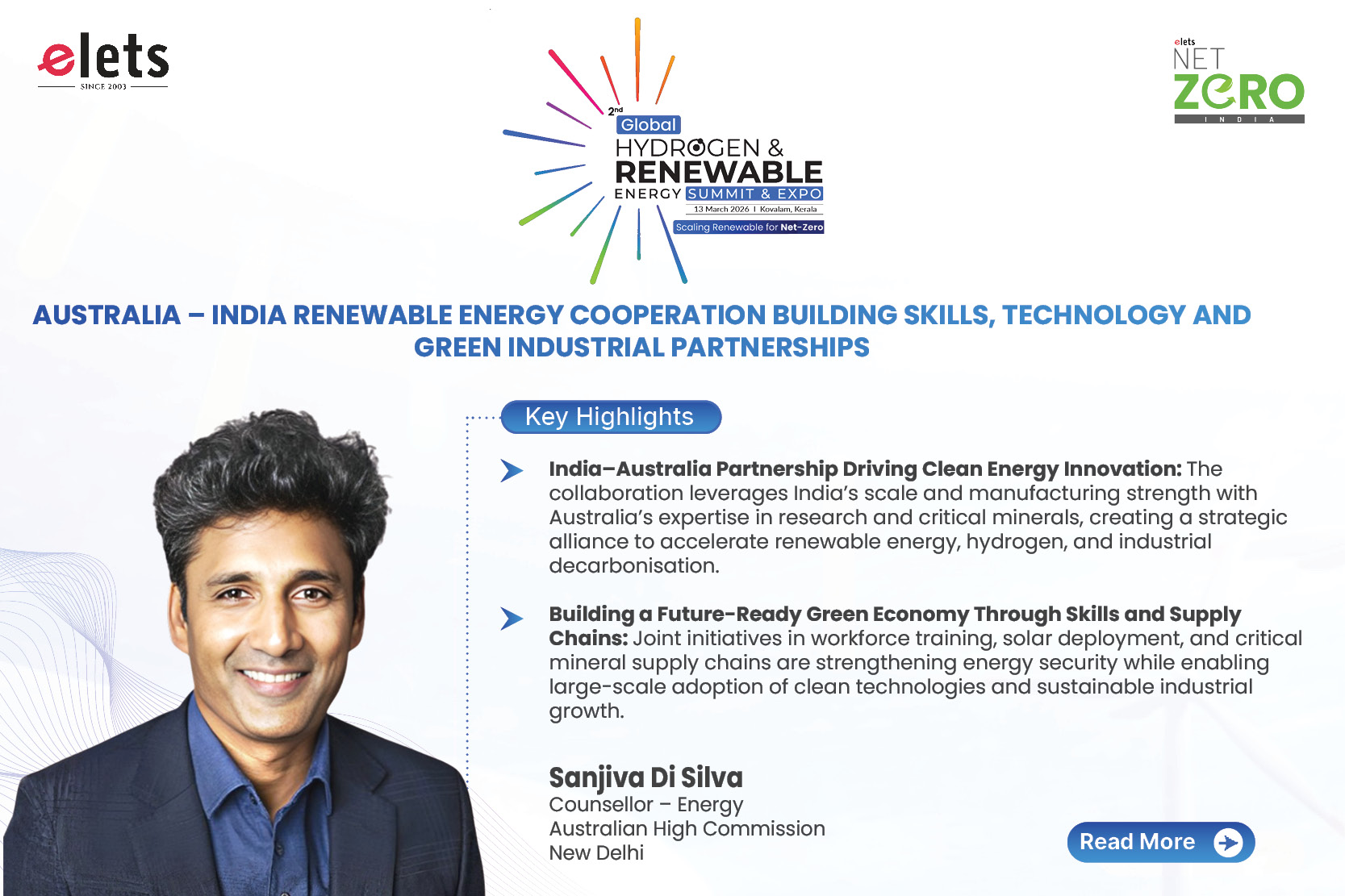
Insights shared by: Sanjiva De Silva, Counsellor – Energy, Australian High Commission, New Delhi, at the Global Hydrogen & Renewable Energy Summit on 12 March 2025 in Kochi, Kerala.

Be a part of Elets Collaborative Initiatives. Join Us for Upcoming Events and explore business opportunities. Like us on Facebook , connect with us on LinkedIn and follow us on Twitter, Instagram.
"Exciting news! Elets technomedia is now on WhatsApp Channels Subscribe today by clicking the link and stay updated with the latest insights!" Click here!