 News
News






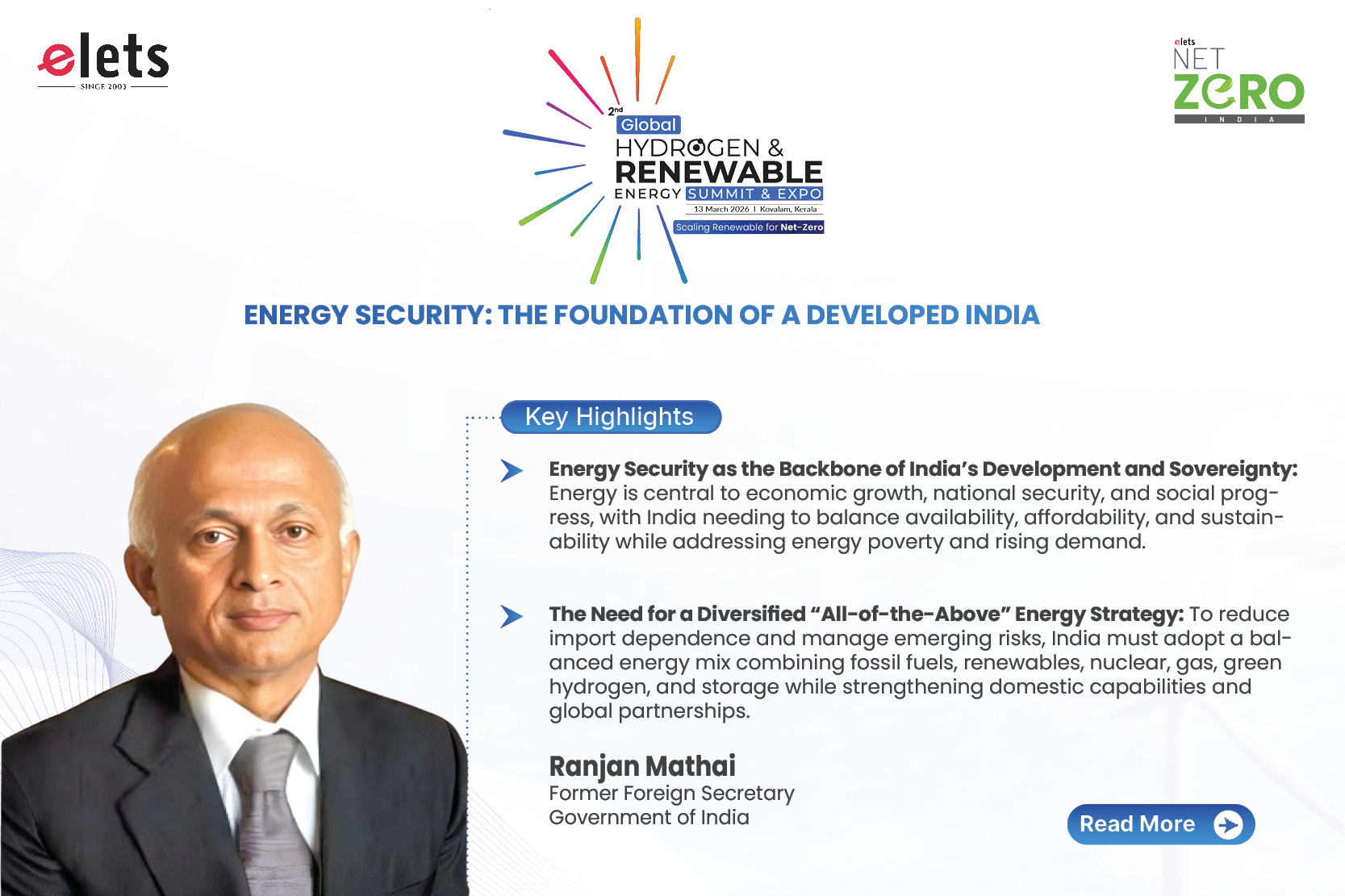
Energy is not merely a sectoral concern. It is the foundation of national survival, economic growth, technological advancement, and strategic autonomy. Any serious conversation about a developed India must begin with one central truth: development means energy, energy, and more energy.
Whether we speak of affordable healthcare, modern education, technological upgradation of agriculture and industry, digital infrastructure, efficient logistics, or defense preparedness, none of it is possible without secure, affordable, and sustainable energy supplies. Energy is the difference between stagnation and growth, between vulnerability and resilience.

Understanding Energy Security
The International Energy Agency defines energy security in two dimensions:

- Long-term security: Investments in energy supply aligned with economic development and environmental sustainability.
- Short-term security: The system’s ability to respond promptly to sudden disruptions in supply and demand.
Energy security, therefore, rests on three pillars: Availability, Affordability, & Sustainability Managing these three simultaneously has become increasingly complex. Technology, geopolitics, supply chain disruptions, corporate strategy, and even consumer behaviour are reshaping the global energy order. For India, this complexity is magnified by scale.
India’s Unique Energy Challenge
India is perhaps the first large country attempting to achieve three energy goals simultaneously:
- Ending energy poverty for over a billion people.
- Transitioning to cleaner energy in line with planetary responsibility.
- Maximising self-reliance amid geopolitical and geoeconomic uncertainty.
No other major power has attempted this triple transformation at the same time.
Stark Realities
- India represents 18% of the world’s population.
- We consume only about 6% of global primary energy.
- As a developed nation, this could rise to 12% or more.
- Over 100 million Indians still depend on firewood, charcoal, and dung for cooking and heating.
Any definition of energy security must include ending this energy poverty.
At the same time, electricity demand projections made just two years ago are already outdated. Digital transformation, artificial intelligence, and data centers are accelerating electricity consumption. A single AI-based query can consume multiple times the electricity of a conventional search. With GDP growth projected around 7% annually, future energy demand will exceed previous estimates.
Fossil Fuels: Present Realities and Strategic Risks
India’s energy mix remains about 80% dependent on fossil fuels, primarily coal, oil, and gas.
Coal
We have expanded domestic coal production and are investing in cleaner coal technologies and carbon capture. However, environmental costs and health impacts make long-term phase-down inevitable.
Oil
Oil security is critical:
- Nearly 90% of India’s oil is imported
- India is the fastest-growing oil importer globally
- Around 60% of imports pass through the Strait of Hormuz, a geopolitical choke point
- About 20% of export earnings are spent on oil imports
Energy import costs directly affect currency stability and trade balances. Strategic petroleum reserves must expand toward at least 60 days of supply to manage disruptions.
Gas
Natural gas is essential as a transition fuel, particularly for base-load power and fertilisers. Domestic production must increase while supply sources diversify, possibly through pipelines.
Even with aggressive electrification, projections suggest India may still require around 5 million barrels per day of oil in 2040. Electric vehicles are growing, but out of roughly 270 million vehicles, fewer than 10 million are electric.
Nuclear Energy: A Strategic Imperative
Nuclear energy must remain part of India’s long-term base-load strategy. India already operates a 700 MW indigenous reactor model, and long-term plans follow Dr. Homi J. Bhabha’s three-stage nuclear program:
- Light water reactors
- Fast breeder reactors
- Thorium-based reactors
Small Modular Reactors (SMRs) offer additional flexibility. Though nuclear energy faces criticism over costs and waste management, its long-term levelized cost declines significantly over time. As Dr. Bhabha famously observed, no power is as expensive as having no power.
The Energy Transition and New Vulnerabilities
The transition to renewables presents enormous opportunities but also new security challenges.
China currently dominates:
- Solar module manufacturing
- Wind turbine components
- EV battery production
- Processing of critical minerals
India cannot afford to replace dependence on Gulf oil with dependence on Chinese supply chains for critical minerals and renewable technologies.
Rare earth export controls in 2010 demonstrated how energy technologies can become geopolitical leverage. Energy transition must therefore include domestic manufacturing, mineral security strategies, and diversified supply chains.
Green Hydrogen and Infrastructure
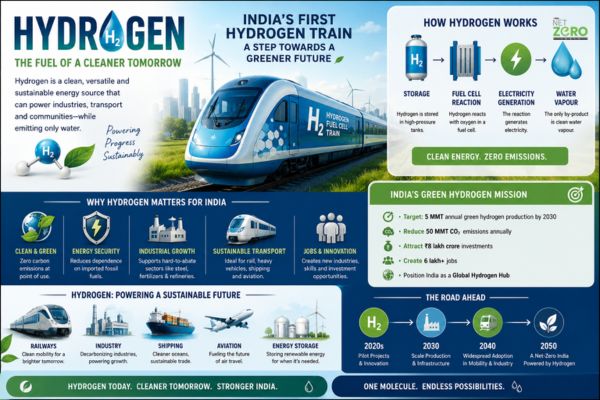
India is right to pursue low-cost green hydrogen. However, experts note that up to 60% of hydrogen costs lie in storage and transport infrastructure. Therefore, building viable, safe, and user-friendly infrastructure is as important as focusing on the “color” of hydrogen.
Hydrogen safety cannot be overlooked. Public understanding and regulatory frameworks must evolve alongside technological ambition.
Public Acceptance and the “All of The Above” Strategy
No single solution can guarantee energy security. India requires an “all of the above” strategy, combining:
- Fossil fuels (with cleaner technologies)
- Renewables (solar, wind)
- Nuclear
- Natural gas
- Hydrogen
- Storage systems
Every energy form requires infrastructure and environmental trade-offs. Wind farms face ecological criticism. Solar parks require large land areas. Nuclear faces safety concerns. Oil and gas extraction involves environmental risks.
Public awareness and transparent communication are essential to prevent every project from facing blanket opposition.
Climate Justice and Development Space
India must continue to demand climate justice in international negotiations. Nearly 95% of the global carbon budget for limiting warming to 1.5°C has already been exhausted—largely by developed economies over two centuries.
India needs development space. Energy is central to poverty eradication. As Indira Gandhi stated at the 1972 Stockholm Conference on the Human Environment, “Poverty is the worst form of pollution.”
Energy is the key to ending poverty. Without energy security, there can be no developed India.
Conclusion
Energy security is not an abstract or theoretical concept; it is the foundation upon which a nation’s stability and progress rest. It directly determines economic resilience by ensuring that industries, services, and digital infrastructure function without disruption. It underpins military preparedness, as defense capabilities rely heavily on assured fuel and power supplies. It safeguards currency stability, since heavy energy imports can strain foreign exchange reserves and destabilise trade balances. It drives industrial growth by powering manufacturing, logistics, and innovation ecosystems. Above all, energy security is central to poverty eradication, because reliable and affordable access to energy enables livelihoods, education, healthcare, and overall human development.
In an era of unrestricted geoeconomic competition, energy supply and pricing are strategic weapons. India must therefore combine self-reliance with global engagement, technological innovation with infrastructure investment, and sustainability with realism.
Energy security is the bedrock of national security. It is the foundation upon which a developed India must stand.
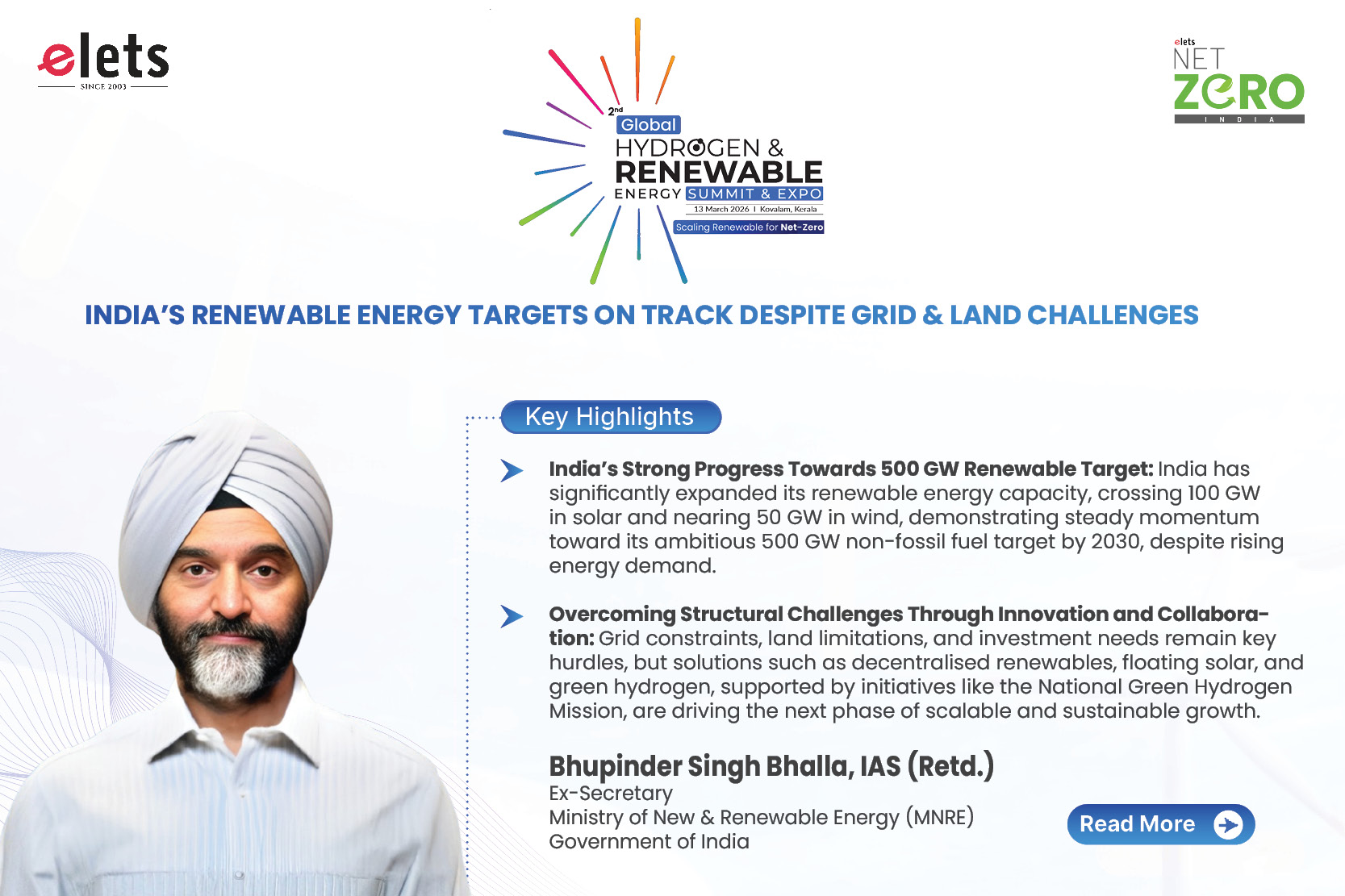
Insights shared by: Ranjan Mathai, Former Foreign Secretary of India, at the Global Hydrogen & Renewable Energy Summit 2025, held on 12 March, in Kochi, Kerala

Be a part of Elets Collaborative Initiatives. Join Us for Upcoming Events and explore business opportunities. Like us on Facebook , connect with us on LinkedIn and follow us on Twitter, Instagram.
"Exciting news! Elets technomedia is now on WhatsApp Channels Subscribe today by clicking the link and stay updated with the latest insights!" Click here!