 News
News





Article
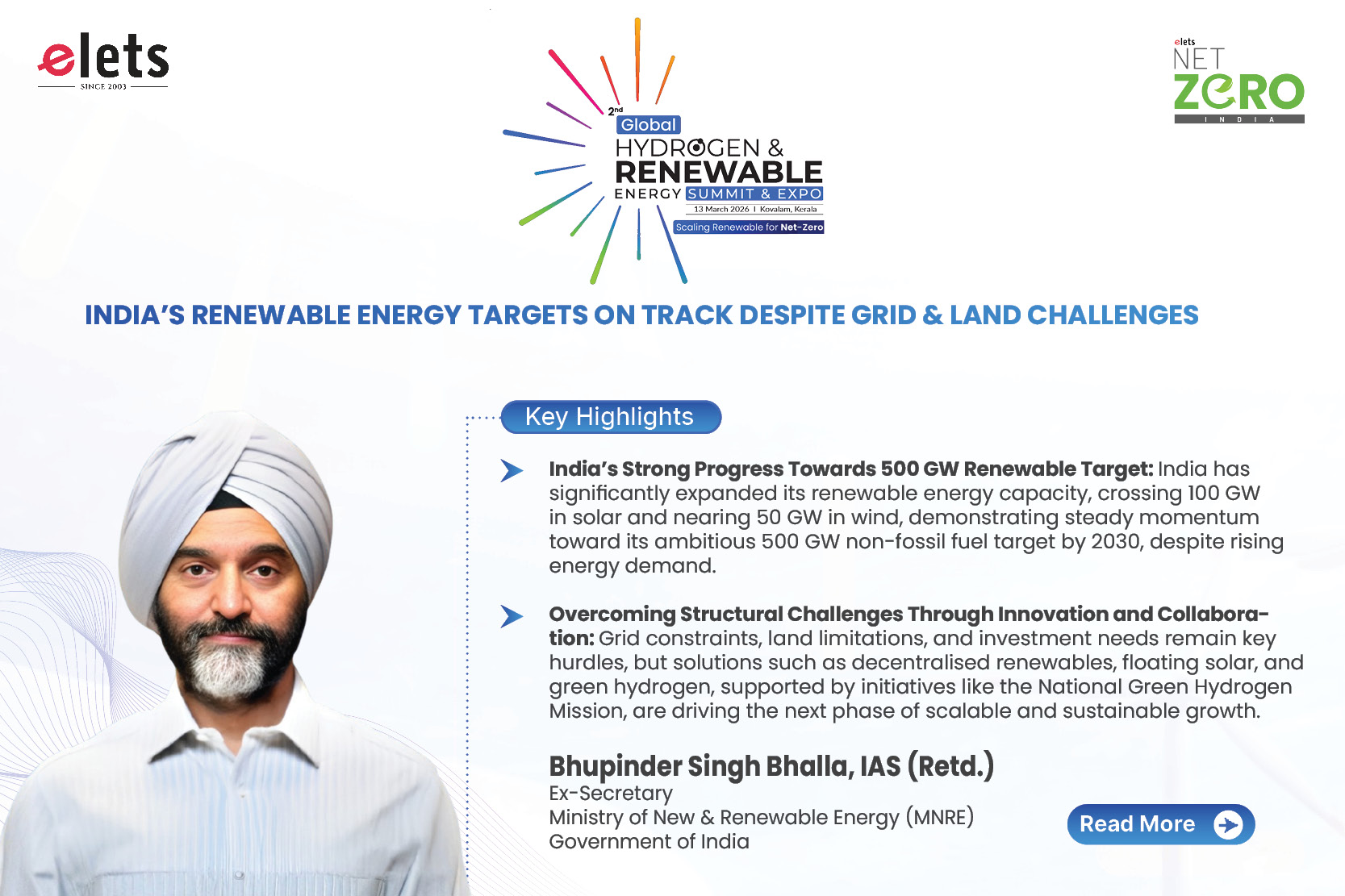
India’s Renewable Energy Targets on Track Despite Grid & Land Challenges
India’s Renewable Energy Targets on Track Despite Grid & Land Challenges
![]() By
eletsnetzerofinal2025 29-July-2026
By
eletsnetzerofinal2025 29-July-2026


Kerala has consistently been at the forefront of sustainability initiatives. The state has laid out ambitious targets and introduced innovative policies in the fields of renewable energy and green hydrogen.
India’s rapidly growing economy has led to a surge in energy consumption. Over the past two decades, energy use has doubled, and it is expected to grow by at least 25% by 2030. Presently, over 40% of India’s primary energy needs are met through imports, costing the country over USD 90 billion annually. Key sectors like mobility and industry continue to rely heavily on imported fossil fuels, underlining the urgent need to diversify the energy mix with renewable sources.

Progress in Renewable Energy Capacity
India has set an ambitious target of achieving 500 GW of non-fossil fuel electricity capacity by 2030. This is a significant leap from 75 GW in 2014 to around 222 GW by February 2025, with 215 GW already from renewable sources. Landmark milestones include:

- Crossing 100 GW of installed solar capacity
- Nearing 50 GW of wind energy capacity
- Reaching over 200 GW in total renewable capacity
However, achieving the 500 GW target in the next six years will be challenging. Conferences like this Global Hydrogen & Renewable Energy Summit are crucial in fostering discussion and finding pathways to bridge the gap. Currently, around 180 GW of renewable energy projects are under implementation, with another 80 GW tendered. Central agencies have begun issuing 50 GW in annual bids since April 2023, complemented by state-level tenders.
Addressing the Key Challenges
While the momentum is strong, several challenges persist:
- Grid Availability: Congestion in renewable-rich states like Rajasthan and Gujarat needs to be addressed through optimal grid planning and usage.
- Power Purchase Agreements (PPAs): Delays between project awards and PPAs can stall progress, creating uncertainty for developers.
- Land Constraints: Particularly for states like Kerala, innovative approaches such as floating solar policies are essential.
- Investment Requirements: From 2004 to 2014, India invested about 3 lakh crore (~USD 35 billion) in renewable energy. This doubled to around 7 lakh crore (~USD 80 billion) in the next decade. But the path to 2030 demands over USD 400 billion in investments across generation, transmission, and green hydrogen.
The Role of Green Hydrogen
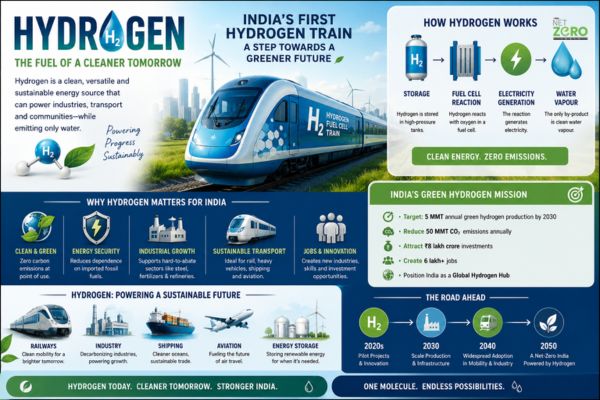
Green hydrogen is poised to play a vital role in decarbonising hard-to-abate sectors such as refining, fertilisers, steel, shipping, and long-haul transport. In January 2023, the Government of India launched the National Green Hydrogen Mission, earmarking 19,744 crore (~USD 2.5 billion), with 17,490 crore set aside for incentives.
Key Developments Under the Mission:
- Electrolyser Manufacturing: 4,440 crore awarded to support 3,000 MW capacity across 14 companies, with actual capacities expected to exceed this.
- Green Hydrogen Production: 5,300 crore allocated for just under 1 million metric tonnes per annum. Remarkably, the average incentive has dropped from 24/kg in the first tranche to 16.2/kg in the second, demonstrating increased market confidence and declining costs.
- Expanded Potential: Initially designed to support 1.3 MMT per annum, the revised cost dynamics may allow for support of an additional 1 MMT under the same budget.
- R&D and Standards: Over 400 R&D proposals and 100 Centre of Excellence proposals have been received. In standards and regulations, 91 out of 150+ recommended standards have been published, including unique India-specific benchmarks for hydrogen-powered two-wheelers.
Looking Ahead
To realise the vision of a sustainable, self-reliant energy future, India must continue addressing financing, infrastructure, regulatory, and innovation challenges. Collaboration among government bodies, states, industries, and international partners will be essential.
Kerala’s leadership in hosting this summit reflects the importance of regional efforts complementing national ambitions. With strategic planning, robust policy frameworks, and committed execution, India is well-positioned to meet its 2030 targets — both in renewables and green hydrogen — and emerge as a global leader in clean energy.
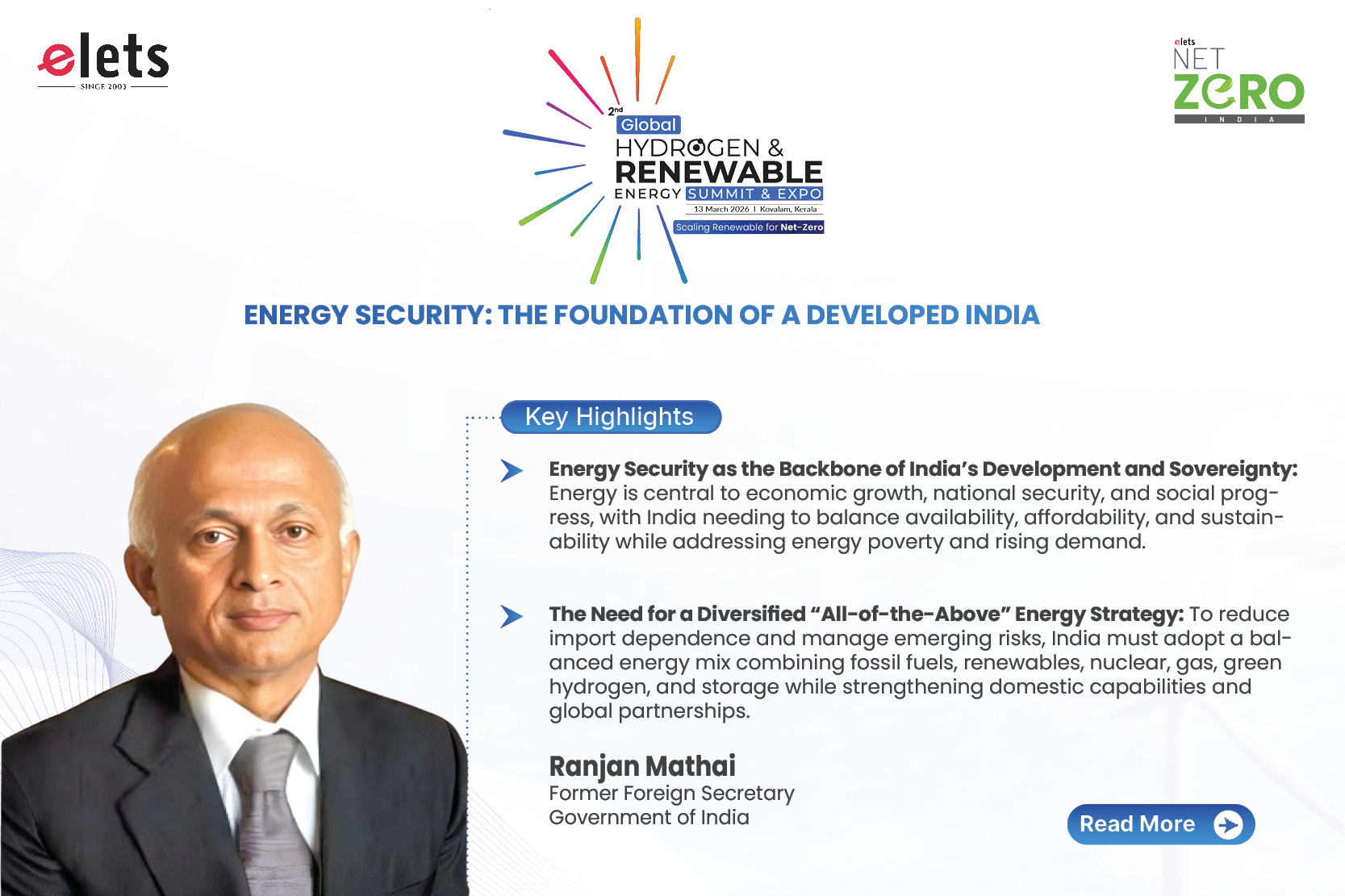
Insights shared by: Bhupinder Singh Bhalla, IAS (Retd.), Ex-Secretary, Ministry of New & Renewable Energy (MNRE), Government of India, at the Global Hydrogen & Renewable Energy Summit on 12 March 2025 in Kochi, Kerala.

Be a part of Elets Collaborative Initiatives. Join Us for Upcoming Events and explore business opportunities. Like us on Facebook , connect with us on LinkedIn and follow us on Twitter, Instagram.
"Exciting news! Elets technomedia is now on WhatsApp Channels Subscribe today by clicking the link and stay updated with the latest insights!" Click here!