 News
News




News
Uttar Pradesh is investing in renewable energy to drive growth in its industrial and agricultural sectors
Uttar Pradesh is investing in renewable energy to drive growth in its industrial and agricultural sectors
![]() By
Samuel Raj 10-October-2026
By
Samuel Raj 10-October-2026


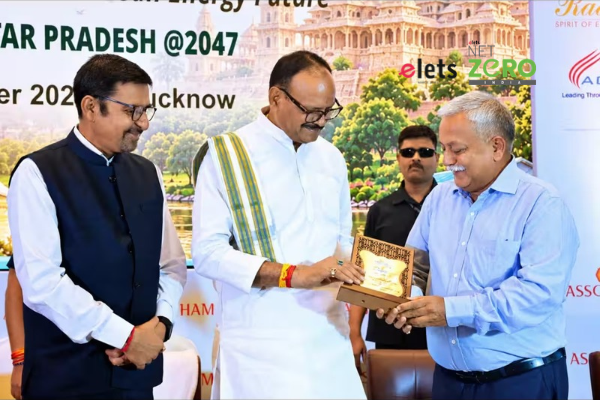
In order to strengthen the renewable energy ecosystem, Uttar Pradesh is looking to support the industrial expansion and agricultural growth, with the state government signaling continued investment in clean energy infrastructure, green hydrogen, and emerging energy technologies.
In Uttar Pradesh, Urja Sangam 2026, the focus was organized by the ASSOCHAM India, in association with the Uttar Pradesh and the New and Renewable Energy Development Agency (UPNEDA) and Invest UP. The event brought together government representatives, industry stakeholders, and financial institutions to discuss opportunities across manufacturing, project execution, and power offtake.
The momentum behind renewable energy is rapidly increasing
Shri Brajesh Pathak, the Deputy Chief Minister, who attended the event as the chief guest, stated that the state was stepping up investment in renewable energy, which he described as a priority sector. He also pointed out the expansion of the sector since 2017, including the establishment of the new distribution units and progress in the grid integration, as part of the state’s efforts to reduce carbon emissions.

In the event, he also highlighted India’s role in establishing the International Solar Alliance and underscored the importance of central government programs such as the PM Surya Ghar Muft Bijli Yojana and PM-KUSUM in advancing solar adoption.
He also stated that these were encouraging farmers to use available land for solar power generation while reducing their electricity costs. He also said that Uttar Pradesh had emerged as the country’s leading state in rooftop solor installations.
Biogas and renewable energy present exciting opportunities for investment
The advisor to the Chief Minister, Shri Awanish Kumar Awasthi, said that Uttar Pradesh has offered opportunities for investment in green energy, adding that the state was well placed to expand its sustainable energy ecosystem. He also expressed confidence in India’s potential to emerge as a global leader in the sector.
Emphasizing the vibrant compressed biogas (CBG) landscape, Awasthi noted that Uttar Pradesh boasts 37 CBG facilities either in operation or installed, collectively generating around 237 tonnes per day (TPD).
He highlighted the Centre’s GOBARdhan initiative, aimed at transforming cattle dung, agricultural byproducts, and various organic waste into valuable commercial goods such as biogas, compressed biogas, and organic fertilizers.
This initiative presents a promising opportunity to connect agricultural waste management with clean energy generation, opening new investment pathways, especially as the state strives to cultivate a more extensive ecosystem focused on bioenergy and other sustainable, low-carbon fuels.
The spotlight is on green hydrogen and electrolyzer technology
An essential discussion at the conclave delved into the realm of electrolyser manufacturing and the burgeoning field of green hydrogen. The dialogue revolved around cutting-edge technology, regulatory frameworks, market potential, and investment opportunities.
This distinguished panel featured notable experts, including Sandeep Singh Chadha, Chief of Staff and Vice President of Growth and Strategy at SAEL; Zeeshan Raza, Deputy General Manager at Tata Motors; Rohit Mahajan, Assistant General Manager at J&K Bank; Himanshu Joshi, Assistant Sales Manager at IDFC FIRST Bank; and Mallika Modi, Director and Chief Business Development Officer at Zero Footprint Industries Ltd.
The involvement of industry leaders and financial institutions underscored the critical need to connect technological advancements and manufacturing capabilities with access to funding, commercial feasibility, and the establishment of markets for green hydrogen. These elements are pivotal in fostering a robust domestic electrolyser manufacturing landscape and advancing green hydrogen initiatives.
Solar production and implementation of projects
A separate session focused on solar manufacturing and project execution, covering floating solar, solar manufacturing policy and industry readiness, as well as the implementation of government An exclusive session dedicated to solar manufacturing and project execution took place, exploring innovative concepts like floating solar, the intricacies of solar manufacturing policy, and the readiness of the industry. It also examined the rollout of government initiatives aimed at boosting solar adoption. as the PM Surya Ghar scheme, PM-KUSUM, and PM-SSY, with a comprehensive agenda that focused on the necessary policies and execution strategies for enhancing solar manufacturing and deployment. The session underscored the critical need to convert policy support into tangible investments, robust manufacturing capabilities, and scalable projects.
Integrating sustainable energy solutions with agricultural practices
The role of agriculture emerged prominently in conversations about the shift towards cleaner energy. Awasthi pointed out the shortcomings of traditional fertilizer application, emphasizing that a large portion of nitrogen from urea fails to benefit crops effectively. He also mentioned the increasing adoption of green ammonia, which holds promise for lowering the carbon footprint associated with fertilizer production.
The convergence of renewable energy, green hydrogen, ammonia, and bioenergy presents exciting prospects for innovation in manufacturing, agricultural inputs, and waste-to-energy initiatives, as long as these technologies can be developed on a commercial scale.

Be a part of Elets Collaborative Initiatives. Join Us for Upcoming Events and explore business opportunities. Like us on Facebook , connect with us on LinkedIn and follow us on Twitter, Instagram.
"Exciting news! Elets technomedia is now on WhatsApp Channels Subscribe today by clicking the link and stay updated with the latest insights!" Click here!