 News
News






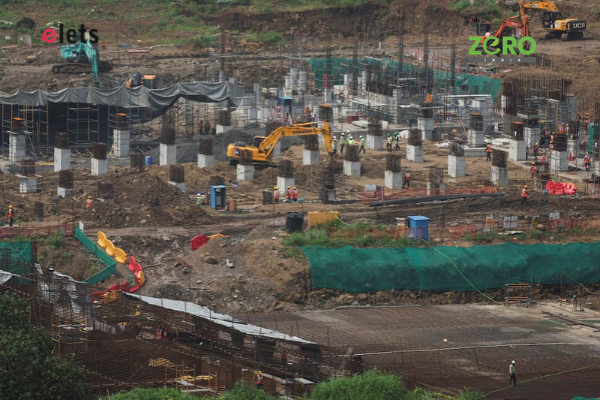
The artificial intelligence booms fuel an unprecedented data center building spree; the view from Indian engineer Tushar Shetty’s Mumbai apartment captures a tension playing out around the world.
The vibrant expanse of greenery that once graced the view from his 21st-floor window has been transformed into a barren patch of red soil, stripped of its trees to accommodate an Amazon facility, a key component of the tech giant’s ambitious $21 billion investment in AI infrastructure in India by 2030.

The 46-year-old said that “I would not have bought the house if I had known,” lamenting a purchase made just five months ago.
Residents have increasingly rebelled against the spread of AI data centers, from the suburbs of Virginia to the outskirts of Amsterdam and Dublin, complaining of noise, surging electricity consumption, water stress, and industrialization of residential neighborhoods.

Prime Minister Narendra Modi’s ambition to host “the whole world’s data,” stretching from Maharashtra in the west to Andhra Pradesh in the south, is gaining momentum in India, where Amazon, Google, and Microsoft are pouring billions into facilities to advance.
Currently unable to compete with the leading-edge models from the US and China, India is charting its own course, wagering that supremacy in the foundational infrastructure of artificial intelligence could be equally advantageous.
Modi’s investment vision is central to India’s strategy, aiming to reclaim its status as a global tech hub, yet it faces pushback from local communities and worries about limited resources.
Data centers are clustering in the cities already short of the freshwater, as India holds 4% of the world’s freshwater for 18% of its people. According to the S&P Global estimates, 60% to 80% of the Indian data centers could face high water stress this decade.
According to the research firm Mordor Intelligence, data centers used about 150 billion liters of water, then a figure projected to more than double by 2030.
The Amazon initiative located near Mumbai is quickly becoming a significant point of contention in India. Conversations with over two dozen locals and an examination of official communications reveal increasing worries that it may overburden the area’s power and water resources, as well as produce noise detrimental to health, especially affecting children and the elderly.
The dispute has nevertheless sparked street protests and has drawn opposition politicians into the fight. It will not burden public utilities because water and power will come from dedicated sources, as Amazon and the local authorities have strongly defended the project.
The government led by Modi has actively defended the initiative, touting data centers as “the unseen forces driving India’s digital existence” and claiming that contemporary technologies utilize water and electricity in a more sustainable manner.
The offices that didn’t respond to the request for the comment were the Ministry of Electronics and Information Technology, the Prime Minister’s Office, and Maharashtra’s chief minister’s office.
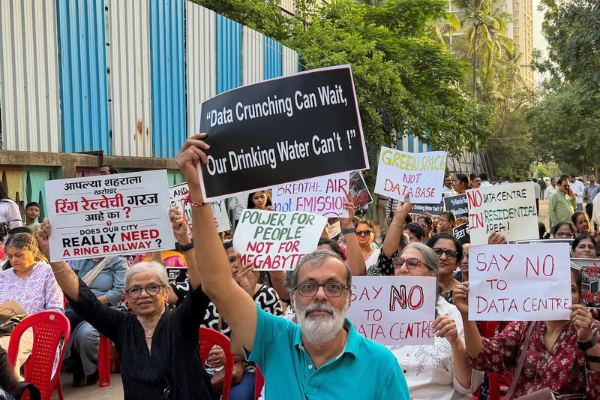
The local residents want the project moved elsewhere. On Tuesday, September 8th, hundreds of residents, including the elderly people, gathered beside the site holding placards reading “Data centers are energy vampires.”
Vasudha Shetty, a 62-year-old, purchased a flat next to the 54-acre planned facility but wants to prioritize a quiet retirement and says, “If the data center stops, we will stay…. If it goes ahead, we will move.”
AMAZON CONSIDERS ENGAGING WITH THE COMMUNITY
According to the 1000 residents living near the site, the project was pushed through without a meaningful consultation.
The world’s largest concentration of data centers is in Virginia. In the 2024 proposal, Amazon paused for three facilities amid concerns over noise and proximity to homes, saying it wanted more time for community engagement. Mumbai residents say they never got that chance.
According to the internal reports, Amazon is not overly concerned because government officials have indicated the protest will pass, according to a person familiar with its planning. Still, the company is drawing up community outreach plans to address concerns over noise, water, and power.
A resident quoted that “Building data centers comes at a cost. Amazon at a global level is prepared to work with the community and limit any inconvenience.” The person also stated that “For now there is no other option but to live with protests.”
Reuters was told by Amazon that the data center will use water-free cooling, a dedicated power supply separate from homes, and noise mitigation measures. It added that more saplings were planted than trees removed.
Some industry executives raised the question of whether data centers belong next to neighborhoods.
The CEO of Sify Infinit Spaces, which runs 14 data centers, stated that “I will never set up a center in a residential area.” He also stated in an industry event in September that “Centres need abundant, uninterrupted power and water … and near homes they risk being starved of both in a shortage.”
Microsoft has revealed an ambitious four-year investment initiative worth $20.5 billion for India, primarily focused on developing AI data centers.
POLITICAL SNAGS
In the southern region of Andhra Pradesh, advocates for the environment are raising their voices against Google’s ambitious $15 billion data center initiative. They express concerns regarding potential threats to local wildlife, water resources, and energy availability, while also claiming that land belonging to a temple was utilized without proper authorization. Both Google and the state authorities refute these allegations.
The situation has escalated into a political issue. In September, Aaditya Thackeray, a member of the opposition, stood alongside protesters in Mumbai, advocating for the relocation of the Amazon project. He asserted that his party would take action to move it if they regained power.
In Mumbai, real estate agent Atul Jadhav expressed that worries from buyers regarding scenic views and property valuations could be negatively impacting the resale prices of nearby homes.
“We will come out on the roads and do whatever it takes to stop it,” said Vidya Kadam, 68, who has lived in the area for 30 years.

Be a part of Elets Collaborative Initiatives. Join Us for Upcoming Events and explore business opportunities. Like us on Facebook , connect with us on LinkedIn and follow us on Twitter, Instagram.
"Exciting news! Elets technomedia is now on WhatsApp Channels Subscribe today by clicking the link and stay updated with the latest insights!" Click here!