 News
News




News
India’s energy security challenge has shifted focus from mere supply to the imperative of resilience
India’s energy security challenge has shifted focus from mere supply to the imperative of resilience
![]() By
Samuel Raj 09-October-2026
By
Samuel Raj 09-October-2026


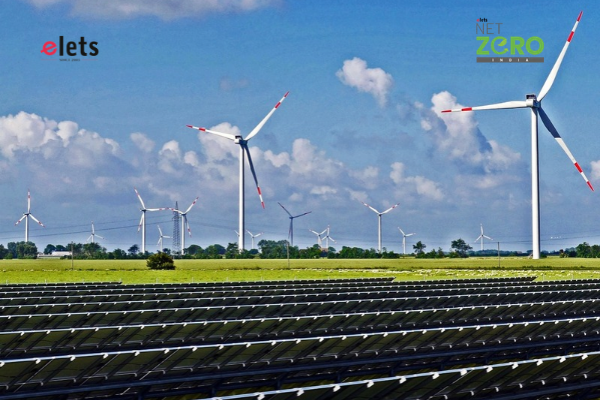
As the capacity for renewable energy expands, the significance of variability escalates. The reliability of power delivery, while ensuring grid stability, will increasingly hinge on effective storage solutions, adaptable generation methods, robust transmission networks, and agile grid management systems.
India’s energy security discourse has evolved beyond merely securing sufficient supplies for economic advancement. While this aspect remains crucial, the landscape has shifted. With rising electricity demand and the growth of renewable energy sources, the focus must now be on the system’s reliability in adapting to demand changes, generation variations, and infrastructure pressures. The future of India’s energy security hinges on fostering resilience throughout the power network and the sectors reliant on it.

Striking a balance between demand and generation is increasingly challenging
The magnitude of the challenge is unmistakable. According to the International Energy Agency (IEA), India’s electricity demand is projected to increase by an average of 6.4% each year from 2026 to 2030, resulting in an additional 570 TWh in annual consumption. In 2024 the peak demand reached 250 GW, which is being compared with 162 GW in 2017. It rose further to 270 GW in May 2026, with cooling demand increasing during the evening hours, when solar generation begins to decline. This also highlights a fundamental shift. The challenge is not simply to generate electricity but to match supply and the demand at the right time.

The significant progress was made in India by expanding its generation base in June 2026, with non-fossil fuel sources accounting for 54.18% of installed capacity. Variability becomes more important as renewable capacity grows.
India has made significant progress in expanding its generation base, with non-fossil fuel sources accounting for 54.18% of installed power capacity as of June 2026. As renewable capacity grows, however, variability becomes more important. The dependability of power delivery, while ensuring the stability of the grid, will increasingly rely on innovative storage solutions, adaptable generation techniques, robust transmission infrastructure, and dynamic grid management systems.
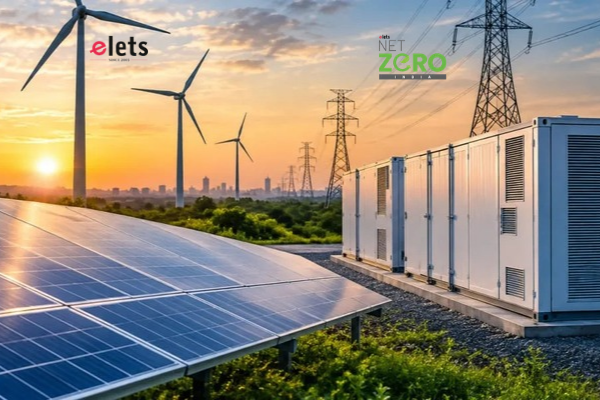
The evolving energy landscape is adding layers of complexity to the grid. With the integration of solar, wind, batteries, and decentralized generation, a multitude of assets, technologies, and data points are now part of the system. To navigate this intricate web effectively, we need reliable, real-time insights and the capacity to act on that information through synchronized control, especially when generation fluctuates rapidly. Battery storage plays a crucial role in smoothing out these variations and bridging the gap between demand and supply, while sophisticated controls can harmonize various sources and adapt to shifting grid dynamics. Thus, resilience transforms into a core operational capability, rather than merely a byproduct of installed capacity.
The boundary between the producer and the consumer is becoming less rigid, as more consumers adapt to rooftop solar, batteries, and distributed resources. This makes the coordination across the system even more important, especially during the periods of high demand or disruption.
Resilience should also encompass the industrial sector
In the continuous process industries, the energy disruption can affect the production, asset performance, process safety, and product quality; the implication didn’t stop at the grid. The industrial resilience will depend on how effectively organizations understand and respond to the changing conditions as the operating environment becomes more complex.
For example, the renewable energy operations often involve diverse assets, multiple systems, and large volumes of operational data; this makes asset visibility and reliability increasingly important. What makes it harder to identify the performance issues early is aging control technologies, fragmented systems, and poor data quality. Proactive asset management, real-time condition assessment, and predictive maintenance strategies can identify issues early, preventing them from escalating into significant operational challenges.
This same principle applies inside the industrial facilities. Energy management has become less about monitoring consumption in isolation and more about connecting energy use with the production, process conditions, and equipment performance. In the industrial sector, resilience has evolved beyond just being a matter of infrastructure; it has become a crucial business necessity that directly impacts operational stability, market competitiveness, and overall growth. Enhanced measurement, control, and optimization strategies empower operators to adapt to shifting conditions while effectively managing energy usage. The integration of industrial AI enhances this capability by processing vast amounts of data, uncovering trends, and highlighting anomalies that may need attention. Its purpose is to provide seasoned operators with improved insights, rather than to supplant their expertise.
Efficiency serves as a vital indicator of resilience
Through the lens of sustainability, energy efficiency is often viewed, but it is equally relevant to energy security. In 2030 India, the IEA estimates that if all the air conditioners are sold, the increase in peak electricity load could be around 20% lower. Reducing the avoidable consumption across homes and industries can therefore ease pressure on the wider system.
India must persist in securing investments across generation, fuels, transmission, and storage sectors. However, merely increasing capacity won’t resolve all disruptions. Challenges such as extreme weather, equipment malfunctions, sudden demand surges, and digital vulnerabilities will keep testing our infrastructure. The focus should shift towards creating an energy system that can foresee challenges, withstand shocks, and bounce back swiftly.
This represents a transition from merely ensuring supply security to fostering resilience—making sure that energy systems stay dependable, agile, and flexible as circumstances grow increasingly unpredictable. As India embarks on its next growth journey, the capacity to adapt may prove just as crucial as the ability to generate energy at a large scale.
Yuki Furuya serves as the Deputy Head of the Energy & Sustainability Management Unit and leads Corporate Sales at Yokogawa India Limited. With a robust background spanning over 16 years at Yokogawa Electric Corporation, he excels in international business development, sales, and project management, particularly in the realms of power, renewable energy, and green hydrogen.

Be a part of Elets Collaborative Initiatives. Join Us for Upcoming Events and explore business opportunities. Like us on Facebook , connect with us on LinkedIn and follow us on Twitter, Instagram.
"Exciting news! Elets technomedia is now on WhatsApp Channels Subscribe today by clicking the link and stay updated with the latest insights!" Click here!