 News
News




News
India’s Battery Energy Storage Push Faces Major Viability Challenges
India’s Battery Energy Storage Push Faces Major Viability Challenges
![]() By
Samuel Raj 08-October-2026
By
Samuel Raj 08-October-2026


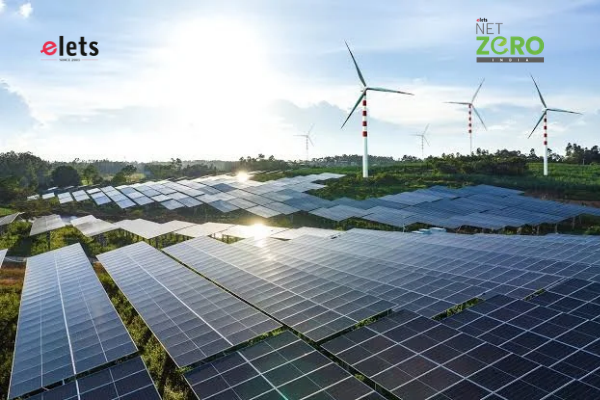
India’s shift towards green energy is encountering significant obstacles as initiatives to bolster wind and solar power through battery storage struggle. This is largely due to fierce competition, the impracticality of certain projects, and a wave of contract terminations. Experts in the industry estimate that nearly a third of the projects that have been put out for bidding may not be feasible.
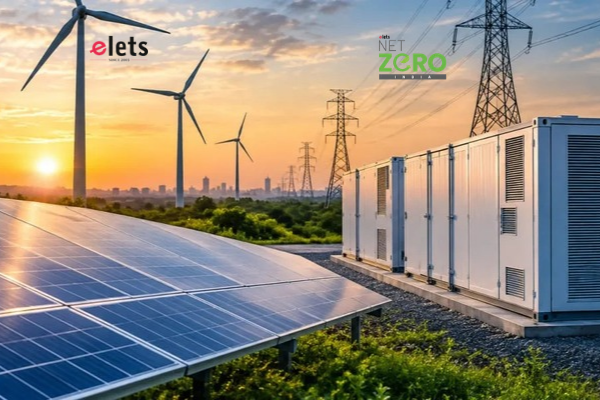
Innovative battery energy storage systems (BESS) capture solar and wind energy at the moment of generation for later utilization. To enhance the dependability of variable renewable energy sources, the government has made it a requirement to incorporate BESS in all upcoming solar and wind project bids.

Nonetheless, insights from the India Energy Storage Alliance (IESA), a collective of battery manufacturers, reveal that 24 gigawatt hours (GWh) of BESS projects faced cancellation or were re-tendered between 2018 and 2026, underscoring the hurdles in the shift towards sustainable energy. Unfortunately, a detailed year-by-year account of these project cancellations or re-tenderings is not accessible.
More than 11% of the Central Electricity Authority’s (CEA) ambitious goal of 208 GWh by the decade’s end has been affected by cancellations or re-tenderings of capacity.

An additional 22 GWh of capacity granted through the government’s ₹5,400 crore viability gap funding (VGF) 2.0 initiative is facing challenges, as BESS developers secured these contracts by offering bids below the unsustainable rate of ₹2 per kilowatt-hour (KWh), according to three informed sources. Current market trends indicate that the BESS tariff needs to be a minimum of ₹2.4 per unit to be considered feasible.
The government, through the VGF scheme, offers financial backing of up to ₹18 lakh per MWh for the establishment of battery storage facilities totaling 30 GW. According to data from the power ministry presented in the Rajya Sabha in July, awards have been granted for 22.43 GWh of this capacity, but only 5 GWh has reached financial closure.
Alok Kumar, the director general of the All India Discoms Association (AIDA), representing power distribution companies, expressed ongoing worries regarding the feasibility of nearly a third of the projects that have been tendered to date.
“Companies are still figuring out the technology. It is estimated that around 30%, or up to one-third of the projects, may not be viable as developers are yet to complete financial closure,” said Kumar, a former secretary in the ministry of power. “This is a learning stage, but norms should be put in place to select efficient and capable players, rather than focusing on the lowest tariff quoted.”
Recently, NTPC Ltd, a government-owned entity, ended its ₹413-crore agreement with GR Infraprojects Ltd (GRIL) for a 400-MWh battery energy storage system project at the Mouda Super Thermal Power Station in Maharashtra, citing the contractor’s inability to fulfill its contractual duties and make the necessary progress on the project.

Be a part of Elets Collaborative Initiatives. Join Us for Upcoming Events and explore business opportunities. Like us on Facebook , connect with us on LinkedIn and follow us on Twitter, Instagram.
"Exciting news! Elets technomedia is now on WhatsApp Channels Subscribe today by clicking the link and stay updated with the latest insights!" Click here!