 News





Article
From Sustainability to Profitability: How AI and Climate Intelligence Can Transform Business Decisions
From Sustainability to Profitability: How AI and Climate Intelligence Can Transform Business Decisions
![]() By
Samuel Raj 27-November-2026


For much of the day, we have been discussing the changing energy landscape, the expansion of renewable power, the growing demand from data centres and the need to modernise infrastructure. These conversations raise an important question: how do we ensure that the transition towards a more sustainable economy is also economically viable for businesses?
I believe the answer lies in changing the way we understand and use data. Sustainability can no longer remain a largely philosophical conversation about doing the right thing. It must become an integral part of business strategy, investment decisions and financial performance. To achieve this, we need to move beyond conventional sustainability reporting and begin translating environmental information into actionable business intelligence.

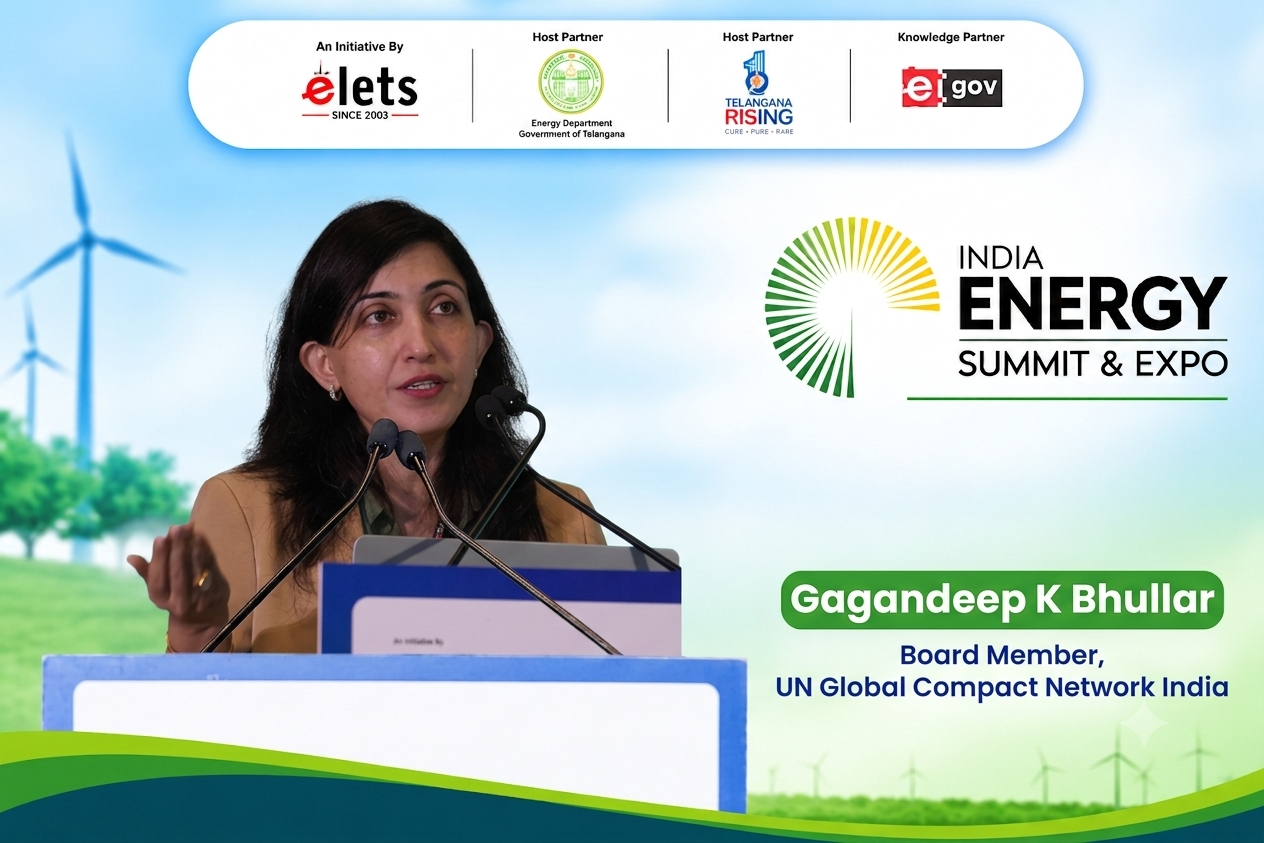
This is the idea behind our initiative, Define, an AI-powered application that brings together geospatial intelligence, satellite data and asset-level information to help businesses understand climate risks and make better decisions. As a board member of the UN Global Compact Network India, I see this as an important opportunity to connect sustainability objectives with the practical realities of industry.
Understanding climate risk at the asset level
One of the biggest challenges businesses face today is understanding how climate-related risks affect their assets, operations and long-term profitability. Companies may have information about their facilities, suppliers and energy consumption, but translating that information into a clear understanding of future risks is not always straightforward.

This is where AI and geospatial intelligence can make a significant difference.
Define is designed to consume geospatial and satellite data and generate climate intelligence at the asset level. It helps businesses understand the carrying capacity of a region, the sustainability of assets within that region and the factors that could influence their long-term performance.
The questions we need to ask are practical ones. What makes an asset profitable today? What could threaten its profitability in the future? How might a thermal power plant remain commercially viable as renewable energy expands? How will steel produced through the blast furnace-basic oxygen furnace route compete as the industry transitions towards electric arc furnaces?
These are not merely environmental questions. They are questions about investment, operational continuity, competitiveness and financial risk.
I often use an example from our early work to explain why this intelligence matters. Nearly two years ago, while developing Define, we were speaking with a large private equity fund about a property it owned in Jasper, Alberta, Canada. Our models indicated that the property was exposed to significant risk.
The fund’s representative questioned this assessment. He was in New Delhi, where air quality was a major concern, and found it difficult to understand how a property in Jasper, known for its exceptionally clean air, could be at risk.
Two months later, a wildfire affected the area, resulting in a loss of approximately CAD 880 million for the property owner.
For me, this example illustrates the value of climate intelligence. A location may appear safe based on its present conditions, but its future risk profile can be very different. AI can help identify signals that conventional assessments may overlook and allow businesses to prepare before a climate event causes significant damage.
Moving beyond conventional sustainability data
We have made considerable progress in measuring energy consumption and estimating emissions. Smart metering, for example, allows us to track electricity use, while established methodologies help convert energy consumption into emissions data.
However, there is a larger question that we need to address: how do we translate emissions into meaningful climate outcomes?
Sustainability targets are often expressed in terms of temperature goals, including the ambition to limit global warming. Yet the relationship between an individual company’s emissions and the broader temperature targets is not always easy for businesses to interpret.
Billions of dollars in investment and financial transactions are influenced by sustainability commitments and corporate targets. But many organisations do not have a clear understanding of the underlying data and assumptions that connect their operations with these goals.
AI creates an opportunity to change this. Instead of relying entirely on information manually collected from individual facilities, we can generate large volumes of asset-level data using satellite imagery, geospatial intelligence and advanced analytical models.
This means businesses can gain insights into their operations without physically visiting every facility or installing sensors on every piece of equipment. It also allows them to compare the performance of their assets with similar facilities across the world.
Creating a global benchmark for industrial performance
Consider a small electric arc furnace in France. With the right intelligence, we can examine the individual equipment and operational characteristics of that facility and understand how it performs.
We can assess how many days the plant has remained operational, the temperatures at which it operates, its energy consumption and the sources from which that energy is procured. We can also examine its air-quality performance against relevant guidelines and estimate the raw materials required to sustain its operations.
These insights become even more valuable when we compare one facility with another.
Today, more than a million assets globally are mapped within the Define system. This allows us to examine how a particular steel plant, cement facility or industrial operation performs relative to comparable assets in other locations.
For a manufacturer, such comparisons can answer important questions. Is a facility operating efficiently? Is it consuming more energy than comparable plants? How dependent is it on coal, natural gas or renewable energy? Are its operations exposed to environmental or resource-related risks?
The advantage is that businesses can access this intelligence without having to physically inspect every asset. Satellite and geospatial data, combined with AI, can provide a broader understanding of industrial performance and regional conditions.
I believe this changes the way companies should approach sustainability. Instead of treating environmental information as a separate reporting requirement, they can use it to understand operational efficiency, identify risks and make better investment decisions.
Data centres, energy demand and regional carrying capacity
One of the most important conversations in the energy sector today concerns data centres. As artificial intelligence expands, data centres will require substantial electricity and supporting infrastructure. This raises questions about whether India can accommodate their growth sustainably.
These concerns are not unique to India. Communities in several parts of the world have raised questions about the environmental impact of data centres, particularly their electricity and water requirements.
The important point is that we should not approach this debate through assumptions alone. We need to understand the carrying capacity of the regions in which these facilities are being developed.
Define can help assess the availability and composition of power sources within a local radius of approximately 150 kilometres. This is particularly relevant because large-scale storage is not yet available everywhere, and the transmission of energy across the entire country cannot always be assumed to be available at the required scale.
We can examine the sources of electricity in a particular region and understand their composition. How much power comes from coal? How much comes from natural gas? What proportion is renewable? At what capacity utilisation levels are these sources operating?
This information helps businesses assess whether the regional energy ecosystem can support a proposed data centre or industrial facility.
The same approach can be extended to water infrastructure. If India wants to become a leading destination for data centres, we must understand whether the regions hosting these facilities have sufficient water resources. We need to examine where aquifers should be recharged and identify practical ways of retaining and replenishing water.
AI makes it possible to evaluate these questions using information that was previously difficult to access or analyse at scale. This can help investors and policymakers make more informed decisions about where infrastructure should be developed and what interventions may be required.
Climate risks are also economic risks
The financial consequences of climate events often extend far beyond the direct damage to physical infrastructure.
Consider a flood in Los Angeles that was predicted by the system. The direct damage involved the destruction of a bridge valued at approximately $50 million. However, the broader economic impact was estimated at around $2 billion.
Why was the economic loss so much greater than the cost of the damaged infrastructure?
The affected region was an important agricultural hub. The disruption affected supply chains, led to the loss of perishable goods and created wider economic consequences for the surrounding community.
This illustrates an important principle: the cost of a climate event cannot be measured only by the value of the asset that is damaged. We must also account for the businesses, communities, supply chains and livelihoods that depend on that infrastructure.
For companies, this means climate risk assessment must extend beyond their immediate facilities. They need to understand the environmental and physical risks affecting suppliers, raw material sources, transport routes and other critical parts of their value chains.
A factory may be operating efficiently, but if its raw materials come from a region exposed to severe climate risks, its business continuity could still be threatened.
This is particularly important for energy-intensive industries. If coal supplies are disrupted because of climate-related risks affecting mines, power generation and industrial operations could be affected. The consequences may ultimately reach manufacturing margins and business performance.
Carbon costs and the changing economics of sustainability
Environmental data is also becoming increasingly important because of the changing economics of carbon.
Carbon-related trade instruments, including the European Union’s Carbon Border Adjustment Mechanism, are creating new considerations for exporters. Businesses must increasingly understand the emissions associated with their products and the potential financial implications of carbon-intensive production.
The cost of carbon varies significantly across markets and regulatory systems. In the discussion, I highlighted the contrast between the carbon price assumptions associated with emerging mechanisms and the much higher carbon prices seen in certain international markets and local regulations.
For example, the European carbon market has seen prices above $75 per tonne, while New York City’s Local Law 97 creates substantial financial implications for buildings with high emissions.
These differences demonstrate why environmental data must be understood in financial terms. Companies need to know not only how much carbon they emit but also how those emissions could influence their competitiveness, operating costs and access to international markets.
This is where AI-driven intelligence becomes valuable. By connecting environmental information with business and financial data, organisations can identify risks and opportunities that may otherwise remain hidden.
Sustainability must become a business case
There is another dimension that we must consider: the availability of critical raw materials.
The global automotive industry experienced significant pressure in 2021 when copper and nickel became difficult to obtain. The resulting constraints affected production and demonstrated how vulnerable manufacturing supply chains can be to material shortages.
These same materials are essential for building renewable energy infrastructure and electric vehicles. Copper, nickel and rare earth elements are required across several clean technology value chains.
As the world accelerates its energy transition, demand for these resources will continue to influence industrial competitiveness. Businesses must therefore understand where their raw materials come from, what environmental risks affect those locations and how supply disruptions could affect their operations.
For me, this reinforces the need to change our approach to sustainability. We must move from a sustainability-for-good mindset to a sustainability-for-profitability approach.
This does not mean reducing sustainability to short-term financial gains. Rather, it means recognising that environmental responsibility and business performance are increasingly interconnected. Companies that understand their resource dependencies, climate exposure, emissions and operational efficiency will be better positioned to manage risks and identify opportunities.
The key is to interpret the signals that are already available and translate them into financial intelligence.
The next data paradigm for business
The world has changed dramatically in the way data is generated and made available. We are now operating in a different data paradigm from the one that existed just two years ago. The volume of information being generated has expanded rapidly, and AI is making it possible to analyse that information in ways that were previously difficult or prohibitively expensive.
I would encourage businesses to reconsider how they use data. Look at where your raw materials originate, how dependent your operations are on particular energy sources, what climate risks affect your facilities and how environmental changes could influence your supply chains.
The opportunity is not limited to large industrial companies. It extends across energy, manufacturing, infrastructure, real estate and other sectors whose assets depend on the natural environment.
At Define, our objective is to make this intelligence more accessible and useful for decision-makers. We want to help businesses understand their assets in the context of regional conditions, global benchmarks and changing environmental risks.
I believe the next phase of sustainability will be defined by the ability to convert data into decisions and decisions into measurable business outcomes. The companies that embrace this approach will be better prepared for a world in which climate resilience, resource efficiency and profitability are increasingly linked.
It is time to move beyond viewing sustainability as a feel-good exercise. We must recognise it as a source of business intelligence, a tool for managing risk and an opportunity to build more resilient and profitable enterprises.
——————————–
Insights shared by Gagandeep K Bhullar, CEO and Founder, UN Global Compact Network India. at the India Energy Summit and Expo 2026, held on 18-19 August 2026, Hyderabad

Be a part of Elets Collaborative Initiatives. Join Us for Upcoming Events and explore business opportunities. Like us on Facebook , connect with us on LinkedIn and follow us on Twitter, Instagram.
"Exciting news! Elets technomedia is now on WhatsApp Channels Subscribe today by clicking the link and stay updated with the latest insights!" Click here!