 News




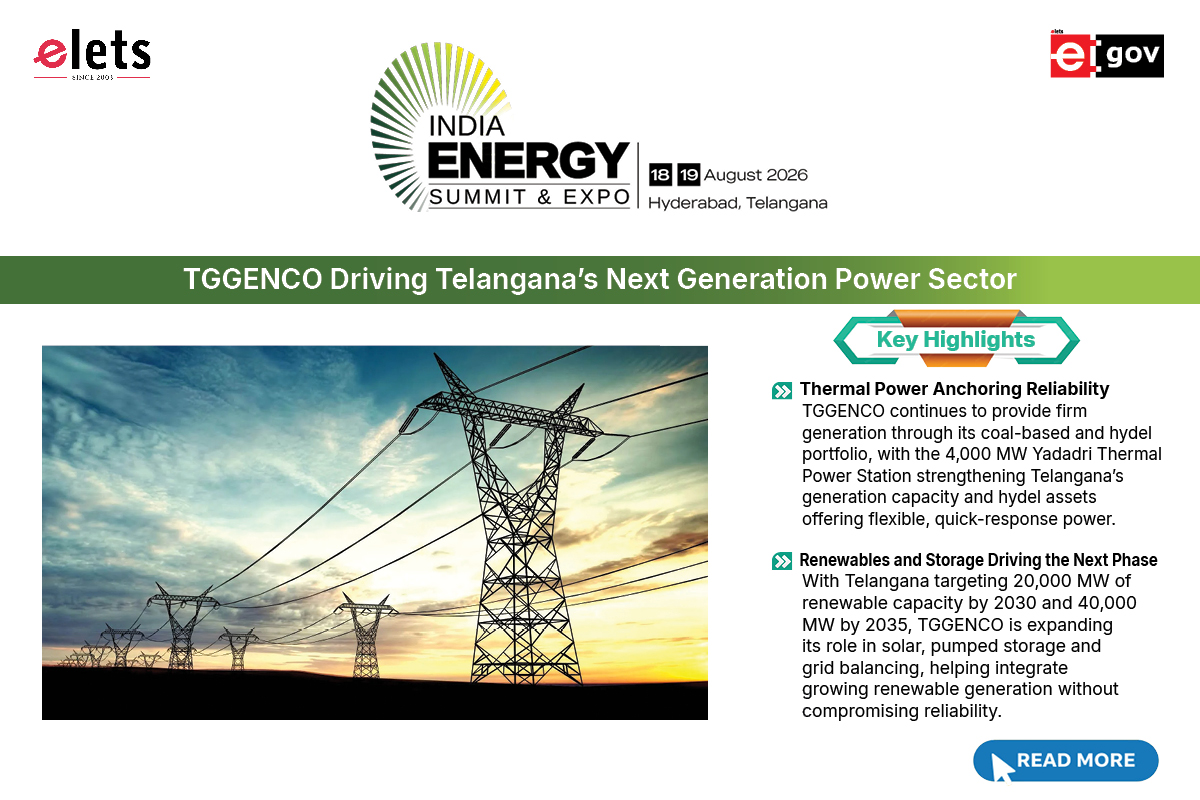
The Telangana Power Generation Corporation Limited, known widely as TGGENCO, sits at the centre of the state’s electricity story. Headquartered at Vidyuth Soudha in Khairatabad, Hyderabad, the corporation was created after the bifurcation of Andhra Pradesh in 2014 and has since grown from an installed base of roughly 4,365 MW into a multi-fuel utility spanning coal, hydel and, increasingly, renewable sources. Its Hyderabad headquarters is where engineering, planning, and financial decisions for plants scattered across Nalgonda, Khammam, Warangal, Peddapalli, and Nagarkurnool districts are coordinated, making the city the administrative nerve centre of Telangana’s power sector, even though the generating stations themselves lie far from the capital.
Thermal Generation: The Backbone

Coal-based thermal capacity still carries the bulk of the load. The Kothagudem Thermal Power Station near Paloncha in Khammam district, commissioned in stages beginning in 1966, remains one of TGGENCO’s oldest and largest units, with a capacity of 1,800 MW. The Kakatiya Thermal Power Station at Chelpur in the erstwhile Warangal district adds another 1,100 MW, while the Bhadradri Thermal Power Plant near Manuguru, built after ground was broken in 2015, contributes 1,080 MW from four 270 MW units. The much older Ramagundam B station, commissioned in 1971 with American financial assistance, continues to run at a modest 62.5 MW, illustrating the corporation’s mix of legacy and modern assets.
The centrepiece of current thermal expansion is the Yadadri Thermal Power Station at Veerlapalem village in Damaracherla mandal, Nalgonda district. Designed for 4,000 MW across five supercritical units of 800 MW each, Yadadri is being built by Bharat Heavy Electricals Limited under an engineering, procurement and construction contract and is intended to be the largest thermal plant developed by a single state-owned utility in the country. Unit 2 was commissioned first, followed by Unit 1, with the remaining three units scheduled for sequential commissioning through the current year. Once complete, Yadadri alone will roughly double TGGENCO’s thermal footprint.
Hydel Power: Krishna and Godavari Assets
Telangana’s hydel fleet, almost entirely inherited from the joint Andhra Pradesh Genco and now operated by TGGENCO, draws principally from the Krishna river system. The Srisailam Left Bank station, an underground powerhouse with six reversible units, has a capacity of 900 MW, while the Nagarjuna Sagar hydroelectric project across the Krishna in Nalgonda district contributes about 816 MW from eight units, the first commissioned in 1978. Both stations function as pumped-storage schemes, drawing water back uphill during low-demand hours to release it again at peak times, a flexibility that has become increasingly valuable as more variable renewable capacity joins the grid.
Smaller hydel assets round out the portfolio: the Priyadarshini Jurala and Lower Jurala projects together add roughly 474 MW, the Pulichintala scheme contributes about 120 MW, and a scatter of mini and micro hydel stations on the Godavari side, including Singur, Nizamsagar, Pochampad and installations near Peddapalli, add smaller but locally significant capacity. Taken together, the state’s installed hydel capacity stands at approximately 2,475 MW, a resource the corporation continues to lean on for cost-effective, quick-response power during the monsoon months.
Capacity Expansion and Renewable Push
Beyond Yadadri, capacity expansion plans are increasingly tilted toward renewables. Under the state’s Clean and Green Energy Policy, Telangana has set a target of 20,000 MW of renewable capacity by 2030, rising to 40,000 MW by 2035, with TGGENCO and the Telangana Renewable Energy Development Corporation named as nodal agencies for implementation. The policy covers solar, wind, pumped storage, battery energy storage and green hydrogen, signalling a broader diversification of the generation mix than coal and hydel alone can provide. TGGENCO has begun contributing directly to this shift, including a proposed 4.6 MW solar installation at mini-hydel station sites near Peddapalli, alongside continued pump-mode operation of the Nagarjunasagar and Srisailam Left Bank units to balance load as renewable penetration rises.
For Hyderabad specifically, the corporation’s role is felt less in generation, since none of the major plants sits within the city, and more in the planning, financing and grid-balancing decisions made from its Khairatabad headquarters. The city hosts the Energy Department of the state government, the Telangana Electricity Regulatory Commission and the corporate offices of the distribution utilities that draw on TGGENCO’s output, making Hyderabad the coordination point through which power generated hundreds of kilometres away in Nalgonda or Khammam districts is scheduled, priced and routed to consumers across the state, including the city’s own industrial and residential load.
Sustainability and the Road Ahead
Sustainability commitments extend beyond new solar capacity. The reverse-pumping systems at Nagarjuna Sagar and Srisailam Left Bank, in operation since 2018, allow water to be recycled between reservoirs rather than drawn afresh, reducing the strain on the Krishna basin during dry years. The Clean and Green Energy Policy also folds in electric vehicle charging infrastructure and green hydrogen production, areas where TGGENCO is expected to take on a coordinating role alongside private developers. With Yadadri nearing full commissioning, the corporation’s near-term priority is expected to shift from thermal construction to integrating a growing share of solar and storage capacity into a grid still anchored by coal and the Krishna’s hydel stations, a balancing act that will be managed, as much of the state’s energy planning already is, from offices in Hyderabad.
Future Projects and Grid Integration
Looking beyond Yadadri, the corporation’s pipeline reflects the state’s broader ambition to pair firm coal-based capacity with flexible, dispatchable renewable sources rather than treat the two as competing tracks. Pumped storage remains central to that thinking: the reversible units at Srisailam Left Bank and Nagarjuna Sagar already demonstrate how existing hydel infrastructure can double as grid-balancing capacity, and the Clean and Green Energy Policy explicitly names pumped storage alongside battery storage as priority areas for fresh investment. New pumped-storage proposals on the Krishna and Godavari basins are being evaluated by the Energy Department in Hyderabad in coordination with TGGENCO, with siting and clearance work expected to shape the next phase of hydel expansion once Yadadri’s remaining units are synchronised to the grid.
The corporation’s workforce and contracting activity also underline how much of its day-to-day functioning runs through Hyderabad. Tenders for spares, servicing and civil works at plants as far apart as Nagarjuna Sagar, Srisailam and the Yadadri township are floated and processed centrally, and major policy decisions, from environmental clearances to tariff-linked capacity additions, are cleared through the Energy Department at the state secretariat in the city. As Telangana’s electricity demand continues to climb toward the state government’s projected peak of around 19,000 MW, TGGENCO’s task is less about choosing between thermal, hydel and renewable generation and more about sequencing all three from a single control point in Hyderabad, so that new capacity comes online without compromising the reliability the state’s households and industries have come to expect.
————————————–
Written by: Divya Tyagi | Elets News Network (ENN)

Be a part of Elets Collaborative Initiatives. Join Us for Upcoming Events and explore business opportunities. Like us on Facebook , connect with us on LinkedIn and follow us on Twitter, Instagram.
"Exciting news! Elets technomedia is now on WhatsApp Channels Subscribe today by clicking the link and stay updated with the latest insights!" Click here!