 News




News
The Purpose Behind Rubio’s Visit to the World’s Largest Oil Refinery in India
The Purpose Behind Rubio’s Visit to the World’s Largest Oil Refinery in India
![]() By
Samuel Raj 21-October-2026


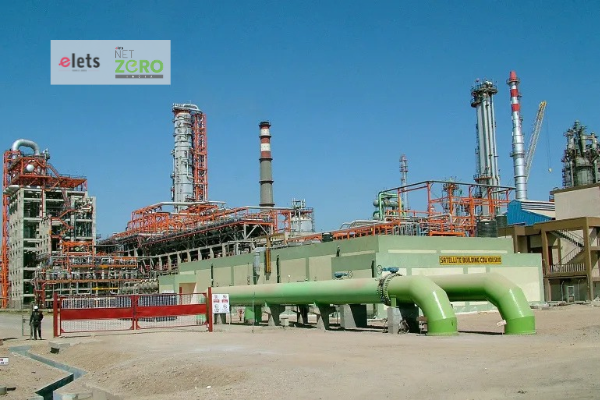
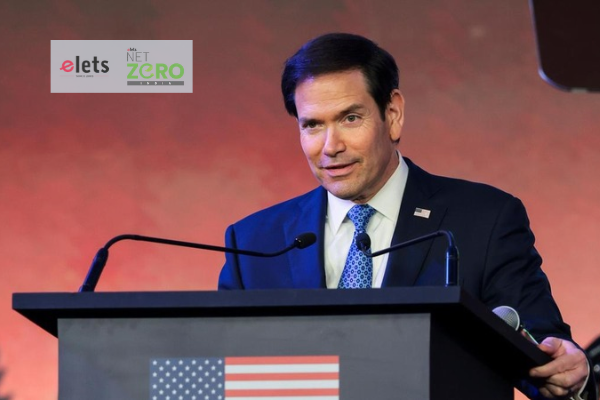
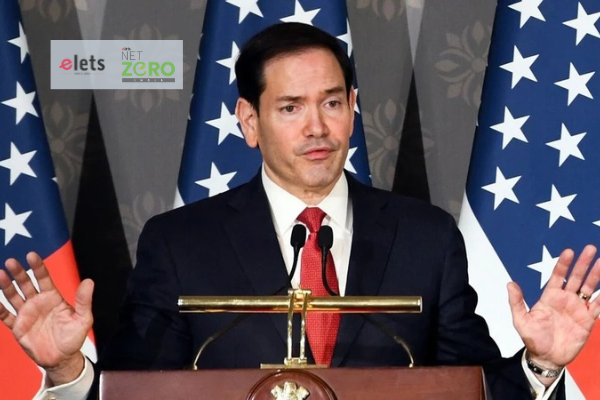
U.S. Secretary of State Marco Rubio has landed in India for a brief two-day trip, during which he plans to visit the Jamnagar refinery complex in Gujarat, owned by billionaire Mukesh Ambani’s Reliance Industries, a significant player in the global oil arena.
This refinery, located in Prime Minister Narendra Modi’s home state, holds the title of the largest single-site refinery in the world. Reliance Industries finds itself at a pivotal point amid the current global energy crisis.

The conglomerate plays a crucial role in Washington’s strategy to penalize Russian energy purchasers while simultaneously attempting to stabilize oil prices in the context of the ongoing conflict with Iran, alongside rising diesel prices in the U.S., where an important midterm election is approaching. Recently, Reliance has also pledged a substantial investment in the U.S., which the Trump administration has highlighted as a success in attracting international capital.
Interestingly, Rubio is bypassing the capital, New Delhi, during a time when the U.S.-India relationship has faced challenges, marked by various points of contention and a stalled trade agreement.
So, what brings the top U.S. diplomat to the world’s largest single-site oil refinery?
What are Rubio’s travel plans?
Following his discussions in Mumbai, the bustling financial center of Maharashtra, Rubio is set to journey to Jamnagar in the adjacent state of Gujarat, close to the Gulf of Kutch. This vibrant city, which leads into the Arabian Sea, hosts the impressive refining complex of Reliance Industries, a key player in crude oil processing and fuel exports, boasting a capacity of 1.4 million barrels per day (bpd).
Earlier this year, Rubio made a trip to India, but this time, it’s more centered on business, as highlighted by the US ambassador to India, Sergio Gor, during a press briefing last week. According to a statement from Rubio’s office, he plans to engage with business leaders to explore avenues for commercial investment and foster economic collaboration.
“While in Jamnagar, he will connect with representatives from Reliance,” Gor mentioned.
What’s happening in Jamnagar?
The world’s largest single-site oil-refining complex has a combined crude-processing capacity of 1.4 million bpd. That is nearly 1.5 per cent of global refining capacity, according to the company.
Jamnagar is home to the largest single-site oil-refining complex in the world, boasting an impressive crude-processing capacity of 1.4 million barrels per day (bpd). This accounts for nearly 1.5% of the global refining capacity, as reported by the company.
Jamnagar sources crude oil from international suppliers and sends refined products to markets worldwide. Notably, the refinery is capable of processing heavy, sulfur-rich crude oil that many other facilities struggle with, transforming it into higher-value products.
Recently, Reliance announced that the complex has successfully processed over 216 different crude grades, claiming to be “perhaps the only refinery to achieve this remarkable milestone.”
The capacity of the Jamnagar refinery is also contributing to a significant increase in imports of Venezuelan crude oil—recently taken over by the US after the ousting of former President Nicolas Maduro—as Washington aims to reshape the global oil landscape.
According to estimates from analytics firm Kpler, Reliance is projected to handle approximately 350,000 bpd to 370,000 bpd of crude oil intake in October. “We will discuss with Reliance the possibility of refining more Venezuelan crude,” Rubio mentioned to reporters in brief comments on Tuesday.
What makes the refinery crucial for global energy supplies?
Reliance plays a pivotal role in maintaining stability in the global oil markets, being one of the largest suppliers of refined petroleum products worldwide. For example, in September, six out of seven large cargo ships that arrived at European Union ports with oil products were carrying goods from Reliance.
The company’s primary export is diesel, a concern for Trump, especially with prices hitting record highs in the US as the midterm elections approach next month.
While specific export data by category remains confidential, an analysis by Reuters from trade sources revealed that Reliance Industries exported 21.66 million tonnes of refined petroleum products from Jamnagar in the first half of 2025. Diesel comprised the largest portion at 9.81 million tonnes, followed by petrol at 6.14 million tonnes and jet fuel at 2.06 million tonnes.
Europe represented the largest segment of the company’s exports, accounting for 28 percent of Reliance’s refined products during this timeframe. Notable buyers include BP, ExxonMobil, Glencore, Vitol, and Trafigura.
Additionally, the Jamnagar refinery exported approximately $143 million worth of oil products to the US last month, according to data referenced by the Centre for Research on Energy and Clean Air (CREA), a Finnish think tank.
CREA highlighted in its report that the EU’s ban on importing petroleum products derived from Russian crude starting January 2026 does not effectively block products from third-country refineries that also process Russian crude. The Jamnagar refinery exemplifies this loophole.
Rubio’s trip to the refinery coincides with Trump grappling with his lowest approval ratings, as inflation and soaring fuel prices loom large ahead of the midterm elections in November. Currently, only around 31 percent of Americans express satisfaction with Trump’s performance, marking the lowest point in his presidency, as revealed by a Reuters/Ipsos poll.
The Trump administration has also reportedly been pushing Ukraine’s President Volodymyr Zelenskyy to stop strikes on Russian energy facilities, which have rattled the global fuel markets.
Why the refinery is important for the Russia-Ukraine war
Reliance is also a critical actor in US efforts to influence how much oil Russia sells.
Since the start of Russia’s full-fledged war on Ukraine in February 2022, India has emerged as The significance of the refinery in the context of the Russia-Ukraine conflict is driving that surge in imports. While only 3 percent of its oil was sourced from Russia before 2022, that share rose to Reliance plays a pivotal role in the United States’ strategy to regulate Russia’s oil sales.
In August 2025, when Trump enacted a 25 percent tariff on Indian goods to penalize New Delhi for its Russian oil purchases, Reliance felt the immediate impact. Although it significantly reduced its Russian crude imports in the following months, Russian oil still constituted a third of the output processed at Jamnagar’s refinery during the July-September 2026 quarter.
This situation faced potential escalation when the Trump administration considered imposing a 100 percent tariff on Indian goods due to ongoing Russian oil imports, following a new legislative measure.
Fortunately, Trump has since put those proposed tariffs on hold, alleviating concerns for both India and Reliance.
Senator Rubio noted that India has been actively diversifying its energy sources away from Russian crude, despite continuing to import millions of barrels of Russian oil daily. “Countries like India have made efforts to diversify their energy portfolios, yet they still rely significantly on Russian energy due to the complexities of making abrupt changes,” Rubio remarked recently.
“Nonetheless, they remain a vital ally and partner of the United States.”
Is Reliance also investing in the US?
Yes, India’s richest man, Mukesh Ambani, the chairman and managing director of Reliance Industries, is investing in the US, primarily through energy-related projects.
The company is supporting America First Refining’s ambitious plan to build an oil refinery at the Port of Brownsville in Texas, marking the first significant US refinery project in nearly half a century, as announced by Trump back in March.
Absolutely! Mukesh Ambani, the wealthiest individual in India and the head of Reliance Is Reliance making moves in the US? into the US, focusing mainly on energy initiatives.
In November 2024, Reliance’s US branch also took a 21 percent stake in Wavetech Helium, a helium exploration company, for $12 million, aligning with its strategy for low-carbon energy.
Recently, Trump revealed that India’s Essar Group — a significant player in the oil sector with deep connections to Russia — is planning an $18 billion integrated steel investment in the US through its subsidiary, Mesabi Metallics.
Recently, a notable clash occurred between Trump’s associate and Ambani.
In light of Reliance’s ventures in the US and Rubio’s forthcoming visit to the Jamnagar facility, Elon Musk, the wealthiest individual globally and a prominent ally of Trump, has openly criticized Ambani.
Musk’s Starlink, a space telecommunications venture, has faced significant hurdles in obtaining a license to operate in India for several years.
In a series of posts on X, Musk accused Prime Minister Narendra Modi’s administration of delaying Starlink’s entry to benefit Ambani’s leading telecom company, Jio. He provocatively referred to Ambani as “Prime Minister Ambani” and inquired if he would “consider permitting Starlink is gearing up for a challenge. Musk claimed that powerful elites are hindering Starlink’s progress, holding onto their “monopolistic control” over the Indian market.
In a message shared on X, Reliance expressed that it has “never shied away from competition” and has “thrived in an India that embraces both domestic and foreign investment and innovation.”

Be a part of Elets Collaborative Initiatives. Join Us for Upcoming Events and explore business opportunities. Like us on Facebook , connect with us on LinkedIn and follow us on Twitter, Instagram.
"Exciting news! Elets technomedia is now on WhatsApp Channels Subscribe today by clicking the link and stay updated with the latest insights!" Click here!