 News
News




News
India Set to Achieve Unprecedented 70 GW+ Power Capacity Expansion in FY27, Minister Advocates for AI-Driven Innovations
India Set to Achieve Unprecedented 70 GW+ Power Capacity Expansion in FY27, Minister Advocates for AI-Driven Innovations
![]() By
Samuel Raj 15-October-2026
By
Samuel Raj 15-October-2026


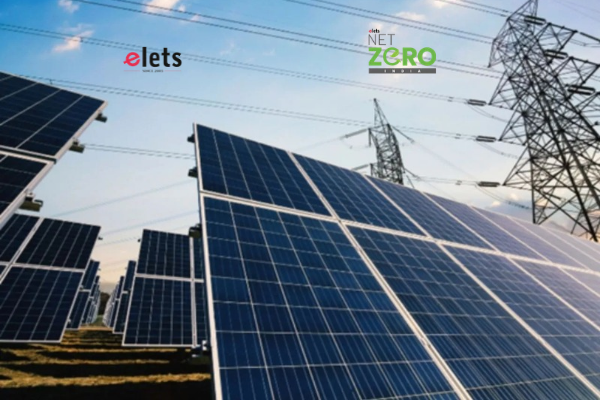
India is poised to enhance its power generation capacity by over 70 GW in the fiscal year 2026-27, marking the most significant increase in a single year, according to Union Minister of Power and Housing & Urban Affairs Manohar Lal.
During the opening session of the Central Electricity Authority’s (CEA) two-day international conference and exhibition titled “Making Indian Power Sector AI-Enabled,” conducted virtually, Manohar Lal emphasised the imperative to transform India’s power sector into a more intelligent and efficient system.

The gathering took place at the prestigious Manekshaw Centre in New Delhi. During this significant occasion, Manohar Lal highlighted the necessity of developing a sophisticated and expansive power infrastructure for the future. He pointed out that simply increasing electricity production is not enough; intelligent management of this power is equally crucial. With India’s power generation capacity now standing at approximately 555 GW, he emphasised the urgent need for a system that can proactively predict electricity demand. Furthermore, he underscored the critical role of seamlessly integrating renewable energy sources and energy storage solutions, all while guaranteeing a reliable and cost-effective power supply for consumers.
Lal described AI as an invaluable asset and a key solution. He asserted that AI has the potential to enhance generation forecasts, optimise grid operations, facilitate proactive maintenance scheduling, and swiftly identify power outages. He emphasised the necessity for the sector to transition from a reactive approach to a more predictive and proactive framework, prioritising the security of power data and the ethical application of AI.

Background
The conference took place on the occasion of CEA’s 53rd Foundation Day.
Union Minister Pralhad Joshi, who participated in the event via virtual means, highlighted that India boasts over 305 GW of non-fossil fuel capacity, which represents nearly 55% of its total installed capacity of 554.5 GW. He emphasised the crucial question of how effectively India can integrate, transmit, dispatch, and utilise clean energy. He noted that artificial intelligence could enhance renewable energy forecasting, facilitate real-time grid balancing, optimise storage solutions, minimise curtailment, and assist in identifying network congestion.
“AI can help us convert data into intelligence, intelligence into timely decisions and decisions into better outcomes,” he said. He added that human oversight and accountability must remain central to critical grid operations and that India should develop AI solutions suited to Indian conditions and extend them to other emerging economies.
September 2026: India Surpasses 308 GW in Non-Fossil Energy Capacity
The Minister of State for Power and New & Renewable Energy, Shripad Yesso Naik, proudly announced that India achieved a remarkable milestone by reaching 50% of its installed capacity from non-fossil sources in June 2025, significantly ahead of its 2030 Nationally Determined Contribution (NDC) target by over five years.
As of September 30, 2026, the nation’s non-fossil energy capacity has exceeded 308 GW, comprising more than 171 GW from solar energy and 59 GW from wind power. The peak power demand soared to 256 GW in April 2026 and further climbed to 270 GW in July 2026.
He said India was no longer just building a bigger power system but a more complex one, and AI could help manage it. “Technology becomes meaningful only when it improves the life of our people,” he said, adding that AI must be reliable, explainable and secure.
The Minister of State for Commerce & Industry and Electronics & IT, Jitin Prasada, emphasised that the advancement of AI, semiconductors, and data centres is intricately linked to a significant increase in power supply, especially in the realm of green energy.
He advocated for making power accessibility for AI as seamless as UPI has made digital transactions. Furthermore, he mentioned that the government is crafting a comprehensive policy for data centres aimed at attracting large-scale investments while ensuring that electricity costs for consumers remain stable. He also highlighted the importance of equipping the youth with necessary skills and addressing potential supply chain challenges related to power equipment and semiconductor chips.
Harnessing AI for Enhanced Grid Integration
Secretary of the Ministry of Power, Pankaj Agarwal, said AI applications in the grid would require real-time action, with response times measured in milliseconds or less. He said India could offer renewable-rich regions for data centres. He urged the sector to scale up pilot projects into sustainable business cases. He added that a data governance committee would include Pankaj Agarwal, Secretary of the Ministry of Power, emphasising that the integration of AI into the grid necessitates instantaneous responses, often within milliseconds. He pointed out that India possesses abundant renewable energy zones suitable for data centres. Agarwal encouraged the industry to transform pilot initiatives into viable business models. He also mentioned the formation of a data governance committee that will include representatives from both the industry and government sectors. He expressed his support for the conference’s ten targeted tracks aimed at generating practical results and noted the efforts of CEA’s dedicated team of 54 engineers who are exploring ten distinct areas of AI.
CEA Highlights the Role of AI in Power Infrastructure
Chairperson Ghanshyam Prasad of CEA articulated that the focus of the sector has evolved from merely ensuring power availability to effectively managing its sources, distribution, and timing of usage.
He reflected on India’s progress from an installed capacity of 13 GW at the time of independence to the establishment of a unified national grid. He likened the sector’s plans, standards, and regulations to a runway, with AI serving as the essential aircraft. Prasad emphasised that CEA has formed a specialised team of 54 officers dedicated to AI initiatives, advocating for the development of in-house AI capabilities within institutions instead of relying solely on external solutions.
In the course of the session, CEA introduced three new documents and tools.
Vidyut Dwar serves as a digital gateway for international electricity trading, with the CEA acting as the official body that oversees the approval of electricity imports and exports to neighbouring nations. This innovative platform consolidates the entire application procedure into a single interface, enabling users to upload documents electronically, monitor the status of their applications, and receive approvals seamlessly. Its design aims to streamline the process, making it more efficient, eco-friendly, and transparent.
The esteemed officials introduced the CEA Manual on Transmission Planning Criteria 2026, which encompasses aspects such as capacity expansion, reliability, the integration of renewable energy, innovative technologies, and enhanced utilisation of transmission corridors. Additionally, it presents planning criteria that tackle right-of-way issues.
The third initiative launched was the Unified Framework for Digitalisation of the Distribution Sector, designed to guide power distribution companies in the phased, needs-based, and outcome-focused adoption of digital technologies.
The Central Electricity Authority serves as the technical and planning entity under the Ministry of Power, Government of India, providing counsel on power sector planning, technical standards, and safety protocols.

Be a part of Elets Collaborative Initiatives. Join Us for Upcoming Events and explore business opportunities. Like us on Facebook , connect with us on LinkedIn and follow us on Twitter, Instagram.
"Exciting news! Elets technomedia is now on WhatsApp Channels Subscribe today by clicking the link and stay updated with the latest insights!" Click here!