 News
News




Article
Power System 2.0: Financially Sustainable DISCOMs and Next-Gen Transmission for a High-Renewables Future
Power System 2.0: Financially Sustainable DISCOMs and Next-Gen Transmission for a High-Renewables Future
![]() By
eletsnetzerofinal2025 28-April-2026
By
eletsnetzerofinal2025 28-April-2026


Building a Resilient and Financially Viable Power Ecosystem
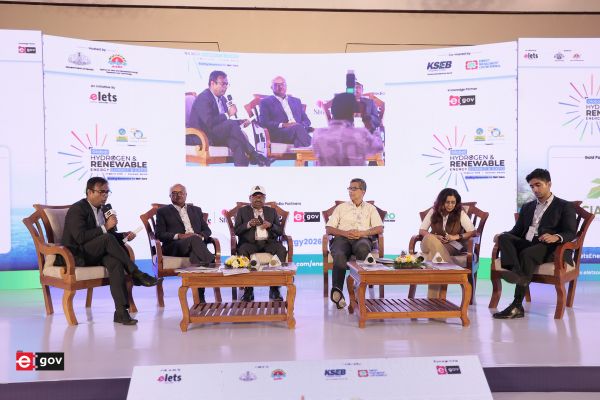
The panel at the 2nd Global Hydrogen & Renewable Energy Summit in Kovalam on 13th March 2026, discussion focused on the urgent need to reimagine India’s power systems as the country accelerates toward a high-renewables future. While renewable energy capacity continues to expand at an unprecedented pace, the conversation emphasised that generation alone is not sufficient. A robust and financially sustainable power ecosystem requires modernised transmission networks, efficient distribution systems (DISCOMs), and integrated digital infrastructure capable of delivering clean energy reliably and affordably.

Power System 2.0 envisions a grid that is not only greener but also smarter, more flexible, and financially resilient. As renewable energy sources such as solar and wind introduce variability into the system, the role of transmission infrastructure becomes increasingly critical in balancing supply and demand across regions. At the same time, financially stressed DISCOMs must evolve through reforms, improved operational efficiencies, and innovative business models to ensure long-term sustainability.
Speaker Perspectives

Mohammad Saif, Partner, EY India
The discussion highlighted that the transition to clean energy must be supported by equally strong transmission and distribution networks. Without efficient grid infrastructure, even the most ambitious renewable targets cannot translate into reliable power delivery. Strengthening DISCOM finances and modernising grid systems are therefore central to enabling the next phase of India’s energy transition.
Sanjeev Kumar Katiyar, Managing Director, Chhattisgarh State Power Generation Co. Ltd.
While renewable energy continues to scale rapidly, thermal power remains an essential component of grid stability. Conventional generation provides the flexibility required to manage intermittency and ensure a consistent supply, particularly during peak demand or when renewable output fluctuates. A balanced energy mix will be crucial during the transition phase.
Girish Tanty, Director, TNBD, GRIDCO Ltd.
Modern power systems require flexible procurement strategies to manage variability effectively. Mechanisms such as bilateral agreements, power banking, and participation in real-time power markets enable utilities to optimise costs while maintaining grid reliability. These tools are becoming increasingly important as the share of renewables grows.
Anil M., Deputy Chief Engineer (Rtd), KSEB Ltd & Research Scholar, Amrita School of Business
India’s vast 5,500-km coastline presents a significant opportunity for offshore wind development. However, unlocking this potential will depend heavily on the availability of strong transmission infrastructure to evacuate power from coastal generation sites to demand centres. Strategic planning in grid expansion will be key to tapping this resource.
Snigdha Ghosh Ray, CEO, GreenH2 NxT Pvt. Ltd. & Managing Partner, HYDROGY International Trade UG
The concept of an “India Energy Stack” could revolutionise the sector by creating a unified digital platform for energy transactions. By enabling transparency, real-time data exchange, and seamless market participation, such a platform could function as an “Amazon of energy,” transforming how power is generated, traded, and consumed.
Abishek Reddy, Managing Director, Naxion Energy
Energy storage will be a cornerstone of Power System 2.0, and sodium-ion batteries present a promising alternative to conventional technologies. By enabling localisation of the supply chain, reducing dependence on critical minerals, and lowering costs, these batteries can enhance grid resilience and support large-scale renewable integration.
Key Insights
- The panel underscored that the financial sustainability of DISCOMs remains a cornerstone of India’s energy transition. Addressing structural challenges such as high AT&C losses, tariff inefficiencies, and delayed payments is essential to improve cash flows and attract investment. Digital interventions like smart metering and data-driven demand management can significantly enhance operational performance.
- Another key takeaway was the importance of next-generation transmission infrastructure. Expanding green energy corridors, strengthening inter-state connectivity, and deploying advanced grid management technologies will be crucial to integrate large volumes of renewable energy while maintaining grid stability.
- The discussion also highlighted the growing role of flexible market mechanisms. Tools such as real-time power markets, bilateral contracts, and power banking allow utilities to optimise procurement and respond dynamically to fluctuations in supply and demand.
- Energy storage emerged as a critical enabler for managing intermittency and ensuring reliability. Technologies like sodium-ion batteries, along with other storage solutions, can reduce costs, improve energy security, and support higher renewable penetration.
- Finally, the panel emphasised the transformative potential of digitalisation. The proposed India Energy Stack can create a unified platform for energy transactions, enhancing transparency, improving price discovery, and enabling a more efficient and competitive power ecosystem.
Conclusion
The panel reinforced that Power System 2.0 is not just about scaling renewable energy; it is about building an integrated, intelligent, and financially viable power ecosystem. Strengthening DISCOMs, modernising transmission infrastructure, and embracing digital innovation will be critical to ensuring that clean energy reaches every consumer efficiently and reliably.
Also Read | Green Ports, Industry & Hydrogen Corridors: Building India’s Export-Ready Hubs
As India moves toward a high-renewables future, the alignment of policy, technology, and market mechanisms will determine the pace and success of the transition. By fostering collaboration across stakeholders and investing in next-generation infrastructure, the country can create a power system that is not only sustainable but also resilient, flexible, and globally competitive.

Be a part of Elets Collaborative Initiatives. Join Us for Upcoming Events and explore business opportunities. Like us on Facebook , connect with us on LinkedIn and follow us on Twitter, Instagram.
"Exciting news! Elets technomedia is now on WhatsApp Channels Subscribe today by clicking the link and stay updated with the latest insights!" Click here!