 News
News





Article
Building Talent and Technology for a Sustainable Tomorrow
Building Talent and Technology for a Sustainable Tomorrow
![]() By
eletsnetzerofinal2025 28-April-2026
By
eletsnetzerofinal2025 28-April-2026


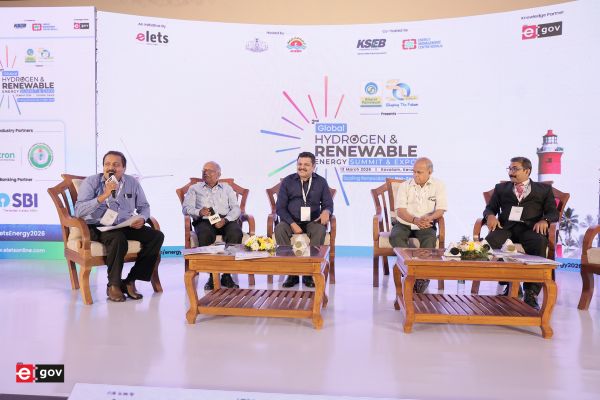
The panel discussion highlighted that achieving a net-zero future will depend not only on technological advancements but also on the ability to build a skilled, future-ready workforce. As clean energy sectors such as green hydrogen, advanced storage, and alternative fuels continue to evolve, the need for continuous innovation and adaptive skilling ecosystems becomes increasingly critical.
The conversation at the 2nd Global Hydrogen & Renewable Energy Summit in Kovalam on 13th March 2026 emphasised that innovation and workforce development must go hand in hand. While research institutions and industry are driving breakthroughs in clean technologies, scaling these solutions requires a strong pipeline of skilled professionals equipped to support deployment, operations, and further innovation.

Speaker Perspectives
Laiju IP Nair, Business Head – Skill Demand Aggregators and CoE, ASAP Kerala (Moderator)
The transition to a net-zero economy requires a well-aligned and responsive skilling ecosystem that evolves with industry needs. As new clean energy segments emerge, traditional training approaches must give way to demand-driven models supported by real-time industry inputs and specialised Centres of Excellence. This approach will be essential to build a workforce that is agile, future-ready, and capable of supporting rapid sectoral transformation.

Levin, Chief Executive Officer, KSPACE
Space technologies developed by ISRO offer significant opportunities to accelerate clean energy innovation, particularly in areas such as hydrogen storage, fuel cells, and advanced materials. Leveraging these cross-sector technologies can help reduce development timelines and improve efficiency within the hydrogen ecosystem, supporting faster scale-up and deployment.
Vinod T V, Chief Operating Officer, Kerala Academy of Skill Excellence (KASE)
Building a future-ready workforce requires a shift toward industry-led skilling frameworks that prioritise practical, hands-on experience. Strong apprenticeship pathways, continuous reskilling initiatives, and closer collaboration between industry and training institutions are essential to ensure that skill development remains relevant, dynamic, and aligned with evolving sector demands.
Kaviraj Nair, Chief Executive Officer, Office of Institutional Advancement – IIT Madras
Universities must play a more active role in driving innovation by creating robust lab-to-market ecosystems. By integrating research, prototyping, pilot deployment, and industry partnerships, academic institutions can accelerate the commercialisation of clean technologies and ensure that innovation translates into scalable, real-world solutions.
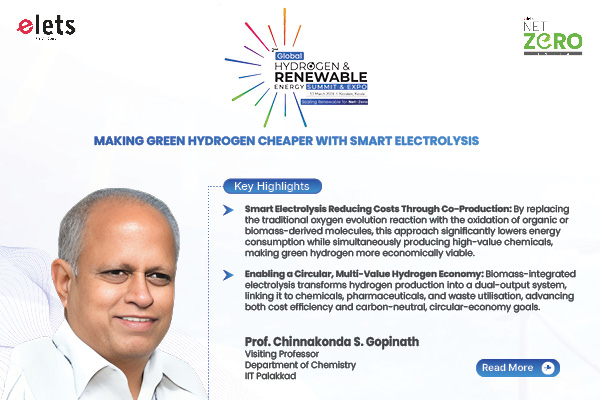
Prof. C S Gopinath, Visiting Professor, Department of Chemistry, IIT Palakkad
Advancements in hydrogen production processes are critical to improving efficiency and reducing costs. Approaches such as replacing conventional water oxidation with organic molecule oxidation can significantly enhance energy efficiency and economic viability, making green hydrogen more competitive for large-scale adoption.
Dr Radhakrishnan Unni, Head – Finance & Industry Engagements, Jain (Deemed to be University), Kochi
The rapid pace of change in the energy sector highlights the importance of continuous upskilling. As technologies and industry requirements evolve, professionals must regularly update their knowledge and capabilities. Flexible learning pathways and industry-integrated programs will be key to supporting lifelong learning and workforce adaptability.
Key Insights
- The panel underscored that scaling green hydrogen and other clean energy technologies will require a strong and coordinated skilling ecosystem. Collaboration between government, industry, and academia is essential to designing training programs that are aligned with current and future industry needs.
- A major takeaway was the importance of integrating education with real-world experience. Internships, apprenticeships, and industry partnerships were identified as critical pathways for preparing a workforce that is both job-ready and innovation-driven, helping bridge the gap between theory and practice.
- The discussion also highlighted the need for universities to align research and curriculum with industry requirements. By fostering lab-to-market pathways, academic institutions can play a pivotal role in accelerating the commercialisation of clean technologies.
- Cost reduction emerged as a critical factor, particularly for green hydrogen. Advancements in production technologies will be essential to make hydrogen economically viable and support its large-scale adoption.
- Finally, the panel emphasised that continuous learning will define the future workforce. As technologies evolve rapidly, ongoing reskilling and upskilling will be necessary to ensure that talent keeps pace with industry transformation.
Conclusion
The discussion reinforced that a successful transition to a net-zero future will depend as much on people as on technology. Building a skilled workforce, fostering innovation, and strengthening industry-academia collaboration will be critical to scaling clean energy solutions.
Also Read | Power System 2.0: Financially Sustainable DISCOMs and Next-Gen Transmission for a High-Renewables Future
With a strong focus on practical learning, continuous skill development, and cost-effective innovation, India can position itself as a global leader in clean energy talent and technological advancement.

Be a part of Elets Collaborative Initiatives. Join Us for Upcoming Events and explore business opportunities. Like us on Facebook , connect with us on LinkedIn and follow us on Twitter, Instagram.
"Exciting news! Elets technomedia is now on WhatsApp Channels Subscribe today by clicking the link and stay updated with the latest insights!" Click here!