 News
News





Article
Green Ports, Industry & Hydrogen Corridors: Building India’s Export-Ready Hubs
Green Ports, Industry & Hydrogen Corridors: Building India’s Export-Ready Hubs
![]() By
eletsnetzerofinal2025 21-April-2026
By
eletsnetzerofinal2025 21-April-2026


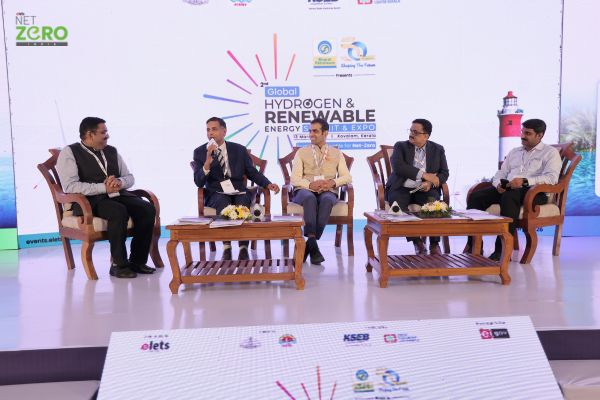
Building Green Ports and Hydrogen Corridors for a Global Energy Future
The panel discussion highlighted the growing importance of ports as strategic enablers in the development of green hydrogen ecosystems, particularly in the context of building export-ready hubs and hydrogen corridors. As global demand for clean energy accelerates, ports are uniquely positioned to serve as critical nodes that connect production, storage, transportation, and international trade. The conversation at the 2nd Global Hydrogen & Renewable Energy Summit in Kovalam on 13th March 2026 emphasised that achieving this vision will require a combination of strong policy frameworks, advanced infrastructure, skilled workforce development, and coordinated ecosystem planning.

Green ports are no longer limited to traditional maritime operations; they are evolving into integrated energy hubs capable of supporting hydrogen production, handling, and export. By enabling efficient logistics, reducing operational complexities, and facilitating seamless connectivity, ports can significantly accelerate the deployment of green hydrogen projects. At the same time, the integration of hydrogen into maritime operations presents an opportunity to decarbonise shipping and enhance overall energy efficiency across the value chain.
Speaker Perspectives

Comdt. PK Kushwaha (Retd), Director – Sales, India and South Asia, Agastya Hydrogen
The development of green ports and hydrogen corridors requires a holistic and coordinated approach that brings together policy, technology, and human capital. Strong regulatory alignment is essential to ensure that infrastructure planning is supported by clear and consistent guidelines, enabling faster project execution and reduced uncertainty for investors.
Equally important is the adoption of innovative technologies and the creation of a skilled workforce capable of supporting this emerging sector. Investments in advanced logistics, storage systems, and digital solutions will play a key role in enhancing efficiency and scalability. Collaboration between industry and academia can further strengthen the ecosystem by fostering research, innovation, and skill development. Together, these elements will help create integrated hubs that support not only domestic utilisation but also global competitiveness in hydrogen exports.
Dr Prasad Arvind Chaphekar, IRS, Director, Ministry of New and Renewable Energy (MNRE), Government of India
Ports have the potential to act as powerful facilitators for green hydrogen development by providing essential infrastructure and support systems. Access to land, power connectivity, and shared facilities can significantly reduce the burden on developers, allowing them to focus on optimising production and export operations. The concept of plug-and-play ecosystems within ports can further streamline project development by simplifying approvals and reducing administrative bottlenecks. By offering integrated solutions for logistics, storage, and connectivity, ports can enhance efficiency across the hydrogen value chain. This approach not only accelerates deployment but also strengthens the overall ecosystem, making it more attractive for investment and large-scale implementation.
Abraham Varghese, Managing Director, Kottayam Port and Container Terminal Services Pvt Ltd
As new fuels such as hydrogen and green ammonia gain prominence, ports must evolve their infrastructure to safely and efficiently handle these resources. This includes upgrading storage facilities, modernising terminals, and implementing specialised handling and bunkering systems designed for these fuels. Safety remains a critical consideration, requiring the adoption of stringent standards and advanced technologies to manage risks effectively. Investments in infrastructure upgrades will be essential to support large-scale fuel movement and ensure operational efficiency. By positioning themselves as capable and reliable hubs for clean energy logistics, ports can play a central role in enabling maritime decarbonisation and supporting the global transition to sustainable fuels.
Sachin Wani, AVP, KPIT Technologies Ltd.
Hydrogen fuel cell technology offers a transformative opportunity for decarbonising maritime operations. From ferries and cargo vessels to port mobility systems, hydrogen-powered solutions can provide zero-emission alternatives to conventional fuels while maintaining operational efficiency. When integrated with green hydrogen production and supportive port infrastructure, fuel cell technologies can create a seamless and sustainable maritime ecosystem. This approach not only reduces emissions but also enhances energy efficiency and operational reliability. As adoption scales, hydrogen-powered shipping has the potential to become a key component of global efforts to achieve net-zero emissions in the maritime sector.
Prashant Pratap, Manager (Investment Promotion), KSIDC
Institutional support plays a crucial role in enabling the development of large-scale green energy projects. Kerala State Industrial Development Corporation has been instrumental in creating a more investor-friendly environment by acting as a single-window facilitator for project development.
Also Read | Financing Decarbonization: Unlocking Capital for Hard-to-Abate Sectors
By supporting industries throughout the project lifecycle, from land identification and regulatory approvals to financing and policy advocacy, the organisation helps reduce delays and streamline processes. This integrated approach not only accelerates project execution but also builds investor confidence, making it easier to attract capital and scale investments in green hydrogen and related sectors.
Key Insights
The discussion underscored that strong policy frameworks and viability support mechanisms are essential for enabling emerging technologies such as green hydrogen, CCUS, and power-to-X fuels to scale effectively. Early-stage cost barriers can be addressed through subsidies, viability gap funding, and supportive regulations that attract private investment. At the same time, the bankability of projects depends heavily on demand assurance, robust project structuring, and timely execution, as uncertainties in these areas can significantly impact investor confidence.
Another critical area highlighted was the need to improve financing access for MSMEs within the supply chain. Existing regulatory constraints often limit their ability to participate at scale, pointing to the need for updated frameworks, blended finance models, and dedicated green funds. Additionally, the panel emphasised that large-scale decarbonisation cannot be achieved through isolated initiatives. Instead, it requires an ecosystem-based approach that integrates energy, transport, storage, and infrastructure, supported by strong public-private partnerships and global collaborations to ensure scalability and long-term competitiveness.
Conclusion
The panel discussion reinforced the idea that ports will play a defining role in shaping the future of the global hydrogen economy. By evolving into integrated energy hubs, they can bridge the gap between production and export, enabling countries like India to position themselves as key players in the international clean energy market. The emphasis on infrastructure development, policy alignment, and ecosystem integration reflects a pragmatic approach to building scalable and competitive hydrogen corridors. At the same time, the integration of hydrogen into maritime operations highlights the potential for ports to drive decarbonisation beyond their traditional roles.
As the transition accelerates, success will depend on the ability to align stakeholders, mobilise investment, and build resilient systems that can support long-term growth. With the right combination of strategic planning, technological innovation, and institutional support, green ports and hydrogen corridors can become powerful catalysts in the journey toward a sustainable and globally competitive energy future.

Be a part of Elets Collaborative Initiatives. Join Us for Upcoming Events and explore business opportunities. Like us on Facebook , connect with us on LinkedIn and follow us on Twitter, Instagram.
"Exciting news! Elets technomedia is now on WhatsApp Channels Subscribe today by clicking the link and stay updated with the latest insights!" Click here!