 News
News





Article
Operating the High-RE Grid: Storage, Flexibility as a Grid Resource
Operating the High-RE Grid: Storage, Flexibility as a Grid Resource
![]() By
eletsnetzerofinal2025 10-April-2026
By
eletsnetzerofinal2025 10-April-2026


Powering a High-Renewable Grid for India’s Future
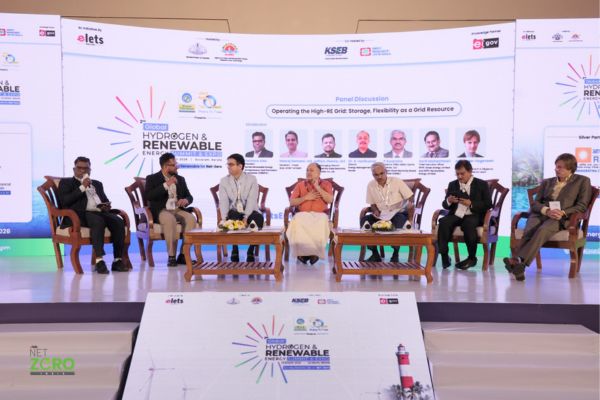
Held during the 2nd Global Hydrogen & Renewable Energy Summit & Expo in Kovalam on 13th March 2026, the discussion presented a comprehensive perspective on India’s transition toward a high-renewable power system, underlining the critical importance of flexibility, energy storage, and digital technologies in ensuring grid reliability. As renewable energy capacity continues to expand rapidly, the traditional grid model is being reshaped into a more dynamic and responsive system capable of managing variability and maintaining stability. The conversation highlighted how decentralised generation, coupled with advanced storage solutions, can significantly enhance grid resilience, reduce transmission losses, and ensure continuity of critical services during disruptions.

India’s energy transition is no longer limited to adding renewable capacity; it is increasingly about building an intelligent and adaptive grid that can integrate diverse energy sources seamlessly. This requires not only technological advancements but also institutional evolution, policy alignment, and coordinated investments across the value chain. The shift toward a decentralised and digitally managed energy ecosystem reflects a broader transformation in how electricity is generated, distributed, and consumed.
Speaker Perspectives

Terance Alex, President, Kerala Renewable Energy Entrepreneurs and Promoters Association (KREEPA)
India’s power sector is entering a defining phase, driven by the ambitious target of achieving 500 GW of non-fossil fuel capacity by 2030. Reaching this milestone will require a fundamental shift in how the grid operates, with a strong emphasis on flexibility, energy storage, and digital integration. These elements are essential to ensure that the increasing share of renewable energy does not compromise grid stability or reliability.
The transition also calls for stronger alignment between policy frameworks and on-ground implementation. Encouraging private sector participation and unlocking investments in grid modernisation will be crucial in accelerating progress. At the same time, building institutional capacity and fostering innovation will play a key role in ensuring that the transition is not only rapid but also sustainable. The development of a resilient and future-ready grid will depend on the ability to integrate these multiple dimensions effectively.
Neeraj Semwal, IAS, Secretary – Power, Govt. of NCT of Delhi
Delhi’s clean energy transition reflects the challenges and opportunities associated with integrating renewables into an urban power system. With around 450 MW of installed solar capacity against a peak demand of nearly 9,000 MW, the focus has been on ensuring seamless integration through the adoption of battery energy storage systems (BESS) and advanced grid management solutions.
These measures help address the inherent intermittency of solar power, enabling better load balancing and ensuring reliability during peak demand periods. The use of smart grid technologies further enhances the system’s ability to respond dynamically to changing demand and supply conditions. This approach demonstrates how urban centres can adopt innovative solutions to accelerate renewable integration while maintaining a stable and reliable power supply.
Aditya Jiwane, IAS, Joint Managing Director, Maharashtra State Electricity Distribution Co. Ltd.
Decentralised renewable energy is emerging as a powerful driver of change in India’s power sector. Maharashtra’s experience with solarised agricultural feeders, which have surpassed 3,300 MW in capacity, illustrates the impact of localised generation in accelerating clean energy adoption. By bringing generation closer to consumption points, these initiatives reduce transmission losses and improve the overall efficiency of the system.
This model also enhances reliability for end users, particularly in the agricultural sector, where a consistent power supply is critical. At the same time, decentralisation helps reduce the burden on centralised grid infrastructure, allowing for more balanced and efficient energy distribution. Such targeted interventions demonstrate how policy and technology can work together to create scalable and impactful solutions.
Dr R. Harikumar, Director, Energy Management Centre, Kerala
The discussion emphasised that resilience in the power sector must go beyond grid stability to include preparedness for climate and disaster-related risks. Extreme weather events and unforeseen disruptions are becoming increasingly common, making it essential to design energy systems that can withstand and recover from such challenges.
Decentralised energy storage and urban microgrids are emerging as key solutions in this context. By localising power supply, these systems ensure that critical services such as hospitals, emergency response infrastructure, and essential public utilities remain operational during outages. This approach not only enhances energy security but also supports faster recovery and continuity during crises, reinforcing the importance of resilience as a core component of energy planning.
P Surendra, Director (HRM, Safety, Sports, Welfare, QA), Kerala State Electricity Board Limited (KSEBL)
India’s power sector is undergoing a structural transformation, moving away from a centralised generation model toward a more decentralised and digitally managed ecosystem. This shift is being driven by the rapid expansion of renewable energy, the integration of energy storage solutions, and the adoption of smart grid technologies. Digitalisation is playing a critical role in enabling real-time monitoring, optimisation, and decision-making across the grid. This not only improves operational efficiency but also enhances the system’s ability to respond to fluctuations in demand and supply. As the grid becomes more complex, the role of advanced technologies in ensuring reliability and sustainability will become increasingly important.
Sarit Maheshwari, Chief Executive Officer, NTPC Green Energy Limited and NTPC Renewable Energy Limited
The scale of ambition within India’s renewable energy sector is reflected in the growth trajectory of NTPC Green Energy Limited. With an operational capacity of around 10 GW, the organisation has set a clear roadmap to expand to 30 GW by 2027–28 and 60 GW by 2032. This expansion is aligned with India’s broader goal of achieving 500 GW of non-fossil fuel-based energy capacity.
Such large-scale capacity additions will play a pivotal role in accelerating the energy transition. However, they also underscore the need for parallel investments in grid infrastructure, storage, and system integration to ensure that the generated power can be effectively utilised. The ability to synchronise generation growth with grid readiness will be key to realising the full potential of renewable energy.
Also Read | From Policy to Projects: Building India’s Green Hydrogen Economy
Alexander Hogeveen Rutter, Manager – Research & Diligence and Electricity Sector Lead, Third Derivative
Energy storage is rapidly emerging as a cornerstone of the renewable energy transition. With battery prices having declined by nearly 90% over the past decade, storage solutions are becoming increasingly accessible and economically viable. This trend is expected to play a transformative role in enabling large-scale integration of renewable energy into the grid. Storage systems help manage the variability of renewable sources by balancing supply and demand in real time. They also enhance grid flexibility, allowing operators to respond more effectively to fluctuations and maintain stability. As clean energy adoption accelerates, the role of energy storage will become even more critical in ensuring a reliable and resilient power system.

Be a part of Elets Collaborative Initiatives. Join Us for Upcoming Events and explore business opportunities. Like us on Facebook , connect with us on LinkedIn and follow us on Twitter, Instagram.
"Exciting news! Elets technomedia is now on WhatsApp Channels Subscribe today by clicking the link and stay updated with the latest insights!" Click here!