 News




News
India’s renewable energy curtailment impacts 118.6 GW capacity in September 2026
India’s renewable energy curtailment impacts 118.6 GW capacity in September 2026
![]() By
Samuel Raj 22-October-2026


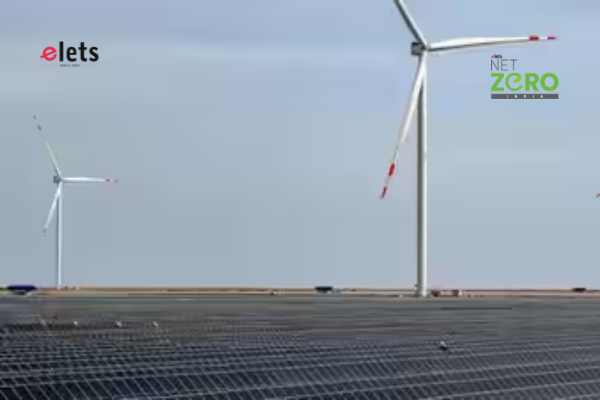
In September 2026, approximately 118 gigawatts (GW) of renewable energy capacity faced curtailment, primarily due to challenges like transmission limitations, insufficient battery energy storage system (BESS) capacity, and a lack of grid flexibility.
During this month, a total of 378.52 million units (MU) of variable renewable energy were curtailed, representing about 1.28% of India’s overall renewable energy generation. This situation underscores the persistent challenges in grid integration, as noted by JMK Research & Analytics.

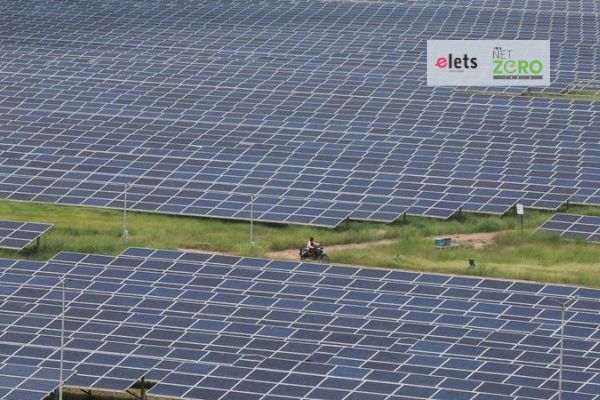
The curtailment impacted a total of 118.6 GW of renewable energy capacity, which included 96.9 GW from solar sources and 21.7 GW from wind energy.
“Significant factors contributing to renewable energy curtailment include mismatches between demand and generation, transmission bottlenecks, limited storage capabilities, and seasonal overlaps where high renewable output coincides with moderate demand,” the report highlighted.
Curtailment Increased Significantly with Solar Capacity Growth
According to JMK Research & Analytics, curtailment experienced a dramatic rise from May to August 2026, soaring to nearly four times the levels seen during the same months in 2025. The addition of approximately 44.6 GW of solar capacity in FY26 has intensified the strain on transmission systems and the flexibility of the grid.
In September 2026, solar energy constituted a staggering 83% of the total curtailment, amounting to around 314 MU. Meanwhile, wind energy curtailment saw a nearly threefold increase year-on-year, reaching 64.98 MU, which elevated its share of overall curtailment from 4.7 % to 17 %.
From December 2025 to February 2026, curtailment levels remained below 50 MU per month but began to rise from April, peaking at an impressive 1,166.52 MU in July. Notably, October 2025 marked the highest curtailment share, accounting for 4.32% of the total renewable energy generation.
In September, there was a notable decrease in curtailment compared to the previous month
“Curtailment dropped by 43.31% month-on-month, reaching 378.52 MU in September 2026, which is a 24% reduction from September 2025. The proportion of curtailed generation also saw a decline of 0.61 percentage points, falling from 1.89% in August to 1.28% in September. However, this reduction seems to provide temporary relief rather than indicating a fundamental enhancement in grid integration,” explained JMK.
In the previous month, 146.73 MUs (39%) were curtailed due to real-time system constraints, while 231.79 MUs (61%) were curtailed due to Emergency TRAS Down in Variable Renewable Energy (VRE).
Real-time constraints refer to back-down instructions issued on the same day to manage congestion and operational limits, whereas emergency TRAS Down involves curtailing generation to maintain a balance between supply and demand. The reliance on this for VRE highlights the limited flexibility within the power system to accommodate the available renewable energy.
Notably, solar energy constituted approximately 82% of the curtailed energy through TRAS Down, indicating that the curtailment in September was primarily driven by the necessity to balance the power system rather than just congestion issues, as emphasised by JMK Research.
Gujarat and Rajasthan together represent a significant portion of the curtailment landscape, accounting for nearly 79% of the total
In detail, Gujarat contributed 187.76 MU, which is 49.6% of the overall curtailment, while Rajasthan’s share stood at 110 MU, or 29.1%.
Notably, Gujarat was responsible for about two-thirds of the wind curtailment at 43.75 MU, whereas Rajasthan’s curtailment was exclusively from solar sources.
Additionally, Karnataka and Tamil Nadu exhibited distinct patterns in curtailment, with totals of 21.07 MU and 12.93 MU, respectively. In Karnataka, solar energy dominated the curtailment figures, while in Tamil Nadu, wind energy played a more significant role.
Energy storage solutions can significantly mitigate curtailment issues
Battery Energy Storage Systems (BESS) play a crucial role by capturing excess renewable energy during peak sunlight hours and releasing it during high-demand evening periods. In September alone, curtailment reached 378.52 MU, averaging about 12.6 GWh per day, which translates to approximately 3 GW of 4-hour storage capacity, according to JMK Research.
The report emphasises the importance of focusing on constrained nodes in Gujarat and Rajasthan. By sizing storage to match recurring surplus energy and responding to signals from system operators, these systems can effectively manage emergency downward reserve events (TRAS Down).

Be a part of Elets Collaborative Initiatives. Join Us for Upcoming Events and explore business opportunities. Like us on Facebook , connect with us on LinkedIn and follow us on Twitter, Instagram.
"Exciting news! Elets technomedia is now on WhatsApp Channels Subscribe today by clicking the link and stay updated with the latest insights!" Click here!