 News
News




News
PM Surya Ghar Scheme May Get 3–4 Month Extension as Successor Plan Takes Shape
PM Surya Ghar Scheme May Get 3–4 Month Extension as Successor Plan Takes Shape
Government targets 90 lakh-plus households by March 2027 while consulting stakeholders on the next phase of India's rooftop solar programme
![]() By
nandini jha 04-September-2026
By
nandini jha 04-September-2026


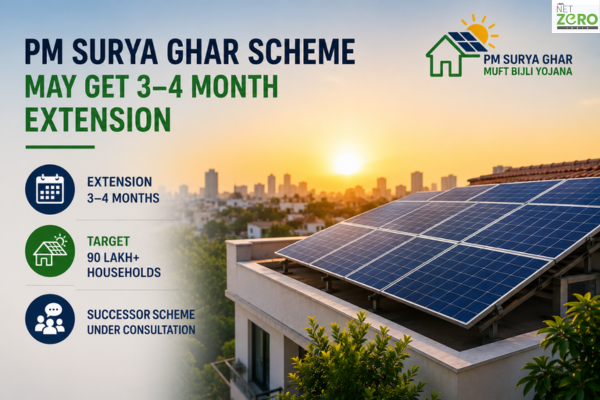
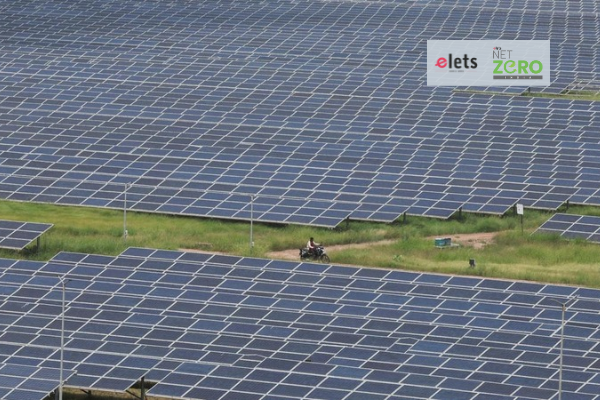
The Centre is considering a three to four-month extension of the PM Surya Ghar: Muft Bijli Yojana if required, as the government works towards expanding rooftop solar adoption across Indian households. The Ministry of New and Renewable Energy (MNRE) has also confirmed that a successor scheme is currently under stakeholder consultation, signalling the next phase of India’s residential rooftop solar programme.
The flagship programme, launched in February 2024 with an outlay of ₹75,021 crore, aims to enable rooftop solar installations for one crore households and add 30 GW of residential rooftop solar capacity. The scheme is currently scheduled to run until March 2027.

According to the ministry, the government expects to reach more than 90 lakh households before March 2027. If additional time is required to bridge the gap to the one-crore target, the programme could be extended by a few months. The possible extension is being considered alongside the development of the successor programme, which is expected to build on the experience and implementation framework of PM Surya Ghar.
The scheme has recorded a sharp acceleration in deployment. More than 50 lakh households had benefited from rooftop solar installations under the programme by early August 2026. In July alone, 5.06 lakh households benefited, marking the highest monthly addition since the scheme’s launch. The average daily installation rate also increased from 5,038 installations in October 2025 to nearly 16,328 in July 2026, representing a 3.2-fold increase.
The government has introduced several measures to support faster adoption, including enhanced central financial assistance for the initial 2 kW of rooftop capacity, collateral-free concessional loans and the RESCO/utility-led aggregation model. These interventions are intended to reduce upfront barriers and expand access to rooftop solar beyond early adopters.
The proposed extension and successor scheme come at a significant point in India’s distributed renewable energy journey. With residential electricity demand rising and rooftop solar offering households an opportunity to generate power locally, the next phase of policy is likely to focus on accelerating installations, improving implementation efficiency and expanding participation across a wider section of consumers.
The government’s target of reaching 90 lakh-plus households before March 2027 places continued emphasis on maintaining the recent installation momentum. Meanwhile, stakeholder consultations for the successor scheme could shape India’s next policy framework for residential rooftop solar and further strengthen the country’s decentralised clean-energy ecosystem.

Be a part of Elets Collaborative Initiatives. Join Us for Upcoming Events and explore business opportunities. Like us on Facebook , connect with us on LinkedIn and follow us on Twitter, Instagram.
"Exciting news! Elets technomedia is now on WhatsApp Channels Subscribe today by clicking the link and stay updated with the latest insights!" Click here!