 News
News





Article
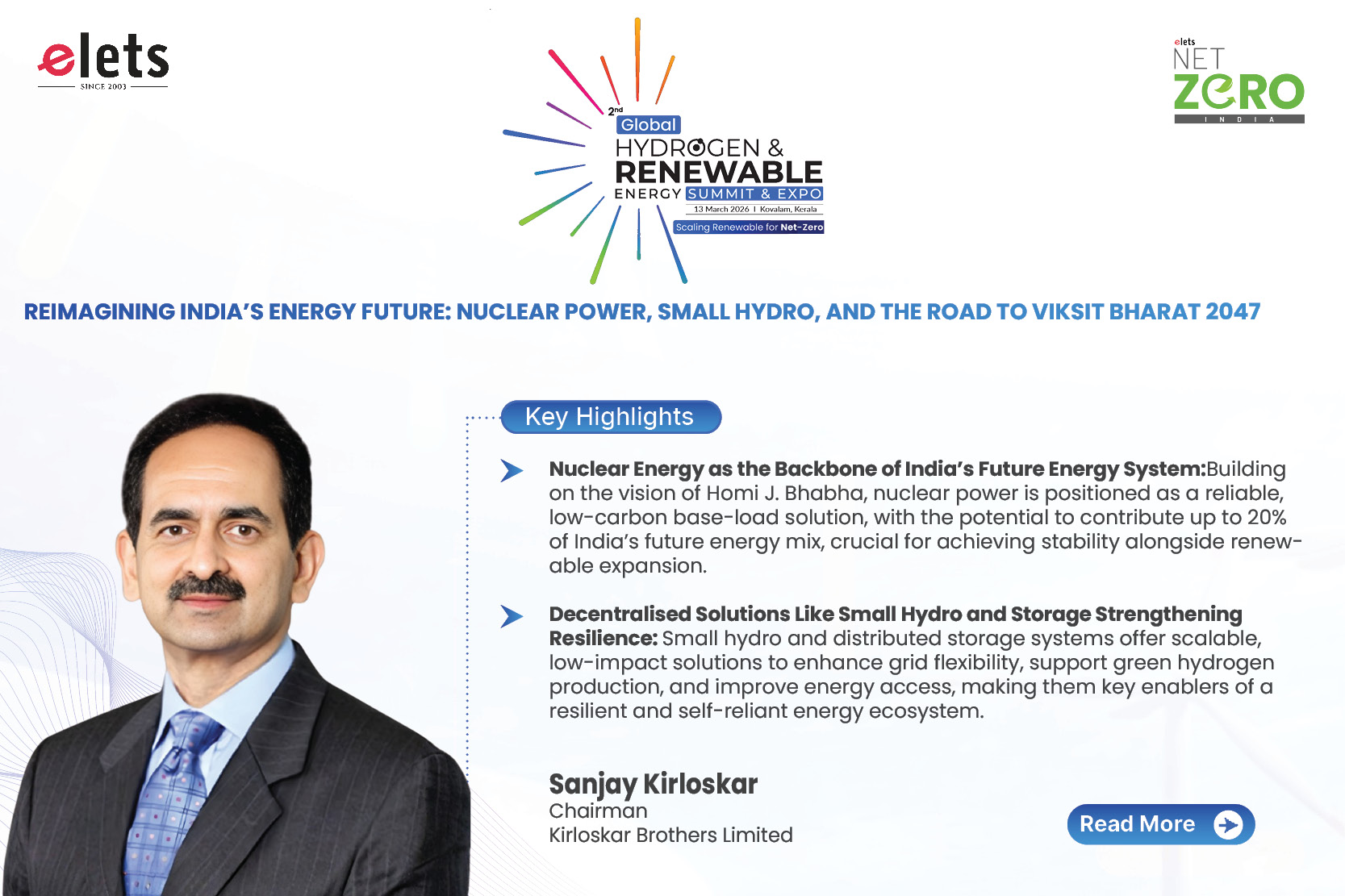
Reimagining India’s Energy Future: Nuclear Power, Small Hydro, and the Road to Viksit Bharat 2047
Reimagining India’s Energy Future: Nuclear Power, Small Hydro, and the Road to Viksit Bharat 2047
![]() By
eletsnetzerofinal2025 30-July-2026
By
eletsnetzerofinal2025 30-July-2026


India today stands at a defining crossroads. As one of the world’s fastest-growing economies and the third-largest energy consumer, the nation’s developmental ambitions are inseparable from its energy strategy. The choices made in this decade will determine not only the trajectory of economic growth but also the environmental and social fabric of the country for generations to come.
The path to Viksit Bharat 2047, a developed, self-reliant India at 100 years of independence, demands an unprecedented expansion of energy capacity. Projections indicate that by 2047, India’s peak power demand could exceed 700 gigawatts, with some estimates placing it closer to 1,000 gigawatts. This implies nearly a four-fold increase in generation capacity compared to today’s levels.

Yet the challenge is not merely about scaling up. It is about transforming how energy is produced, distributed, financed, and consumed. It is about ensuring that this growth is affordable, reliable, and, above all, sustainable.
The Economics of Energy Transition

Globally, the economics of fossil fuels versus renewables present a stark contrast. In 2022 alone, nearly $7 trillion was poured into subsidising fossil fuels—through direct subsidies, tax incentives, and the unaccounted costs of pollution and environmental damage.
By comparison, building a cleaner future requires approximately $4.5 trillion annually until 2030 to scale renewable energy and infrastructure in line with net-zero goals by 2050. While the upfront investment appears daunting, the returns are enormous:
- Cleaner air and reduced healthcare costs
- Lower climate-related disaster losses
- Strengthened energy security
- Reduced exposure to volatile global fuel markets
- Enhanced economic resilience
Studies suggest that a transition to clean energy could save the global economy up to $4.2 trillion annually by 2030 through health benefits and avoided environmental damage alone. The financial calculus is clear: the world can continue paying the price of pollution, or it can invest in a future that pays dividends.
For India, this is not an abstract global debate. It is an urgent national priority.
India’s Energy Reality: The Fossil Fuel Dilemma
India currently has approximately 460 gigawatts of thermal power generation capacity, predominantly coal-based.
Thermal power has long been the backbone of base-load electricity supply, providing consistent power to fuel industrial growth and urban expansion.
However, coal-fired generation today faces mounting and undeniable pressures. Air pollution from thermal power plants continues to contribute significantly to premature deaths and public health crises across the country. At the same time, rising global climate commitments are tightening the regulatory and financial environment around carbon-intensive industries, making long-term reliance on coal increasingly unsustainable. There is also the growing risk of stranded assets, as investments in new coal infrastructure may fail to deliver expected returns in a rapidly decarbonising world. Adding to this challenge is the improving cost competitiveness of renewable energy sources such as solar and wind, which are becoming more affordable, scalable, and attractive to investors with each passing year.
India, alongside China, is often cited as a major rising fossil-fuel power. Meanwhile, Western Europe has transitioned significantly toward renewables, leveraging wind and solar. Even the United States, despite political fluctuations in environmental policy, continues to expand its renewable capacity.
If India remains locked into fossil fuel expansion while the rest of the world accelerates toward green energy, it risks long-term competitiveness and environmental stability. The future must be different.
Nuclear Energy: A Strategic Base-Load Solution
Renewable sources such as solar and wind are expanding rapidly. However, their intermittent nature presents a fundamental challenge: how to provide stable, round-the-clock base-load power without coal. The answer, increasingly, lies in nuclear energy.
India’s nuclear sector has maintained a strong safety record. Globally, when examining long-term statistics since 1945, including major incidents such as Fukushima, the number of fatalities attributed directly to nuclear accidents remains significantly lower than deaths caused annually by air pollution from fossil fuels.
Nuclear power offers:
- Reliable, continuous base-load generation
- Near-zero carbon emissions during operation
- High energy density
- Long operational lifespan of plants
Industry estimates suggest that approximately 20 per cent of India’s future energy mix—around 200 gigawatts—could be generated through nuclear power. This represents not only an energy solution but also a vast industrial opportunity.
Reviving Indigenous Reactor Models
While Small Modular Reactors (SMRs) gained attention globally as a next-generation solution, commercial deployment at scale may take another decade. Meanwhile, India already has proven indigenous designs, such as the 220 MW Pressurised Heavy Water Reactors, which are comparable in scale to SMRs.
Instead of waiting, India can:
- Scale up standardised domestic reactor designs
- Manufacture components in bulk to reduce costs
- Build supply chain ecosystems
- Position itself as a global exporter of nuclear technology
Opening The Door to Private Sector Participation
Globally, private companies play a significant role in nuclear power generation. In India, expanding private sector participation—within a strong regulatory framework—could accelerate investment and innovation.
A balanced model can ensure:
- Government oversight for safety and compliance
- Private capital infusion for rapid expansion
- Access to domestic and global financing markets
Given the enormous replacement market as coal plants phase out, nuclear energy projects can attract strong investor interest, provided policy clarity and regulatory stability are ensured.
India must act decisively. Delays could mean falling behind global shifts in energy economics.
Small Hydro: The Quiet Enabler of Clean Growth
While nuclear power addresses base-load needs at scale, small hydro power represents an often-overlooked but highly strategic component of the renewable ecosystem.
Small hydro installations typically range from micro-level systems of 5 kilowatts to mini plants of 30 kilowatts and beyond. These systems harness flowing water from rivers and streams without the need for massive dams.
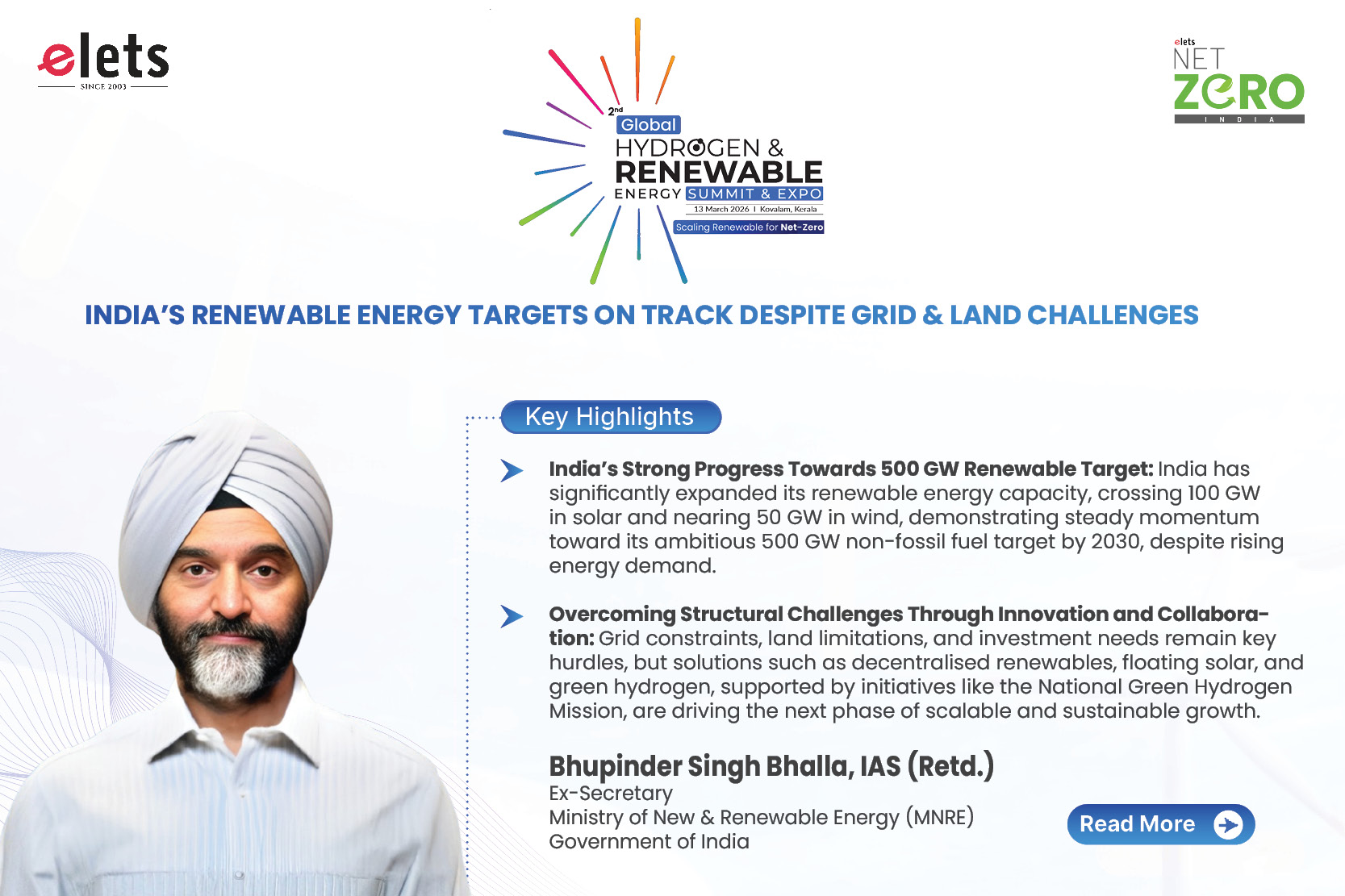
Also Read | India’s Renewable Energy Targets on Track Despite Grid & Land Challenges
Why Small Hydro Matters
Small hydro offers several advantages:
- Consistent and reliable electricity generation
- Minimal environmental disruption compared to large dams
- Long asset lifespan
- Low operational costs
- Suitability for remote and rural areas
For regions blessed with perennial streams and water flows, micro and mini hydro plants can unlock decentralised energy production. Even installations in the range of 10 kilowatts to 2 megawatts can make meaningful contributions to local energy systems. Every megawatt counts in the transition.
Powering The Green Hydrogen Ecosystem
Small hydro also plays a critical role in supporting green hydrogen production.
Green hydrogen relies on electrolysis—splitting water into hydrogen and oxygen using electricity. For hydrogen to truly be “green,” the electricity powering electrolysers must come from renewable sources.
Small hydro contributes in the following ways:
- Reliable power supply: Ensures continuous operation of electrolysers.
- Grid stability: Supports local grids in remote or off-grid regions.
- Cost efficiency: Low operational costs improve hydrogen economics.
- Lower carbon footprint: Renewable electricity reduces lifecycle emissions.
- Hybrid integration: Can be combined with wind and solar to create balanced energy systems.
In hydrogen clusters, especially in industrial zones or remote production sites, hybrid renewable systems combining solar, wind, and small hydro can significantly enhance reliability.
The Case for Micro and Mini Pumped Storage
Large pumped storage plants are gaining momentum across India. However, smaller-scale pumped storage systems, ranging from 10 kilowatts to 2 megawatts, can also play a valuable role in balancing renewable energy.
Such distributed systems:
- Store excess renewable energy
- Provide peak load support
- Enhance grid flexibility
- Reduce dependence on fossil fuel peaker plants
- Decentralisation is key. Not every solution must be massive in scale. Localised systems can collectively contribute to national targets.
Policy Imperatives for Accelerated Transition
To unlock the full potential of nuclear and small hydro, India requires a forward-looking policy framework.
Key Policy Priorities:
- Clear guidelines for capital expenditure planning
- Supportive tariff structures ensuring viable returns
- Public–Private Partnership models for micro and small hydro
- Streamlined regulatory approvals
- Incentives for domestic manufacturing of turbines and reactors
- Long-term investment visibility
Policy certainty will be crucial in mobilising private capital and fostering technological innovation.
Energy Transition as A Social Transformation
The energy transition is not merely about gigawatts and infrastructure. It is about people.
India’s shift away from coal and fossil fuels must ensure:
- Reskilling programs for workers in conventional energy sectors
- Creation of green jobs in manufacturing and services
- Skill development for nuclear engineering and renewable technologies
- Regional economic diversification
With 16–20 per cent of the global population, India’s energy choices influence the entire world. The country’s shift toward clean energy can reshape global markets and supply chains.
A Call for Bold and Decisive Action
The coming years are decisive. International political shifts may alter environmental priorities in other nations, but India cannot afford hesitation.
The urgency is clear:
- Coal capacity must gradually decline.
- Nuclear power must scale up rapidly.
- Small hydro and pumped storage must be incentivised.
- Renewable integration must accelerate.
This is not a moment for incrementalism. It is a moment for structural transformation.
India possesses the technological capability, industrial base, and policy ambition to lead. With strong regulatory frameworks, bold investments, and collaborative partnerships across government, industry, and research institutions, the country can transition from being a rising fossil fuel power to a global clean energy leader.
Conclusion: Powering A Self-Reliant India
The journey to Viksit Bharat 2047 demands energy security, sustainability, and self-reliance. Nuclear power can anchor base-load stability. Small hydro can strengthen decentralised resilience. Renewables and hydrogen can propel innovation and green industrialisation.
The energy transition is not the responsibility of governments alone. It belongs to industry leaders, policymakers, researchers, investors, and citizens alike.
The decisions made today will define India’s economic strength, environmental health, and geopolitical standing for decades. The future is not predetermined—it is being built.
And the time to move is now.
Insights shared by: Sanjay Kirloskar, Chairman, Kirloskar Brothers Ltd, at the Global Hydrogen & Renewable Energy Summit 2025, held on 12 March, in Kochi, Kerala.

Be a part of Elets Collaborative Initiatives. Join Us for Upcoming Events and explore business opportunities. Like us on Facebook , connect with us on LinkedIn and follow us on Twitter, Instagram.
"Exciting news! Elets technomedia is now on WhatsApp Channels Subscribe today by clicking the link and stay updated with the latest insights!" Click here!