 News




News
India’s CCTS outlines the potential of industrial clusters to drive the energy transition
India’s CCTS outlines the potential of industrial clusters to drive the energy transition
![]() By
Samuel Raj 31-October-2026


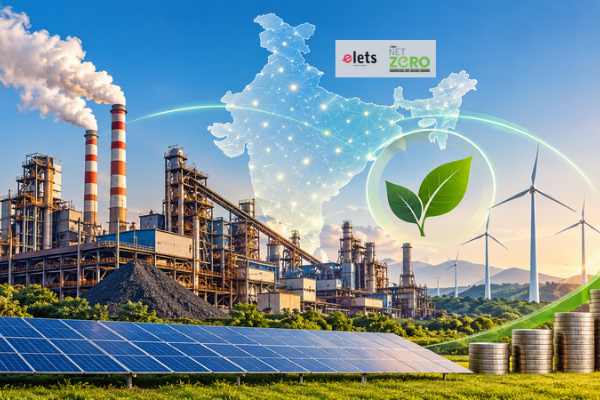
India’s Carbon Credit Trading Scheme (CCTS) encompasses 748 industrial facilities spanning eight sectors, with 255 iron and steel plants still awaiting finalised targets. The top 10 districts in India, which contribute the most to covered emissions, represent over a third of the scheme’s total carbon output, despite comprising only 17% of the obligated plants. This significant concentration is primarily found in the mineral-rich eastern states of India, heavily influenced by the iron and steel industry. The collective industrial demand for cleaner electricity has the potential to facilitate larger, more financially viable renewable energy and storage initiatives compared to individual plant-level procurement, assuming that targets are progressively tightened and that state-level policies regarding open access, wheeling charges, and cross-subsidy surcharges evolve accordingly.
For instance, in Raigarh, Chhattisgarh, a cluster of 16 steel plants emits 22.6 million tonnes of carbon dioxide (MtCO₂), accounting for nearly 3% of the emissions covered by the CCTS. These plants source their power from the same distribution company (discom) and encounter similar regulatory challenges when pursuing cleaner electricity options.

Raigarh exemplifies a broader trend
The top 10 districts in India, showcasing the highest number of industrial facilities, include Raipur in Chhattisgarh with 37 plants, Sundargarh in Odisha with 24, and Ballari in Karnataka with 21, collectively representing 24.5% of the plants obligated under the CCTS. However, the landscape shifts when we consider emissions versus the number of plants. The districts with the most significant carbon emissions account for 36.4% of the total carbon output in the market, yet they comprise only 17% of the obligated plants, revealing a disconnect.

Eastern India, encompassing Odisha, West Bengal, Jharkhand, and Bihar, is responsible for 30% of the emissions covered by the scheme and requires 36% of the reductions mandated in the initial compliance cycle. The iron and steel sector is a major contributor to this disparity, with 106 out of the region’s 152 obligated plants belonging to this industry, which is responsible for nearly three-quarters of the emissions in the area.
CCTS’s approach to carbon measurement
Industries have historically gathered around sources of raw materials and energy. The CCTS introduces a fresh perspective: facilities within these clusters now share a unified motivation to cut emissions.
This initiative evaluates emissions from start to finish, factoring in indirect emissions from electricity purchases. Consequently, a facility’s emission intensity is partially influenced by its energy supply. Since power generation is not included in the scheme, Scope 2 accounting provides the CCTS with a way to indirectly affect emissions related to electricity. The programme maintains a consistent grid emission factor between the baseline and assessment years throughout a compliance cycle, allowing a facility to gain from sourcing cleaner energy rather than relying on improvements in grid cleanliness. This positions clean energy as a vital compliance strategy. Given that numerous obligated facilities are situated close together, their collective demand could facilitate larger-scale procurement efforts.
This presents a significant chance for India, which still needs to incorporate approximately 200 gigawatts (GW) of non-fossil energy capacity to achieve its 2030 goals. As of July 2026, India had reached 300.5 GW of non-fossil capacity, surpassing 60% of its 500 GW target, leaving about 200 GW to be added in the next four years. The Green Energy Open Access Rules of 2022 have made it easier for corporations to procure renewable energy, leading to a rapid increase in corporate renewable purchases, with industries now representing a substantial portion of new clean capacity contracted outside the conventional utility framework.
For industrial purchasers, though, the demand from individual facilities may not always be sufficient to justify a standalone renewable project. Nevertheless, by consolidating demand from multiple plants within the same area, a more compelling investment opportunity can emerge. This is especially crucial for the smaller sponge-iron units prevalent in these regions, many of which may find it challenging to secure long-term power purchase agreements independently. Therefore, collaborating through industry associations to pool their renewable energy needs is a highly recommended approach.
Additionally, the carbon market has created a public registry of industrial facilities that have both regulatory and potential economic incentives to acquire clean energy, encouraging them to monitor their carbon emissions and understand their geographical positioning. Essentially, this serves as a preliminary guide to where the demand for clean power is concentrated and has the potential to expand further.
Transformations in the electricity sector
Shifts in the electricity landscape present a promising opportunity. The waiver for interstate transmission charges on solar and wind projects is gradually being eliminated. From June 2025 onwards, new projects will encounter increasing charges, culminating in full fees by July 2028. Currently, these charges hover around ₹0.65 per kilowatt-hour (kWh), surpassing the renewable generation cost differences between states, which range from ₹0.02 to ₹0.40 per kWh. As these charges re-emerge, the financial dynamics of supplying remote industrial demands from renewable sources in resource-abundant states will evolve, potentially bolstering the rationale for generating and storing energy closer to consumption hubs.
The Central Electricity Authority (CEA) projects that India will require over 400 gigawatt hours (GWh) of energy storage by 2031–32. For industries with continuous processes, a reliable round-the-clock renewable energy supply remains expensive. Ember, a prominent energy think tank, estimates the average cost at approximately ₹9.5 per kWh, primarily due to storage costs. However, it has found that sourcing about half of a facility’s energy needs from solar and wind is already economically viable.
At this point, the carbon price has minimal impact, even at an estimated USD 10 per tonne, as early projections suggest; substituting one kWh of grid electricity with renewable energy yields only around ₹0.7 in credits. Consequently, procurement choices will largely hinge on the cost of clean energy compared to a facility’s existing supply, with tightening CCTS targets likely pushing facilities further as each compliance cycle unfolds.
Unlocking this potential hinges on policies that extend beyond the carbon market’s influence. Power generation is responsible for nearly 40% of India’s emissions, yet it remains outside the CCTS framework. Consequently, the carbon price fails to incentivise a shift towards cleaner energy sources or engage power plants as buyers, which could have been the primary source of credit demand in the market. As a result, the burden largely falls on industrial consumers, who must take the initiative to source cleaner electricity. The process for obtaining open-access approvals is sluggish in numerous states, and factors like cross-subsidy surcharges and banking regulations can significantly impact the final cost of renewable energy. Effective coordination within a cluster necessitates an understanding of the number of participants and the magnitude of their combined demand.
The Bureau of Energy Efficiency (BEE) identifies key areas where monitoring, reporting, and verification demands are most pronounced. This analysis also pinpoints regions where future targets could yield significant benefits. Strengthening regulations in these areas would have a more substantial impact on national outcomes compared to similar actions taken elsewhere. For state authorities, this information underscores industrial hubs where reforms in open access, renewable energy procurement, and storage solutions could create considerable advantages. In Chhattisgarh and Odisha, home to the largest steel production clusters, obligated facilities within the same Discom zone could collaborate to purchase renewable energy collectively, store excess power as a unit, and enjoy reduced open-access fees on this aggregated demand. Chhattisgarh’s exemption from transmission and wheeling fees for the initial 500 MW of green open access sets a noteworthy example.
India has established a carbon market to evaluate industrial emissions. This initiative will also serve as a crucial indicator of the energy transition and the future directions of the scheme.

Be a part of Elets Collaborative Initiatives. Join Us for Upcoming Events and explore business opportunities. Like us on Facebook , connect with us on LinkedIn and follow us on Twitter, Instagram.
"Exciting news! Elets technomedia is now on WhatsApp Channels Subscribe today by clicking the link and stay updated with the latest insights!" Click here!