 News




News
India greenlights Viability Gap Funding to bolster 92 GWh of BESS and pumped hydro energy storage capacity
India greenlights Viability Gap Funding to bolster 92 GWh of BESS and pumped hydro energy storage capacity
![]() By
Samuel Raj 09-November-2026


India’s central government has given the green light for the next phase of the Viability Gap Funding (VGP) initiative, allocating IR145 billion (approximately US$1.5 billion) to enhance energy storage capacity.
Moreover, a representative from the Ministry of Power has indicated that state-owned power companies may soon be mandated to incorporate energy storage solutions in upcoming renewable energy projects.

This announcement, made earlier this week (4 November) by Prime Minister Narendra Modi’s office and the Press Information Bureau (PIB) of India, follows the Union Cabinet’s endorsement. The VGF programme is set to provide capital expenditure support for the deployment of 92 GWh of new energy storage systems.
The plan encompasses 60 GWh of pumped hydro energy storage (PHES), 30 GWh of battery energy storage systems (BESS), and 2 GWh dedicated to alternative energy storage technologies.

The government has announced that the total capacity will amount to an impressive IR976 billion in energy storage investments. Additionally, a new domestic content requirement of 40% has been established.
This development follows the initial phase of the scheme, where the government provided support covering up to 40% of project capital expenditure for 4GWh of projects slated for completion in 2030-2031, as outlined in the 2023-2024 Union Budget.
Subsequently, the initiative was broadened to accommodate 13.2 GWh of new capacity, culminating in a significant expansion that included an extra IR54 billion to back 30 GWh of battery storage, which was announced during a Ministry of Power press conference in June 2025.
Earlier this year, the government made a pivotal decision regarding the VGF scheme, mandating that developers must use at least 20% domestic content—a requirement that has now been increased to 40%.
Prime Minister Modi took to X (formerly Twitter) to characterise this latest approval as a “massive” advancement in storage capacity development, emphasising the 40% domestic content rule as a “unique feature”.
“Store More → Import Less → Power India Round the Clock!” he tweeted.
State utilities will receive energy storage mandates, according to the Ministry of Power secretary.
This initiative has played a crucial role in bolstering India’s nascent energy storage industry. As implied by its name, it serves as a transitional support to enhance the commercial feasibility of energy storage solutions.
Numerous participants, including speakers at the recent Energy Storage Summit India 2026 in Greater Noida, have suggested that the Viability Gap Funding (VGF) should act as a foundational element as the sector evolves, rather than a permanent support mechanism.
Ateesh Samant, COO of independent power producer Oyster Renewable, emphasised that VGF “has been vital” during the initial market phase, alongside the exemption from Inter State Transmission System (ISTS) charges for co-located storage expected to be operational by mid-2028. Standalone Battery Energy Storage Systems (BESS) and Pumped Hydro Energy Storage (PHES) already benefit from these waivers.
“The forthcoming phase involves transitioning from financial support to a well-structured market design. This entails creating markets that compensate storage for the flexibility, capacity, and grid services it offers,” Samant remarked, suggesting measures such as widening the gap between off-peak and peak electricity pricing.
During the recent India summit conference in October, Prashant Bhamu, the deputy director of integrated resources planning at the Ministry of Power’s Central Electricity Authority (CEA), highlighted that India currently boasts an operational battery storage capacity of 5.3 GWh, with an impressive 185 GWh in the pipeline.
According to CEA’s long-term resource adequacy planning, approximately 888 GWh of energy storage capacity, encompassing both Battery Energy Storage Systems (BESS) and Pumped Hydro Energy Storage (PHES), will be essential by the years 2035-2036 across the nation, Bhamu noted.
In related developments, Pankaj Agarwal, secretary of the Ministry of Power, recently announced that India is set to implement mandatory energy storage capacity requirements for state utilities, as reported by Reuters on November 5.
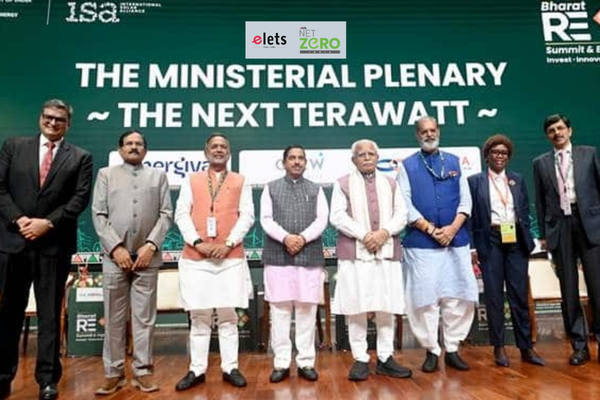
At the Bharat Renewable Energy Summit, Agarwal also indicated that additional clean energy tenders concerning energy storage are on the horizon. However, he mentioned that the specifics regarding capacity addition requirements for state utilities remain “fluid”, according to Reuters.

Be a part of Elets Collaborative Initiatives. Join Us for Upcoming Events and explore business opportunities. Like us on Facebook , connect with us on LinkedIn and follow us on Twitter, Instagram.
"Exciting news! Elets technomedia is now on WhatsApp Channels Subscribe today by clicking the link and stay updated with the latest insights!" Click here!