 News
News





News
India’s 500 GW Clean Energy Target Needs Grid Stability Roadmap: Report
India’s 500 GW Clean Energy Target Needs Grid Stability Roadmap: Report
![]() By
Abhineet Kumar 28-September-2026
By
Abhineet Kumar 28-September-2026


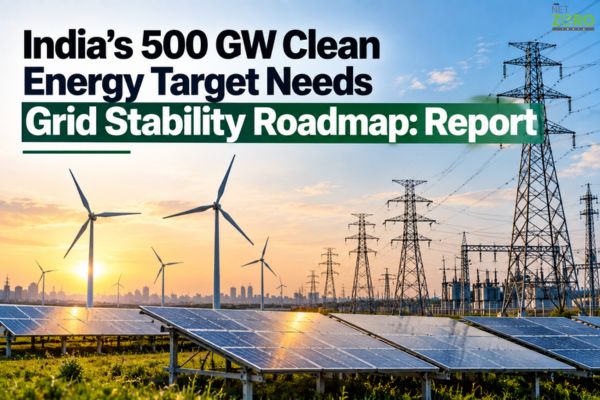
New Delhi: India’s goal of achieving 500 GW of non-fossil fuel-based power capacity by 2030 will need to be supported by clearly defined milestones for grid stability, according to a joint report by the Federation of Indian Chambers of Commerce and Industry (FICCI) and Nangia.
The report, titled “Grid Stability in India: From Diagnostic Assessment to a Reform and Implementation Roadmap,” calls for grid-readiness to be addressed alongside the expansion of renewable and other non-fossil generation capacity. It recommends a set of regulatory and technical measures covering battery storage, grid strength, system inertia, transmission planning and congestion management.

According to the report, India’s power system is undergoing a structural shift. The grid, which was traditionally designed around a relatively small number of large and predictable generation sources, is increasingly accommodating a much larger share of smaller, weather-dependent and power-electronics-based generation.
The report noted that the pace of this transition has, at times, moved faster than the development of supporting transmission infrastructure, energy storage capacity and institutional mechanisms required to maintain system stability.

Focus on Battery Energy Storage
As an immediate measure, the report has called for clarity on the regulatory and legal framework governing grid-forming requirements. It recommends that a single, clearly identified regulatory instrument should be notified, with defined thresholds and requirements for battery energy storage systems (BESS) above 50 MW.
The report also proposes establishing minimum technical requirements for key grid parameters, including grid inertia, rate of change of frequency and system strength. These requirements, it said, should apply nationally as well as to regions with a high concentration of renewable energy generation.
Also Read: India to Set Up First Port-Based E-Methanol Plant at Kandla
Transmission and Congestion Management
The report has also highlighted the need to accelerate the identification of transmission corridors required for the deployment of grid-enhancing technologies and congestion-management solutions.
It recommends completing the corridor-identification exercise so that transmission constraints can be addressed alongside the growth of renewable generation. Such planning would help identify areas where additional technologies or interventions may be required to manage congestion and maintain reliable power flows.
Another recommendation relates to the development of a model national framework for deviation settlement and demand flexibility. The proposed framework would establish defined parameters while allowing states to retain flexibility within agreed limits.
The report’s recommendations come as India continues to expand non-fossil generation capacity and integrate increasing volumes of variable renewable power into the electricity system. It argues that capacity expansion and grid stability need to progress together, with measurable technical and regulatory milestones accompanying the country’s clean energy targets.

Be a part of Elets Collaborative Initiatives. Join Us for Upcoming Events and explore business opportunities. Like us on Facebook , connect with us on LinkedIn and follow us on Twitter, Instagram.
"Exciting news! Elets technomedia is now on WhatsApp Channels Subscribe today by clicking the link and stay updated with the latest insights!" Click here!