 News
News




News
Centre to Accelerate Rooftop Solar Push Under PM Surya Ghar Scheme in FY27: Pralhad Joshi
Centre to Accelerate Rooftop Solar Push Under PM Surya Ghar Scheme in FY27: Pralhad Joshi
![]() By
eletsnetzerofinal2025 10-April-2026
By
eletsnetzerofinal2025 10-April-2026


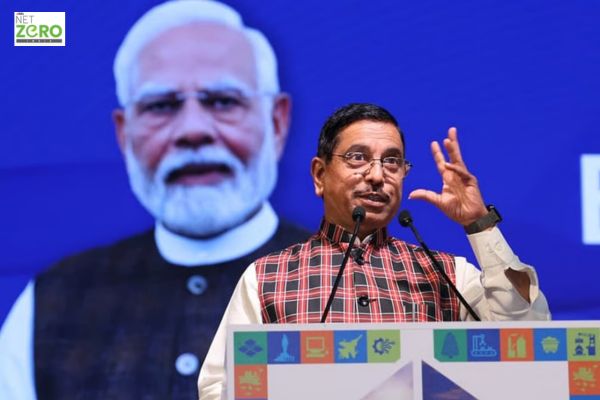
India’s rooftop solar mission is set to pick up pace in the coming year, with the government planning to significantly scale up installations under the PM Surya Ghar Muft Bijli Yojana.
Union Minister for New and Renewable Energy, Pralhad Joshi, announced that the daily rate of rooftop solar installations—currently around 11,000 to 12,000—will be increased to nearly 15,000 to 16,000 per day in FY 2026-27. The push will largely be driven by expanding the Utility-Led Aggregation (ULA) model, which allows DISCOMs and state agencies to install solar systems for households that may lack the resources or infrastructure to do so on their own.
So far, around 35 lakh households have already benefited from the scheme. The government now aims to add another 30 lakh households in the next three to four months, taking the total to around 65 lakh installations. The larger goal remains ambitious—providing solar power to one crore households by March 2027.
While the ULA model has been in place since 2025, its adoption has been relatively limited so far. The Centre now plans to actively encourage states to implement it more aggressively, especially in regions where individual rooftop installations are challenging.
The push for faster installations comes at a time when decentralised renewable energy is playing an increasingly important role in India’s energy mix. In the last financial year, it accounted for a significant share of new renewable capacity additions, highlighting a shift towards more distributed and accessible energy solutions.
At the same time, the government is also working to resolve pending agreements in the sector. Around 40 GW of renewable energy projects are currently awaiting Power Sale Agreements (PSAs), and the Centre is aiming to finalise 10–12 GW of these in the next few months.
India’s broader renewable energy journey is also gaining global recognition. The country has now become the world’s third-largest in terms of renewable energy installed capacity, moving ahead of Brazil. In FY 2025-26 alone, India added record capacity in the non-fossil segment, with renewables contributing significantly to the nation’s electricity needs.
Minister Joshi also highlighted how renewable energy is increasingly being integrated into everyday systems, including powering railway operations during solar hours—an example of how clean energy is becoming part of daily infrastructure.
As the government pushes ahead with its solar mission, the focus is clear: making clean energy accessible to millions of households, reducing dependence on conventional power sources, and moving steadily towards a more sustainable energy future.

Be a part of Elets Collaborative Initiatives. Join Us for Upcoming Events and explore business opportunities. Like us on Facebook , connect with us on LinkedIn and follow us on Twitter, Instagram.
"Exciting news! Elets technomedia is now on WhatsApp Channels Subscribe today by clicking the link and stay updated with the latest insights!" Click here!