
 News
News




News
Centre’s ₹3,120 Crore Push Helps Punjab and Haryana Sharply Cut Stubble-Burning Cases
Centre’s ₹3,120 Crore Push Helps Punjab and Haryana Sharply Cut Stubble-Burning Cases
![]() By
Kavya Verma 02-December-2025
By
Kavya Verma 02-December-2025


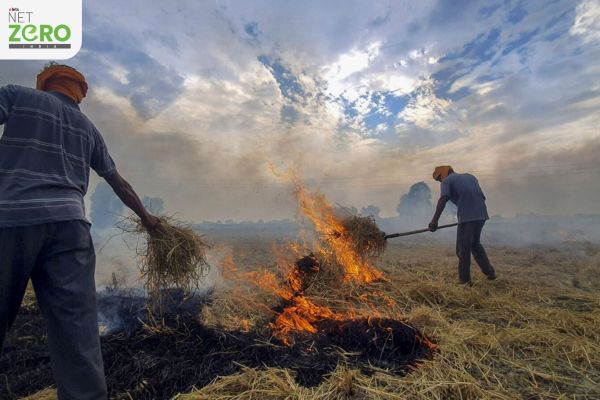
The central government’s sustained focus on curbing stubble burning has led to a dramatic drop in farm-fire incidents across Punjab and Haryana. Between 2018-19 and 2025-26, the Centre released ₹3,120.16 crore to both states under the Crop Residue Management (CRM) scheme to promote in-situ management of paddy residue and discourage burning.
According to official data, presented by Environment Minister Bhupendar Yadav in the parliament, the financial support has enabled the deployment of approximately 2.68 lakh CRM machines in the two states, with around 1.59 lakh in Punjab and 1.09 lakh in Haryana. These machines include Super Seeders, Happy Seeders, Straw Management Systems, and balers that allow farmers to manage crop residue without setting fields on fire.
Authorities report that the initiative has already yielded clear on-the-ground results. During the 2025 paddy season, Punjab recorded a nearly 90% reduction in farm-fire events, falling from 49,922 cases in 2022 to 5,114. Haryana registered an 81% decline, with incidents dropping from 3,661 to 662 over the same period. Officials highlight that this marks one of the sharpest falls in stubble-burning incidents in recent years.
Also Read: PM Modi Announces Opening of India’s Nuclear Sector to Private Players
The scheme has particularly benefited small and marginal farmers by offering CRM machines at subsidised rates and enabling access through cooperative societies and custom hiring centres. Parallel efforts have also been made to create alternative revenue opportunities from crop residue, such as supplying biomass plants, pellet manufacturers and power projects.
While officials have acknowledged the significant success of the initiative, they emphasise that air pollution in North India remains a multi-factor challenge. Even with the drop in stubble burning, pollution from vehicles, industrial emissions, road dust, waste burning and winter weather patterns continues to weigh on air quality.
The government has instructed state administrations to maintain strict monitoring during the harvest window, ensure the availability of CRM equipment to farmers, and strengthen biomass collection and supply-chain networks. Experts note that sustained commitment over the next few years will be crucial to eliminating open-field burning and ensuring durable improvement in regional air quality.

Be a part of Elets Collaborative Initiatives. Join Us for Upcoming Events and explore business opportunities. Like us on Facebook , connect with us on LinkedIn and follow us on Twitter, Instagram.
"Exciting news! Elets technomedia is now on WhatsApp Channels Subscribe today by clicking the link and stay updated with the latest insights!" Click here!